
Swapping Out Nervous Habits: Tactile Tools for Adult Focus
By Kevin Lee | 4/22/2026
Introduction: The Unconscious Urge to Fidget
For decades, the repetitive motion of a tapping pencil or the restless shift in a chair was dismissed as a failure of discipline. Today, as we move through 2026, neuroscientific inquiry suggests these behaviors are far more than mere distraction; they are nuanced, autonomic attempts at self-regulation. As noted by pediatric occupational therapy resources, “Your child taps their pencil nonstop during homework. They touch everything they see. The teacher says they’re ‘always fidgeting’ during class. Before you assume it’s misbehavior, consider this: your child might be showing you exactly what their body needs.” This physiological drive to occupy the hands is a universal phenomenon, manifesting in adults as frequently as in children, with roughly 18-22 percent of professionals reporting that they bite their nails under pressure.
Understanding this biological impulse has catalyzed a massive shift in the wellness market. What began as a viral craze—fidget spinners transitioning from mere novelty items to tools for sensory awareness—has matured into a sophisticated industry. By 2025, the baseline for our current projections, the global sensory toys market was already substantial, currently valued at USD 2.46 billion in 2026. This trajectory is accelerating toward an estimated USD 6.16 billion by 2035, with further long-term forecasts suggesting the market could hit USD 22.8 billion by 2033. North America currently leads this expansion with a 53% market share, heavily influenced by a growing demand for therapeutic and educational tools.
The efficacy of these tools lies in the science of habit substitution. Clinical data shows that replacement behaviors result in a 53% reduction in nail-biting over six weeks, compared to a mere 20% success rate for willpower alone. This transition is not merely behavioral; it is rooted in cognitive load management, a topic we explore in detail at Why Keeping Your Hands Busy Helps Calm Your Mind. Modern innovation is now steering the market away from plastic clutter toward magnetic mechanisms and muted, professional aesthetics suitable for the boardroom. Furthermore, the integration of technology is becoming standard: 39% of sensory toys launched in 2024 featured interactive light, sound, or vibration. As we continue to monitor the stress toy sector—which is expected to reach $7.95 billion by 2030 at a CAGR of 6.1%—the focus is shifting toward clinical validation, exemplified by an ongoing 12-week trial testing vibration-based bracelets as a formal intervention for body-focused repetitive behaviors.
The Psychology of Habit Substitution
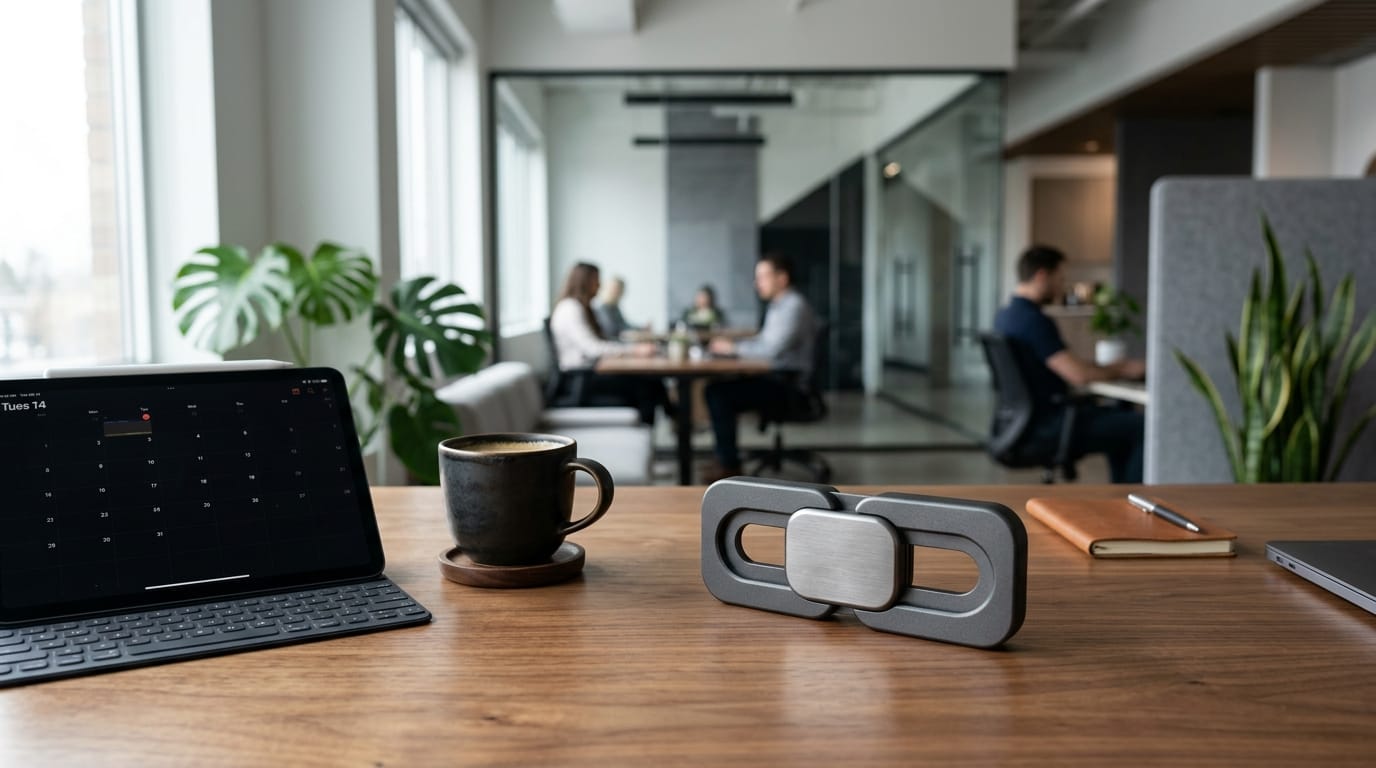
The mechanics of habit cessation have evolved significantly since the early-2020s, when fidget spinners emerged as a transient trend that inadvertently laid the groundwork for modern sensory awareness. Today, we understand that addressing repetitive behaviors—such as nail-biting, which affects roughly 18-22 percent of adults in professional settings—requires more than mere cognitive restraint. Research consistently demonstrates that passive suppression often fails, whereas active substitution yields clinical success. Studies from the early-2020s found that simple replacement behaviors—such as squeezing a stress ball, manipulating therapy putty, rolling a fidget ring, or gently rubbing a textured surface—produced meaningful reductions in nail-biting in roughly half of participants (53% in a six-week trial and over 50% in a 2023 controlled study) compared with only about 20% improvement with willpower alone.
This shift toward tactile intervention has catalyzed a robust industry, with the global sensory toys market valued at USD 2.46 billion in 2026, projected to expand to USD 6.16 billion by 2035 and reaching an estimated USD 22.8 billion by 2033. North America currently leads this expansion with a 53% market share, fueled by a transition from rudimentary toys to sophisticated tools. Innovation is moving rapidly toward magnetic mechanisms and muted, professional color palettes designed specifically for the adult demographic. Furthermore, the integration of technology is becoming a staple; 39% of sensory toys launched in 2024 featured interactive digital elements like light, sound, or vibration, with a 12-week clinical trial currently assessing the efficacy of vibration-based bracelets as a proactive deterrent for nail-biting. As we look toward a future defined by AI-integrated, screen-free sensory tools, the stress toy market is positioned for sustained growth, expected to hit USD 7.95 billion by 2030 at a CAGR of 6.1%.
Mapping Nervous Habits to Sensory Solutions
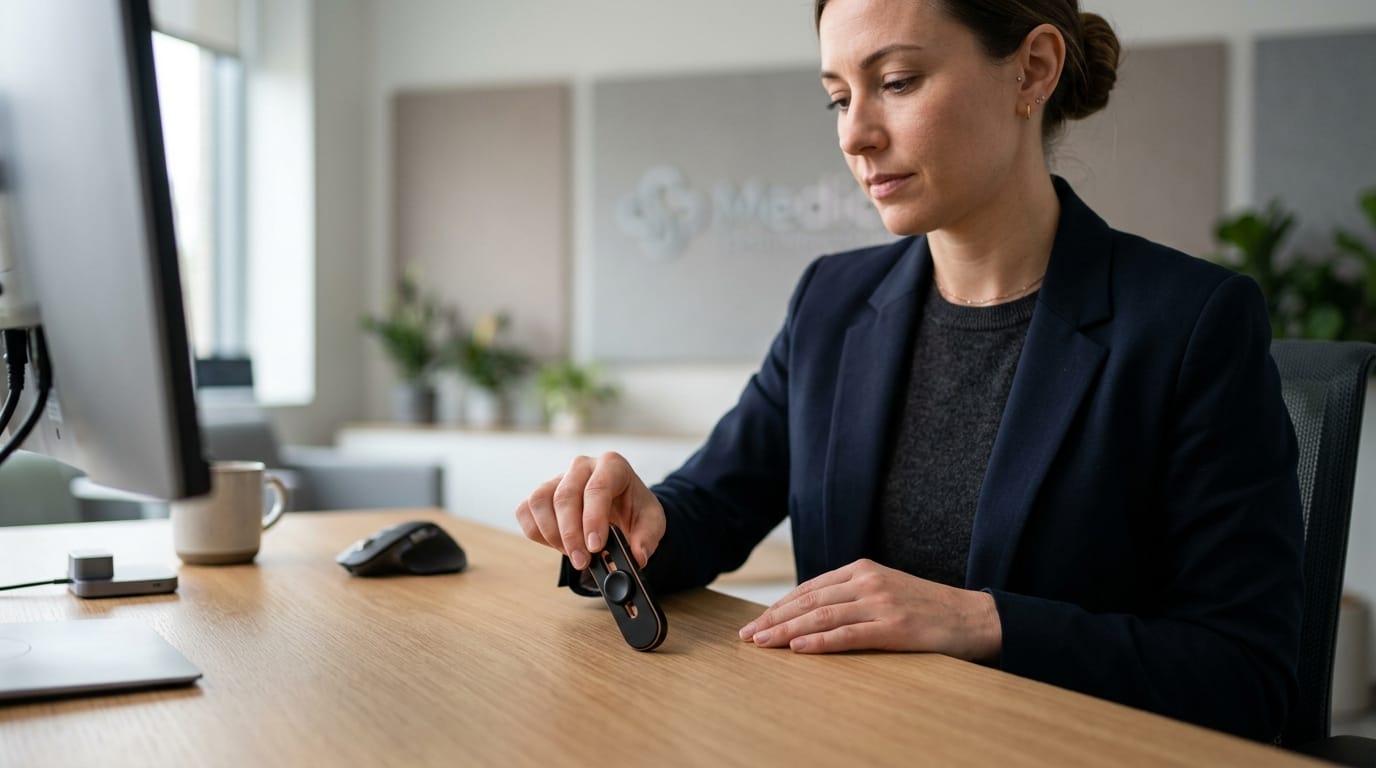
As we navigate a professional landscape where 18-22% of adults report chronic nail-biting, the shift from mere fidgeting to intentional sensory regulation has become a vital component of workplace wellness. The global sensory toys market, now valued at USD 2.46 billion in 2026 and projected to reach USD 6.16 billion by 2035, reflects a growing recognition that these behaviors are biological responses to environmental stressors. Replacing these habits is statistically superior to relying on willpower alone; clinical trials demonstrate a 53% reduction in nail-biting via replacement behaviors, compared to only 20% through willpower. To identify your sensory profile, one must first categorize the manifestation of nervous energy. According to expert occupational therapy guidance, “tactile habits such as constant touching, rubbing or hand-flapping signal a need for textured, pressure-based input and are best met with quiet fidget toys like putty, therapy dough, smooth silicone discs, textured rings, or a Tangle.”
While North America currently commands 53% of the market share, the aesthetic of these tools has evolved from the crude fidget spinners of the past to sophisticated, muted color palettes designed for corporate environments. Innovation is moving rapidly; by 2024, 39% of new sensory toys had already integrated digital elements such as light, sound, or vibration. We are currently observing a 12-week clinical trial testing vibration-based bracelets as a direct intervention for oral fixations, marking a transition toward more clinical, tech-integrated solutions. As the stress toy market pushes toward a USD 7.95 billion valuation by 2030, users are encouraged to move beyond trend-chasing and toward tools that align with their specific sensory needs—be it the high-frequency input of magnetic mechanisms or the grounding comfort of weighted, screen-free tactile devices.
Case Studies: Real-World Swaps That Work
As the global sensory toys market continues its trajectory toward an estimated USD 6.16 billion by 2035, the transition from juvenile distraction to professional regulation is evident. For the 18-22 percent of adults who report chronic nail-biting during office hours, the stakes of intervention are high. Clinical trials have demonstrated that targeted replacement behaviors result in a 53% reduction in nail-biting over six weeks, significantly outperforming the 20% success rate of willpower alone. Professionals are increasingly turning to tools that prioritize discretion, a shift away from the noisy fidget spinners that dominated the past decade toward modern, magnetic, and muted alternatives.
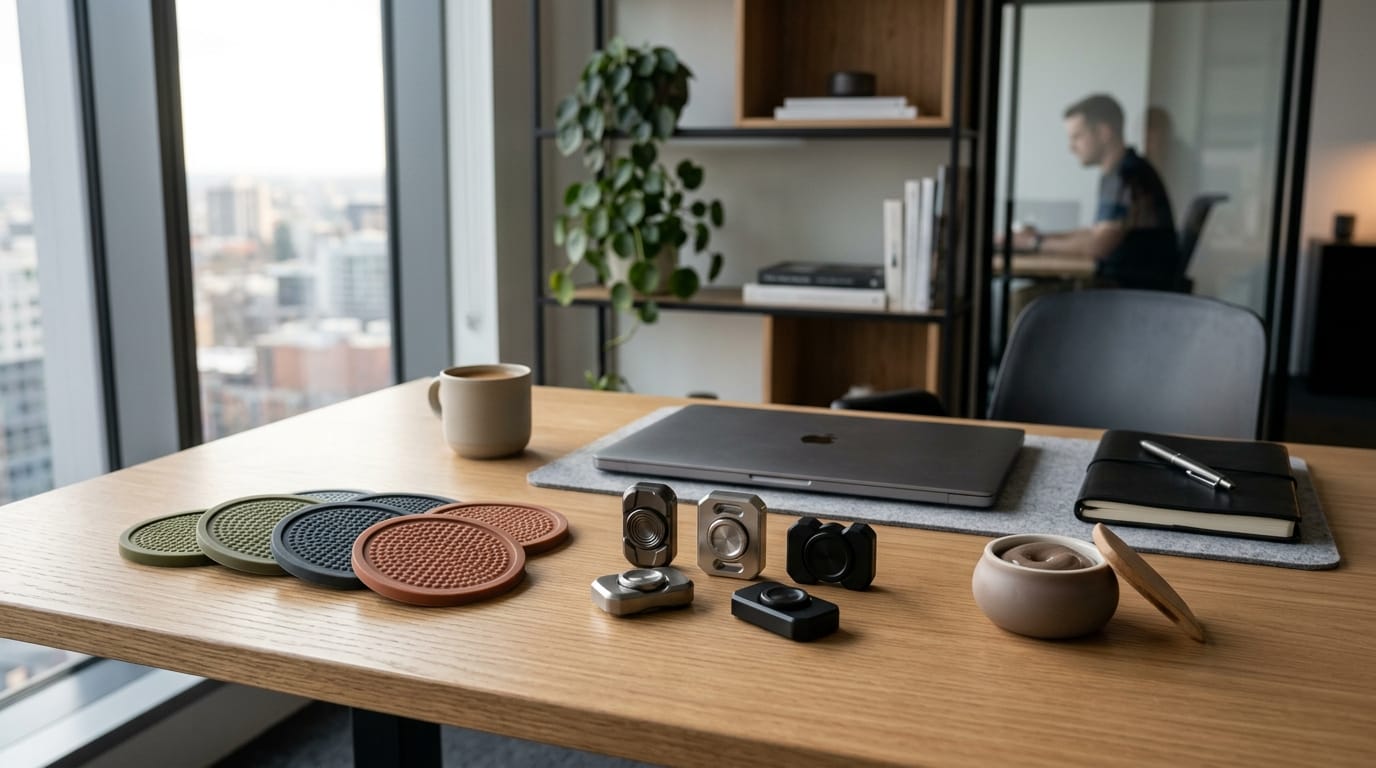
A critical component of this shift involves selecting tools that integrate into high-stakes environments without compromising professional decorum. As noted by Project Ratchet, “We chose Crazy Aaron’s Thinking Putty as our top budget fidget replacement because it hits the sweet spot of being engaging, versatile, and socially acceptable. Unlike obvious fidget spinners or toys that might feel juvenile, putty can be used somewhat subtly (under a desk, in one hand) and doesn’t make noise.” This approach reflects a broader market trend where 39% of sensory tools now feature sophisticated, non-disruptive interactivity.
Looking ahead, the market is poised to reach USD 22.8 billion by 2033, driven by a North American sector that already controls 53% of the industry. Future innovation is currently being tested in clinical settings, including a 12-week trial measuring the efficacy of vibration-based bracelets. As we integrate these tools, the focus remains on leveraging screen-free, tactile engagement—supported by a stress toy market projected to grow to $7.95 billion by 2030—to foster sustained neurological regulation in the modern workplace.
Choosing Your Tool: A Guide to Effective Substitution
As we navigate the professional landscape of 2026, the transition from novelty fidget devices—which famously characterized the early, chaotic popularity of spinners—to sophisticated therapeutic instruments is nearly complete. With the global sensory toys market currently valued at USD 2.46 billion and projected to hit USD 6.16 billion by 2035, the emphasis has shifted toward tools that blend seamlessly into clinical or corporate environments. This evolution is vital, especially given that 18-22 percent of adults regularly engage in maladaptive behaviors like nail-biting while working. Clinical data confirms that such replacement behaviors are far more effective than willpower alone, showing a 53% reduction in habits during six-week trials compared to just 20% for those relying solely on inhibition.
Modern tool selection prioritizes aesthetics that mitigate social stigma. According to industry trend analysis, “The trend is towards toys that use sophisticated, muted color palettes (like the popular Morandi colors), natural wood finishes, and minimalist designs.” This departure from bright, juvenile plastic represents a broader shift in the stress toy market, which is anticipated to reach USD 7.95 billion by 2030 at a CAGR of 6.1%. Beyond visual appeal, functionality is increasingly quiet and tactile; we are seeing a move toward magnetic mechanisms and haptic feedback that avoids disruptive noise.
The integration of technology also defines the current standard of care. With 39% of new 2024 sensory toys incorporating light, sound, or vibration interactivity, users can now access tools that provide structured sensory input. For instance, a 12-week clinical trial is currently evaluating the efficacy of vibration-based bracelets as a formal intervention for body-focused repetitive behaviors. Looking further ahead, the market is expected to reach USD 22.8 billion by 2033, driven by the increasing synthesis of AI and digital elements into screen-free sensory tools. As North America maintains its 53% market share, the focus remains clear: effective substitution requires tools that are as aesthetically unobtrusive as they are neurologically rewarding.
Conclusion: From Distraction to Deliberate Calm
The trajectory of sensory regulation has evolved significantly since the early, viral era of fidget spinners, moving from ephemeral fads toward a sophisticated pillar of mental health management. As the global sensory toys market—valued at USD 2.46 billion in 2026 and projected to reach USD 6.16 billion by 2035—demonstrates, we are witnessing a fundamental shift in how professionals manage the internal friction of the modern workplace. For the 18-22 percent of adults who grapple with chronic nail-biting during office hours, the transition from unconscious habit to intentional self-regulation is no longer a matter of mere willpower, which yielded only a 20% success rate in recent trials compared to a 53% reduction through structured replacement behaviors. This Why Keeping Your Hands Busy Helps Calm Your Mind approach validates the observation that “Repetitive, small movements—like clicking, twisting, or spinning—can help regulate the nervous system, reduce anxiety, and improve concentration,” according to Made-in-China Insights.
Innovation is currently pacing alongside this clinical demand, with North America leading the market with a 53% share, characterized by an influx of muted, sophisticated designs that prioritize discretion and magnetic tactile feedback. With 39% of 2024 sensory toy launches integrating digital interactivity, and ongoing 12-week clinical trials testing vibration-based wearables, the future is clear: we are moving toward a synthesis of technology and biology. While the stress toy market alone tracks toward a USD 7.95 billion valuation by 2030, the broader horizon suggests a potential market of USD 22.8 billion by 2033, fueled by AI-driven, screen-free therapeutic tools. As we move beyond the stigma of the fidget, we empower the workforce to replace mindless distraction with deliberate, steadying calm. By Kevin Lee.