
Sharpening Focus with Quiet Desk Tools
By Kevin Lee | 5/1/2026
The Digital Fatigue Trap: Why Your Phone is a Failed Reset
In the high-velocity landscape of 2026, the modern knowledge worker operates in a state of perpetual cognitive fragmentation, toggling between applications approximately 300 times a day—an average of once every 24 seconds. This rapid-fire switching is not merely an inconvenience; it represents a significant drain on executive function, capable of inducing a productivity loss of up to 40% when tackling complex tasks. As we attempt to recalibrate, many reflexively reach for the smartphone, mistakenly viewing screen time as a cognitive reset. However, clinical data suggests that the digital environment offers no such sanctuary. According to WellOclock, “Every ping, buzz, and notification feels harmless, yet recovery from each digital interruption takes 23 minutes, resulting in up to 3.8 hours of lost productivity per day with just 10 interruptions.”
This persistent digital friction has catalyzed a paradigm shift in how we approach focus. While ASMR evolved from niche internet culture into a mainstream wellness intervention, clinicians have increasingly pivoted toward tangible, low-tech interventions. To understand why your nervous system may be rejecting the pixelated screen in favor of physical grounding, see Why Your Brain Craves Tactile Satisfaction and Everyday ASMR. Currently, 72% of therapists recommend fidget tools as a standard clinical practice to manage anxiety and enhance attention, a trend that reflects the broader movement toward multimodal sensory regulation. With the ADHD productivity tools sector projected to hit $7.55 billion by 2033, it is clear that the future of focus lies in moving away from the screen. Research indicates that even micro-breaks as short as 40 seconds—if spent engaging with tactile inputs rather than digital streams—are sufficient to meaningfully improve attention and task performance. By Kevin Lee.
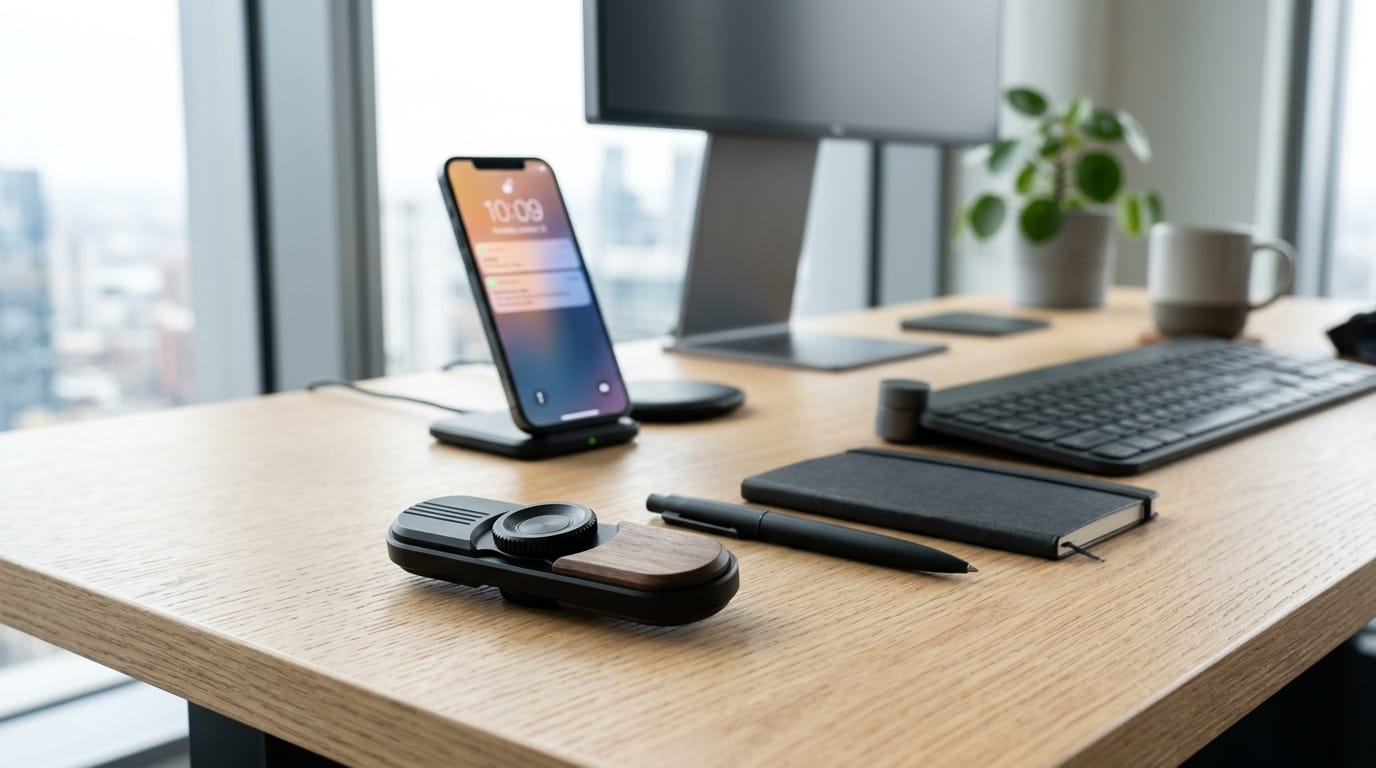
The Science of Tactile Anchoring: How Quiet Motion Locks in Focus
In our hyper-connected landscape of 2026, the cognitive cost of digital fragmentation has reached a critical threshold. Knowledge workers now toggle between applications roughly 300 times a day—an average of once every 24 seconds—compelling the brain to engage in constant, energy-draining context switching. Research indicates that this fragmentation can lead to a 40% loss in productivity for complex tasks, with recovery from a single digital interruption requiring an average of 23 minutes. Compounded by 10 such interruptions, professionals face up to 3.8 hours of lost productivity daily. It is against this backdrop of cognitive fatigue that tactile anchoring has emerged as a clinical necessity, with 72% of therapists now recommending sensory desk tools to manage anxiety and reclaim focus, a transition that has helped drive the ADHD productivity tool sector toward a projected $7.55 billion valuation by 2033.
The biological efficacy of these tools lies in the mechanism of sensory modulation. When we engage with tactile instruments, we activate somatic pathways that bypass the hyper-stimulated prefrontal cortex. As noted in the Zenify 2026 Stress Relief Guide, ‘Sensory Grounding: Touch receptors send signals to your brain that compete with stress signals.’ This competition acts as a neural circuit breaker, effectively dampening the ‘fight-or-flight’ response that characterizes high-pressure work environments. By engaging both the analytical and sensory hemispheres of the brain, quiet motion facilitates a state of balanced attention. Even micro-breaks as short as 40 seconds—long enough to perform a series of tactile interactions—are sufficient to recalibrate the neural network, improve sustained attention, and counteract the deleterious effects of the modern digital churn.
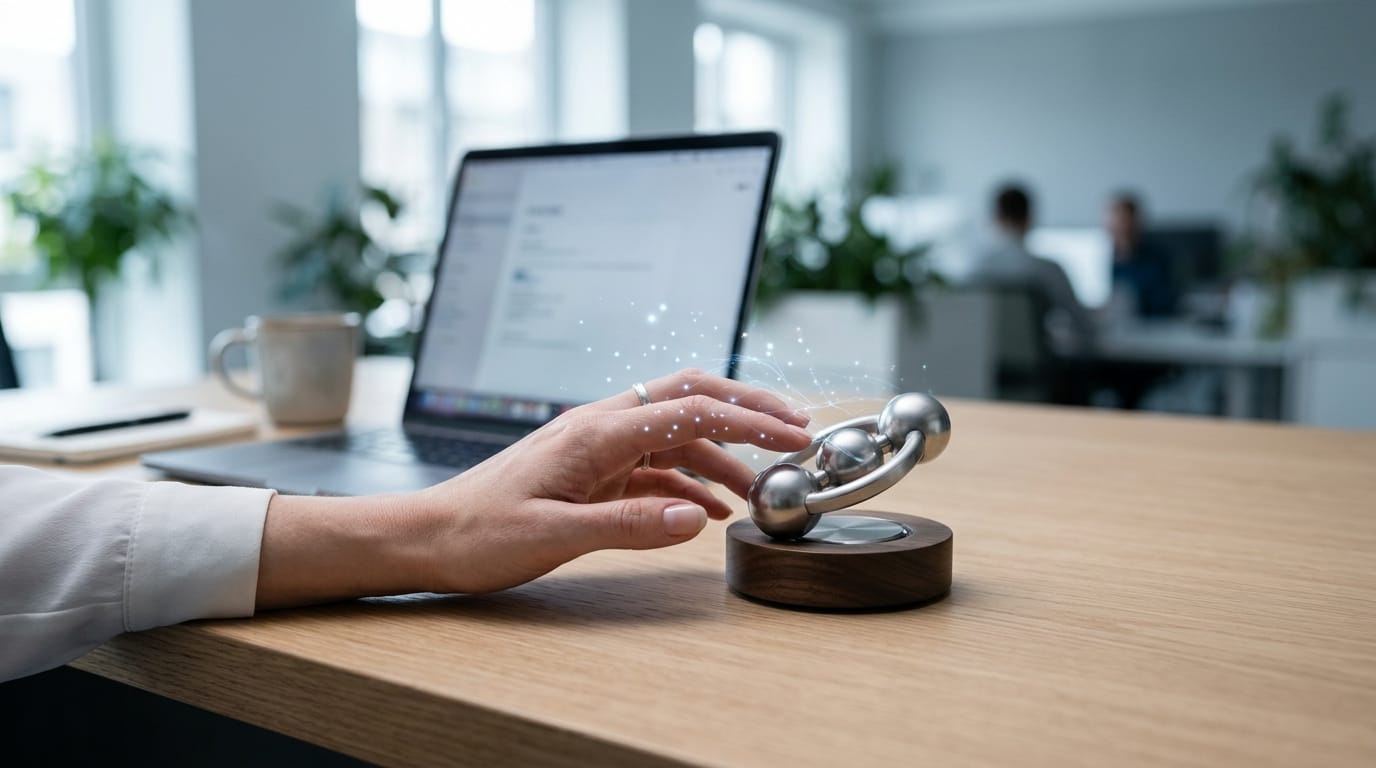
From Distraction to Deep Work: The Role of Productive Micro-Breaks
In the high-velocity landscape of 2026, the modern knowledge worker operates under a persistent cognitive load, toggling between applications approximately 300 times daily—an average frequency of once every 24 seconds. This hyper-fragmented workflow exacts a severe toll on output; data indicates that task-switching on complex assignments can result in a productivity loss of up to 40%. When a digital interruption occurs, the psychological recovery cost is significant, requiring an average of 23 minutes to regain full cognitive immersion. Compounded, just 10 such daily interruptions account for nearly 3.8 hours of lost productivity, effectively hollow-ing out the workday.
To combat this digital erosion, the clinical community has shifted its approach to recovery. While the past decade saw the rise of niche sensory experiences like ASMR, we have now entered a phase of practical, desk-based sensory integration. As noted in research, 40-second micro-breaks are sufficient to improve attention and task performance. This finding underscores a critical pivot: instead of seeking stimulation through screen-based escapes, employees are turning to tactile resets. The mainstreaming of these tools is evidenced by the fact that 72% of therapists now formally recommend fidget devices to manage focus and anxiety. With the ADHD productivity tools sector projected to reach $7.55 billion by 2033, the market is betting heavily on multimodal interventions that replace the dopamine-depleting trap of digital context-switching with the grounding efficacy of physical, productive micro-breaks.

Curating the Quiet Desk: Matching Sensory Tools to Specific Tasks
In an era where knowledge workers toggle between applications an average of 300 times daily—roughly once every 24 seconds—maintaining cognitive flow is a primary clinical challenge. Research indicates that recovery from a single digital interruption takes approximately 23 minutes, and with task-switching accounting for a 40% loss in productivity for complex projects, the modern workstation requires more than just ergonomic chairs. It requires sensory regulation. As 72% of therapists now integrate fidget tools into clinical practice to manage anxiety and focus, the adult-oriented productivity market has shifted toward high-utility, discreet instrumentation, with the ADHD productivity tools sector projected to reach $7.55 billion by 2033.
For the professional environment, the transition from disruptive mechanical toys to multimodal, silent tools is essential. Micro-breaks as brief as 40 seconds have been shown to significantly bolster sustained attention, provided they do not introduce auditory distraction. Tools such as ONO rollers offer fluid, repetitive kinesthetic feedback that promotes focus without the tactile noise that often characterizes recreational toys. Similarly, Odds silicone magnets are specifically designed for this professional constraint; they are crafted to sit smoothly in the palm of the hand, providing a satisfying, haptic sensory experience that remains entirely silent. By curating a desk with these specialized, low-profile devices, professionals can mitigate the cumulative impact of 10 daily digital interruptions, which can otherwise result in nearly four hours of lost productivity, ensuring that the physical workspace supports, rather than hinders, deep work.
Beyond the Fidget: Building a Professional Routine for Mental Resets
In the modern cognitive landscape, the fragmentation of attention has become a clinical concern. Knowledge workers now toggle between applications roughly 300 times a day—an average of once every 24 seconds—which contributes to a significant cognitive tax. Research indicates that task-switching can siphon up to 40% of productivity for complex assignments, and a single digital interruption requires an average of 23 minutes for the brain to fully recover focus. With just 10 such interruptions daily, professionals face up to 3.8 hours of lost potential, making the integration of micro-breaks essential. Evidence suggests that brief resets as short as 40 seconds are sufficient to significantly improve attention and overall task performance.
The therapeutic approach to these focus deficits has shifted dramatically; where sensory tools were once dismissed as trivial, 72% of therapists now formally recommend fidget tools for managing stress and focus, a trend validated by the WPsych Service review of adult sensory tools. As ASMR transitioned from niche internet culture to mainstream wellness, the professional adoption of discrete tactile devices followed. Experts note that “The Fidget Pen easily blends into almost any setting, offering a ‘hidden in plain sight’ experience,” allowing users to regain composure without disrupting the professional environment. By leveraging these multimodal tools, which combine tactile, auditory, and visual feedback, the ADHD productivity sector is evolving rapidly and is projected to reach $7.55 billion by 2033.
Summary: Reclaiming Your Workspace from the Screen
The data surrounding modern knowledge work is sobering: with professionals toggling between applications every 24 seconds, we face a cumulative deficit where task-switching consumes up to 40% of our daily productivity. The cognitive tax of these digital interruptions is profound, as recovering from a single disruption takes an average of 23 minutes, leading to nearly four hours of lost efficiency per day from just ten interruptions. However, the path to cognitive restoration is surprisingly accessible. As we explore Why Your Brain Craves Tactile Satisfaction and Everyday ASMR, it becomes clear that micro-breaks as brief as 40 seconds are sufficient to reset neural focus.
The integration of sensory tools into the workplace has evolved from niche internet subcultures into a standardized clinical approach. With 72% of therapists now actively recommending fidget tools to manage anxiety and focus, the industry is responding with a projected market growth to $7.55 billion by 2033. These multimodal solutions are no longer mere distractions; they are therapeutic instruments of stability in a fragmented digital landscape. As noted in the 2026 Guide to Desk Stress Relief Tools, “Your workspace should actively support your mental health, not merely accommodate it.” This represents a fundamental philosophical shift: we must move away from the passive resignation of the screen-bound environment and toward an active, intentionally designed workspace that protects our attention and preserves our psychological well-being. — Kevin Lee
Frequently Asked Questions
Quiet desk tools reduce auditory clutter and sensory overload in high-pressure medical environments. By minimizing distracting mechanical noises, these items allow healthcare professionals to maintain deep concentration on critical diagnostic tasks. This promotes a calmer workspace, lowering stress levels and enhancing precision during complex administrative documentation or patient chart reviews.
Yes, many modern silent desk tools prioritize ergonomic design alongside noise reduction. These accessories help maintain neutral posture and reduce repetitive strain during long shifts. By integrating smooth, whisper-quiet operations, they prevent micro-stressors that contribute to physical fatigue, ultimately supporting the long-term musculoskeletal health and sustained performance of medical staff.
Incorporating quiet tools into consult rooms helps create a tranquil atmosphere, which is essential for patient comfort. By eliminating harsh clicking or clattering sounds, clinicians can engage in more empathetic, uninterrupted communication. This professional environment fosters trust and reduces anxiety, leading to a more positive patient experience overall.
Expert Resources