
Micro-Breaks: Melting Away Desk Stress
By Kevin Lee | 4/23/2026
Introduction: The Sedentary Strain
In the high-pressure landscape of 2026, the modern professional is caught in a cycle of static exertion. While sedentary work is often viewed as physically passive, the biological reality reveals a different story: prolonged desk hours induce a persistent state of neural and muscular tension. We have moved past the era where sensory tools were relegated exclusively to pediatric therapeutic settings; today, they are becoming essential components of corporate wellness, effectively Why Keeping Your Hands Busy Helps Calm Your Mind. Clinical observations confirm that tactile stimulation can effectively lower the baseline firing rate of typing muscles and significantly reduce EMG activity, offering a measurable physiological reprieve from repetitive strain.
The economic data underscores this transition. According to The Business Research Company, the stress toy market size has reached 5.88 billion USD in 2025, and is projected to grow to 7.95 billion USD by 2030. This growth is mirrored by the broader sensory toys market, which is expected to reach 6.16 billion USD by 2035 with a steady 11% CAGR, with North America currently dominating 53% of the sector. What began with the global phenomenon of the fidget spinner has evolved into a sophisticated market where 39% of 2024 product launches integrated advanced digital elements like haptic vibration and responsive lighting.
For the modern high-performer, productivity is no longer about endurance, but precision. Science suggests that optimal micro-breaks, lasting between 2 and 5 minutes, are critical for mood stabilization and cognitive clarity. By aligning these breaks with natural attention cycles—typically every 25 to 52 minutes—professionals can sustain longer-term focus. As we look toward a future where market innovation shifts toward modular, eco-friendly, and aesthetic-conscious designs, these tools are cementing their role as legitimate instruments of professional regulation rather than mere distractions.

What is a Tactile Micro-Break?
A tactile micro-break is defined as a deliberate, short-duration pause designed to reset cognitive load through physical movement and sensory engagement. Moving beyond their origins as therapeutic tools for children with developmental needs, these interventions have gained mainstream clinical acceptance. Fidget spinners served as an early catalyst for this shift, and today, stress-relief implements are core components of corporate wellness programs. The economic data reflects this evolution; with the global sensory toys market projected to reach 6.16 billion USD by 2035 at an 11% CAGR, and the stress toy segment alone slated to hit 7.95 billion USD by 2030, these tools are becoming institutionalized productivity aids.
The efficacy of these breaks relies on precision timing. High-performers typically calibrate their workflow to align with natural attention cycles, integrating these breaks every 25 to 52 minutes. According to Neurosity research, “A break lasting roughly two to five minutes—long enough to allow gentle fidgeting, a brief stretch, or a quick visual reset but short enough to keep momentum—produces the strongest gains in focus and mood.” Physiologically, this interaction is critical; tactile stimulation has been shown to reduce electromyography (EMG) activity and lower the baseline firing rate of typing muscles, directly mitigating the fatigue associated with repetitive digital tasks.
As of 2025, North America commands 53% of the sensory market, driving an aesthetic shift toward modular, eco-friendly designs that integrate seamlessly into professional environments. Furthermore, product innovation is accelerating: 39% of sensory tools launched in 2024 now integrate digital elements such as haptic vibration or ambient light to further assist in sensory regulation. As we look toward the future of work, the tactile micro-break stands as a scientifically validated method for maintaining cognitive performance in an increasingly high-stimulus digital landscape.

The Science of Sensory Relief
As sensory tools transition from niche therapeutic applications for children into the bedrock of modern corporate wellness, their integration into professional environments has surged, with the North American market capturing a 53% share in 2025. This adoption is underpinned by rigorous neurophysiological evidence. When individuals engage in tactile manipulation during 2-to-5-minute micro-breaks—which high-performers are increasingly timing to align with natural attention cycles of 25 to 52 minutes—they are doing more than just fidgeting; they are recalibrating their motor control systems. As noted by leading research in Frontiers Partnerships, “This afferent influx triggers inhibitory interneurons that dampen excitatory drive to spinal α‑motor neurons, thereby lowering the baseline firing rate of the typing muscles and reducing EMG activity.”
This reduction in motor unit hyperactivity is complemented by a broader systemic dampening of the stress response. As the stress toy market races toward a projected 7.95 billion USD valuation by 2030, the sophistication of these interventions has evolved, with 39% of 2024 product launches incorporating digital elements like haptic feedback or light to further modulate the nervous system. With the broader global sensory toys market poised to reach 6.16 billion USD by 2035, the future of productivity lies in these modular, personalized designs that seamlessly integrate tactile relief into the ergonomic landscape of the high-pressure office.
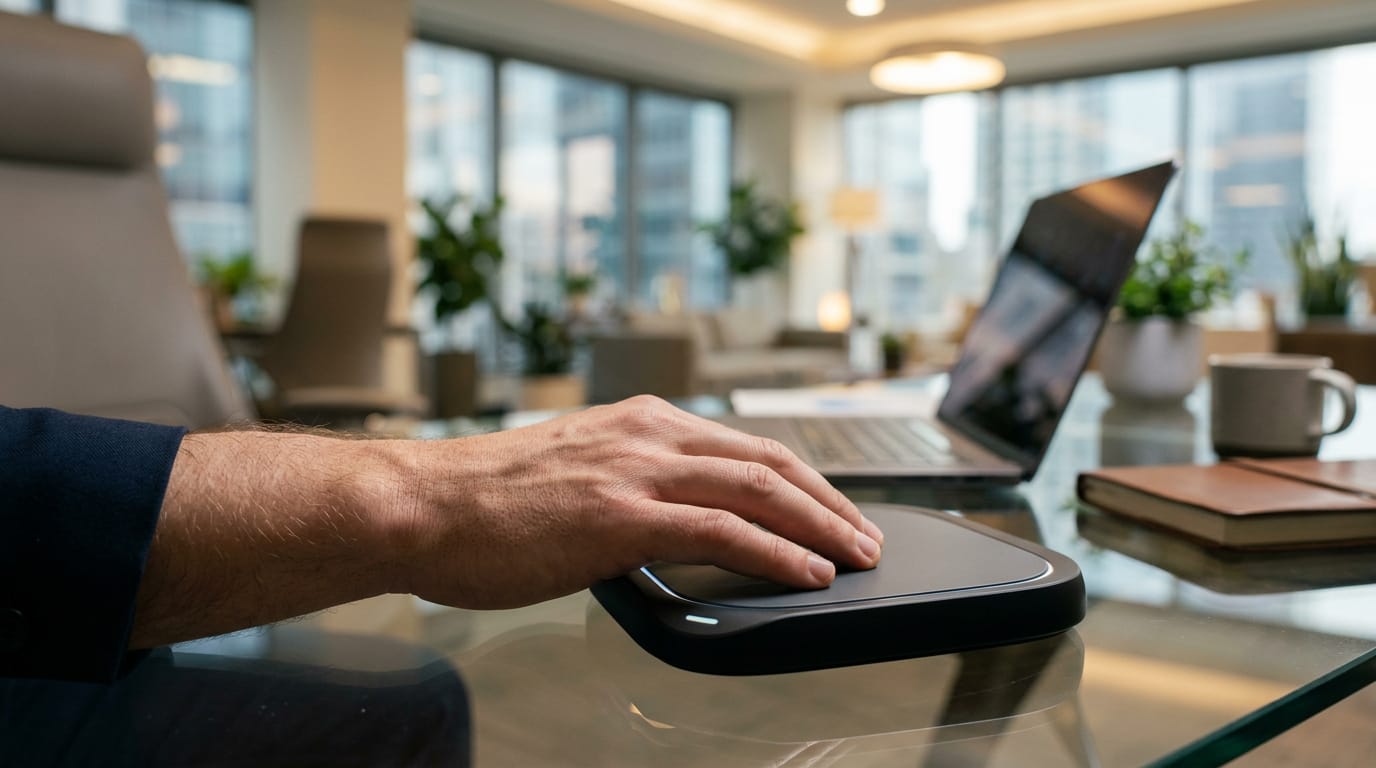
Desk-Friendly Tools for Quick Tension Release
In the modern high-performance workspace, the integration of tactile stimulation has evolved from niche therapeutic applications into a legitimate strategy for cognitive maintenance. As high-performers increasingly align their workflow with natural attention cycles—typically taking 2 to 5-minute micro-breaks every 25 to 52 minutes—the tools utilized during these intervals must balance professional aesthetics with functional efficacy. Tactile engagement during these periods has been shown to lower the baseline firing rate of typing muscles, effectively reducing electromyographic (EMG) activity. While the sensory toy market is projected to reach 7.95 billion USD by 2030, the shift toward executive-grade equipment is palpable. North America currently leads this adoption, holding a 53% share of a market slated to hit 6.16 billion USD by 2035 with an 11% CAGR.
Contemporary design has moved well beyond the early era of plastic fidget spinners, favoring modular and sustainable materials that integrate seamlessly into a minimalist office environment. Professionals seeking sophisticated haptic feedback often gravitate toward tools that offer varied sensory input. As noted in Everyday Health, “The Crags Magnetic Putty from Speks offers the typical fun experience of playing with putty but with a slick feel and aesthetically pleasing hue.” This alignment of form and function represents a broader trend; with 39% of 2024 sensory tool releases now integrating digital elements such as haptic vibration or light, the future of productivity aids remains focused on personalization and the seamless integration of neurological support into the corporate workflow.
Integrating Micro-Breaks into Your Workday
In the evolving landscape of corporate wellness, the transition of sensory tools from niche therapeutic settings to mainstream productivity aids is becoming increasingly clinical. As the global sensory toy market heads toward a projected 6.16 billion USD valuation by 2035, the professional adoption of these tools reflects a growing understanding of physiological regulation. Tactile stimulation has been empirically shown to lower the baseline firing rate of typing muscles and reduce EMG activity, serving as a direct intervention against occupational strain.
To maximize these physiological benefits, strategic timing is essential. According to research on daily productivity rituals, these micro-breaks should be taken about every 25 to 52 minutes of sustained work, with many high-performers favoring a 30- to 45-minute interval that aligns with ultradian rhythms. Implementing a 2- to 5-minute break during these windows not only stabilizes mood but also preserves executive function throughout the workday.
The modern toolkit is advancing rapidly; with 39% of sensory tools launched in 2024 incorporating digital elements such as light or vibration, these devices are becoming sophisticated instruments for focus. As North America maintains a 53% market share, the integration of these tools into standard corporate workflows marks a pivot toward a more neuro-inclusive professional environment. By anchoring tactile engagement to your existing attention cycles, you transition from reactive stress management to a proactive, rhythm-aligned work strategy.
Conclusion: A Small Movement, A Big Difference
The evolution of sensory regulation from a niche therapeutic practice for children to a cornerstone of modern professional wellness is complete. As we look ahead, the data is undeniable: with the global sensory toys market projected to reach 6.16 billion USD by 2035 at an 11% CAGR, and the stress toy market expected to hit 7.95 billion USD by 2030, the shift toward tactile support is more than a fleeting trend—it is a functional requirement for the cognitive age. According to The Business Research Company, “Major trends in the forecast period include rising adoption of stress toys in corporate wellness programs,” highlighting that these tools are now essential assets for the modern workforce.
We have moved far beyond the initial cultural flashpoint of fidget spinners. Today, the focus has shifted toward physiological efficacy; research confirms that targeted tactile stimulation can effectively lower the baseline firing rate of typing muscles and reduce EMG activity. This is particularly vital for high-performers who, by aligning their natural attention cycles, take optimal 2 to 5-minute micro-breaks every 25 to 52 minutes. For those interested in the underlying neuroscience, our previous coverage on Why Keeping Your Hands Busy Helps Calm Your Mind details how these small movements foster deep, sustained concentration.
As North America continues to lead with a 53% market share in 2025, the future of the sector—driven by eco-friendly, modular designs and the integration of digital elements seen in 39% of 2024 product launches—remains bright. By embracing these small, tactile interventions, we not only improve our physical comfort but unlock a more focused, sustainable mode of working. Small movements, as it turns out, make a very big difference. – Kevin Lee.