
Aesthetic Desk Toys for the Modern Home Office
By Kevin Lee | 4/26/2026
Introduction: The Rise of the Adult-Aesthetic Desk Toy
The sensory tool landscape has undergone a profound metamorphosis since the 2017 fidget spinner craze, which initially pigeonholed these devices as transient, plastic-based classroom distractions. Today, we are witnessing the emergence of the ‘Everyday Carry’ (EDC) culture, where sensory regulation is no longer the exclusive domain of childhood development. As research continues to validate the cognitive benefits of tactile engagement—detailed further in our analysis on Why Keeping Your Hands Busy Helps Calm Your Mind—professionals are increasingly integrating these tools into their workspace to manage anxiety and enhance focus.
The economic data underscores this professional pivot. The Global Sensory Toys Market is valued at 2.46 billion USD in 2026 and is projected to reach 6.16 billion USD by 2035, growing at a CAGR of 11%. Notably, adults now account for 42% of global fidget-toy revenues. This demographic shift has fundamentally altered design expectations, with 62% of adult users demanding discreet, executive-style aesthetics that favor minimalism over playfulness. Consequently, the industry has transitioned from five-dollar plastic novelties to premium metal instruments priced between 45 USD and 150 USD, designed for longevity and prestige.
For the modern office, form is as vital as function; silent operation, defined as being under 30 dB, has become a mandatory performance metric to ensure unobtrusive use in high-stakes environments. Furthermore, innovation is accelerating, with 39% of sensory tools launched in 2024 incorporating advanced features like haptic feedback. As North America maintains its 53% market share, the future of this sector points toward a synthesis of ergonomics and technology, integrating screen-free, AI-driven feedback loops that offer emotionally aware support. By Kevin Lee.
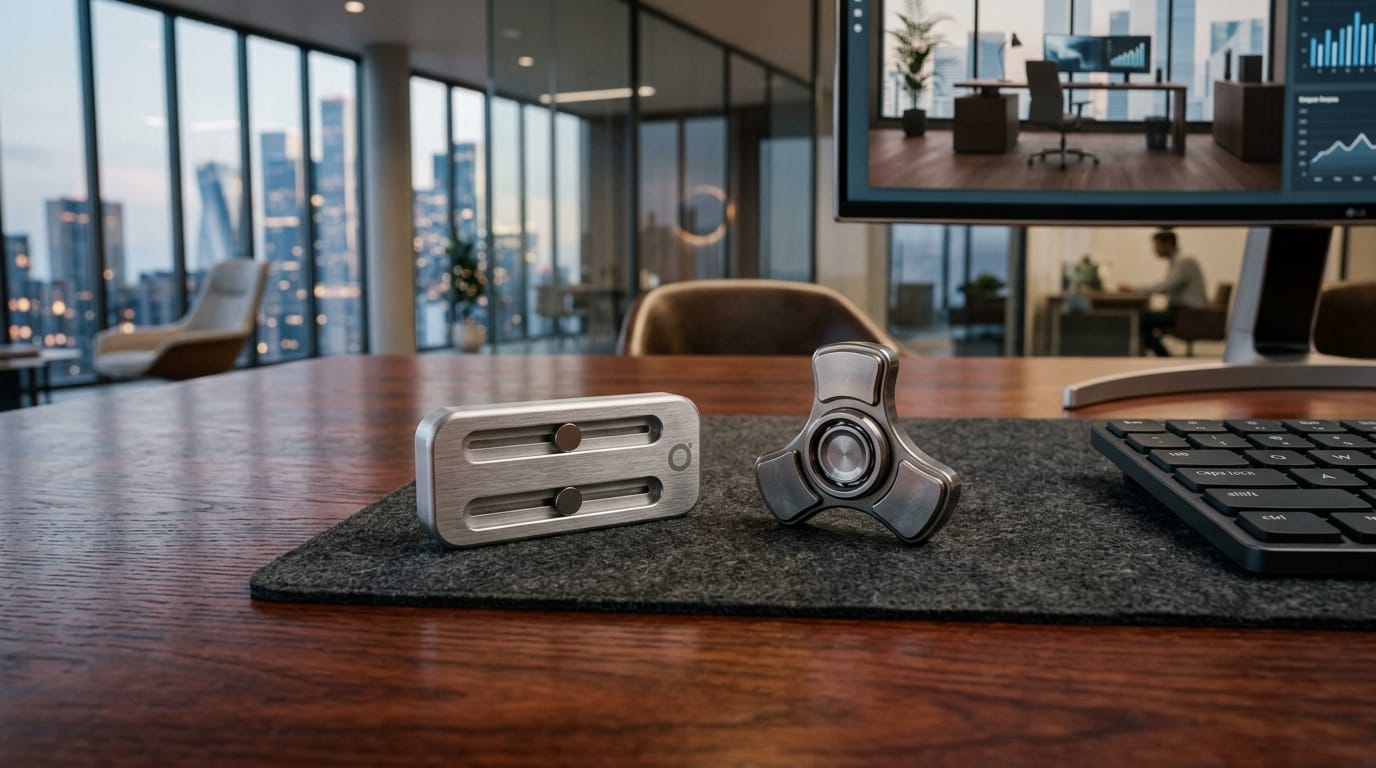
Why Aesthetics Matter for Adult Workspace Adoption
The evolution of sensory tools has reached a critical inflection point, moving far beyond the 2017 fidget spinner craze that tethered these devices to flimsy plastic and classroom distraction. As of 2025, adults account for approximately 42% of global fidget-toy revenues, signaling a transition from recreational playthings to professional-grade regulation tools. The market is currently maturing into an ‘Everyday Carry’ (EDC) culture, where the preference for high-quality, tactile instruments reflects a broader demand for tools that integrate seamlessly into executive environments. According to industry analysis, 62% of adults prioritize discreet, executive-style aesthetics in sensory tools, favoring minimalist designs over the vibrant, juvenile motifs of the past.
This shift in consumer psychology is reflected in the premiumization of the sector. While plastic fidget devices typically retail for 5-10 USD, the demand for sophisticated, adult-oriented instruments has pushed price points for precision-engineered, premium metal fidget tools to between 45 USD and 150 USD. This trend is driven by specific professional constraints; specifically, silent operation—defined as under 30 dB—is now a non-negotiable requirement for workplace adoption. As the global sensory toy market is projected to reach 6.16 billion USD by 2035, with North America currently maintaining a 53% market share, manufacturers are increasingly pivoting toward professional utility. By 2024, 39% of new sensory products integrated digital elements such as haptic feedback, paving the way for a future defined by AI-enhanced, screen-free sensory experiences that offer personalized, emotionally aware regulation without disrupting the professional workflow.
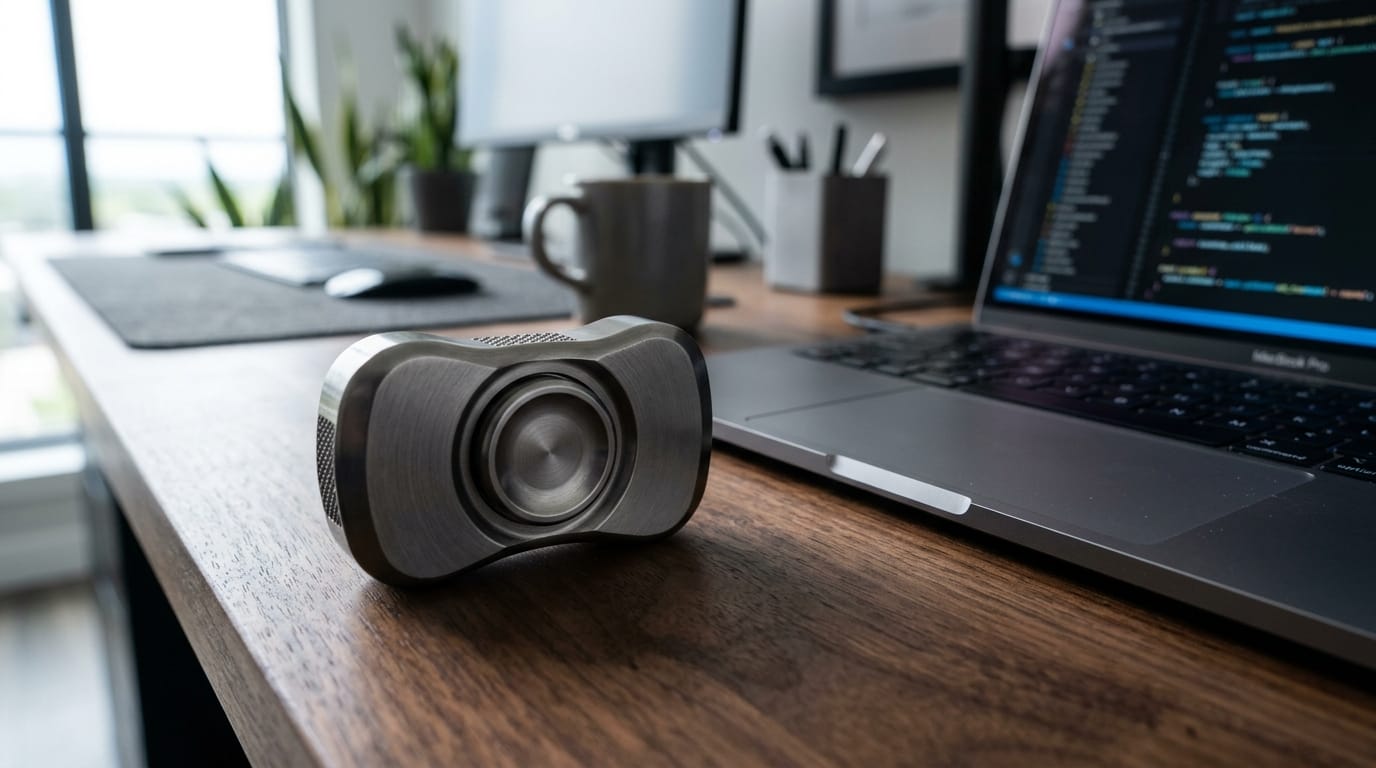
Key Design Elements of Premium Sensory Tools (Materials, Colors, Forms)
The sensory tool landscape has undergone a significant paradigm shift since the 2017 fidget spinner craze, which initially tethered the product category to low-cost plastic and classroom disruptions. As the global sensory market trends toward a projected valuation of 6.16 billion USD by 2035, with North America currently commanding a 53% market share, we are witnessing a migration from disposable novelties to ‘Everyday Carry’ (EDC) culture. This maturation is driven largely by adult consumers, who now account for approximately 42% of global revenues. As noted in Startinal Toys, “The trend is towards toys that use sophisticated, muted color palettes (like the popular Morandi colors), natural wood finishes, and minimalist designs.”
This aesthetic pivot is not merely stylistic but functional; 62% of adults now prioritize discreet, executive-style designs that integrate seamlessly into professional environments. Consequently, manufacturers have replaced loud, kinetic components with precision-engineered mechanics that ensure silent operation—strictly maintaining levels under 30 dB. This emphasis on quality is reflected in the pricing architecture: whereas traditional plastic tools remain in the 5–10 USD range, premium metal fidget toys often retail between 45 USD and 150 USD, reflecting the use of medical-grade aluminum, brass, and titanium. Looking forward, these physical refinements are increasingly augmented by technology; 39% of sensory tools launched in 2024 integrated discreet digital elements, such as nuanced haptic feedback. This progression toward screen-free, emotionally aware sensory experiences represents the future of the industry, moving beyond simple tactile stimulation to provide sophisticated, personalized relief for the modern professional.
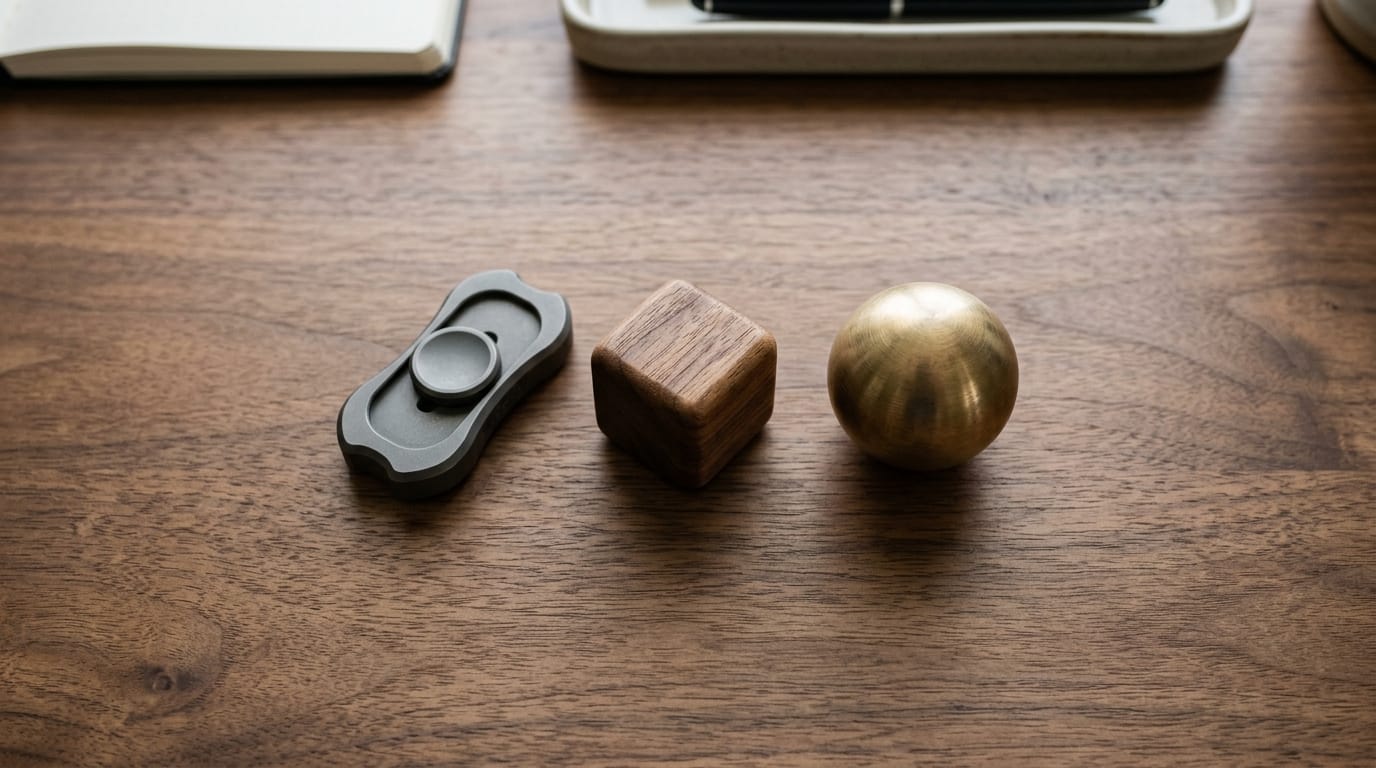
Showcase: Examples of High-Design Desk Toys for Modern Offices
The evolution of the workplace sensory tool has transitioned from the disposable, high-noise plastic gadgets of the 2017 fidget spinner craze to the sophisticated, ‘Everyday Carry’ (EDC) culture we see today. With North America currently commanding a 53% market share in the sensory toy industry and global revenues projected to reach 6.16 billion USD by 2035, the demand for high-design, professional-grade tools is clear. As of 2025, adults drive 42% of global fidget-toy revenues, and with 62% of this demographic prioritizing discreet, executive-style aesthetics, the industry has pivoted toward premium materials like aerospace-grade aluminum and brass.
These refined instruments, which often command prices between 45 USD and 150 USD, are engineered for silent operation, strictly maintaining levels under 30 dB to ensure they remain non-disruptive in open-office environments. For instance, the Crags Magnetic Putty from Speks offers the typical fun experience of playing with putty but with a slick feel and aesthetically pleasing hue, bridging the gap between tactile utility and modern office decor. Beyond traditional materials, we are also observing a technological shift; 39% of sensory tools launched in 2024 have begun integrating advanced elements such as haptic feedback. Looking toward the future, the integration of AI-driven, screen-free digital mechanisms promises a new era of personalized, emotionally aware sensory regulation, allowing professionals to maintain peak cognitive focus through tools that align with both their professional image and their neurological well-being.
How to Integrate Sensory Tools into a Stylish Workspace
The evolution of sensory regulation tools has transitioned from the plastic-heavy, distraction-prone reputation of 2017 to the sophisticated “Everyday Carry” (EDC) culture we observe in 2026. As adults now account for 42% of global fidget-toy revenues, the demand for equipment that aligns with professional environments has surged. With 62% of users prioritizing discreet, executive-style aesthetics, the industry has pivoted toward premium materials, with high-end metal fidget tools—often ranging from 45 USD to 150 USD—replacing low-cost plastic alternatives. Central to this integration is the necessity for silent operation, as tools must maintain noise levels under 30 dB to remain unobtrusive in a corporate setting.
Integrating these tools effectively requires a shift toward minimalist organization. According to guidance from Olander Earthworks, you should “create a small, dedicated “fidget zone” that feels like a curated accent rather than clutter by placing the toys in a minimalist tray or on a sleek metal grid.” This approach allows users to anchor their tactile needs within biophilic elements, such as placing a haptic-responsive slider next to a potted succulent or a stone desk accessory. Given that 39% of sensory tools launched in 2024 featured integrated digital haptic feedback, these devices are increasingly viewed as functional hardware rather than mere playthings. As North America maintains a 53% market share in an industry projected to reach 6.16 billion USD by 2035, curating your workspace with these premium, intentionally designed objects not only prevents clutter but also facilitates the personalized, screen-free sensory support necessary for sustained cognitive performance.
Conclusion: Blending Form and Function for Better Focus
As we navigate the maturation of the sensory tool market—projected to reach 6.16 billion USD by 2035—it is clear that we have moved well beyond the 2017 fidget spinner craze. While that era was marred by cheap plastic and associations with classroom distraction, the current landscape reflects the rise of ‘Everyday Carry’ (EDC) culture. With 42% of global fidget-toy revenue now driven by adults, the industry has pivoted toward premium materials, silent mechanisms operating under 30 dB, and minimalist aesthetics that align with the preferences of 62% of consumers who prioritize executive-style design.
This evolution into sophisticated, durable tools underscores Why Keeping Your Hands Busy Helps Calm Your Mind, particularly in high-pressure professional environments. As noted by industry experts, “A beautifully designed toy is more likely to be left out in the living room, leading to more play” (Startinal Toys). This philosophy explains why professionals are increasingly investing in premium metal tools costing between 45 USD and 150 USD, rather than entry-level plastic alternatives. North America remains at the forefront of this shift, commanding a 53% market share.
Looking ahead, the integration of screen-free digital elements, such as the haptic feedback found in 39% of products launched in 2024, points toward a future of personalized, emotionally aware sensory support. By blending form and function, these tools have become legitimate professional accessories that bolster well-being through intentional, curated design. As we integrate AI to enhance these experiences without adding to our screen-time fatigue, the role of these devices in our cognitive toolkit will only become more essential. – Kevin Lee