
Finding Your ASMR Fit: Matching Triggers to Sensory Tools
By Kevin Lee | 5/1/2026
Introduction: Moving Beyond the Screen—The Rise of Tangible ASMR
For years, the Automated Sensory Meridian Response (ASMR) phenomenon thrived exclusively within the digital realm, evolving from a niche subculture into a cornerstone of mainstream wellness. While the ubiquity of screen-based auditory triggers bridged the gap to relaxation, we have entered a new era of sensory regulation. Today, the focus is shifting toward ‘multimodal’ tools—devices that harmonize tactile engagement with auditory or visual feedback to ground the user in their immediate environment. As Why Your Brain Craves Tactile Satisfaction and Everyday ASMR explains, the transition from passive consumption to active manipulation marks a critical development in stress management.
The efficacy of this shift is backed by mounting clinical evidence. Tactile stress relief tools have been shown to reduce cortisol levels by 31%, while users report that focus duration improves by 28% when utilizing these devices during workplace breaks. Furthermore, data indicates that 65% of first-time adopters maintain regular use after six months, with 45% continuing the habit after one year. For the professional environment, engineering has matched this demand; magnetic sliders typically register noise levels below 30dB, and silent-roller designs are meticulously engineered to operate in the nearly imperceptible 3-8dB range. High-precision manufacturing ensures that metal dome snap ratios consistently hit the 40% to 60% threshold, providing the clear, satisfying tactile actuation points users require to break the cycle of digital fatigue.
As we look toward a future where haptic feedback is integrated into standard office furniture and clinical validation expands for non-weighted tools, it is clear that, as noted in a recent Zenify 2026 Guide, “the solution often sits within arm’s reach on your desk.” Moving beyond the digital screen allows for a more immediate, physical form of regulation—a necessary evolution as weighted tools continue to provide Grade A clinical support for sleep and anxiety, proving that the most effective interventions are often the most tangible.
Decoding Your Sensory Profile: Are You a Seeker or an Avoider?
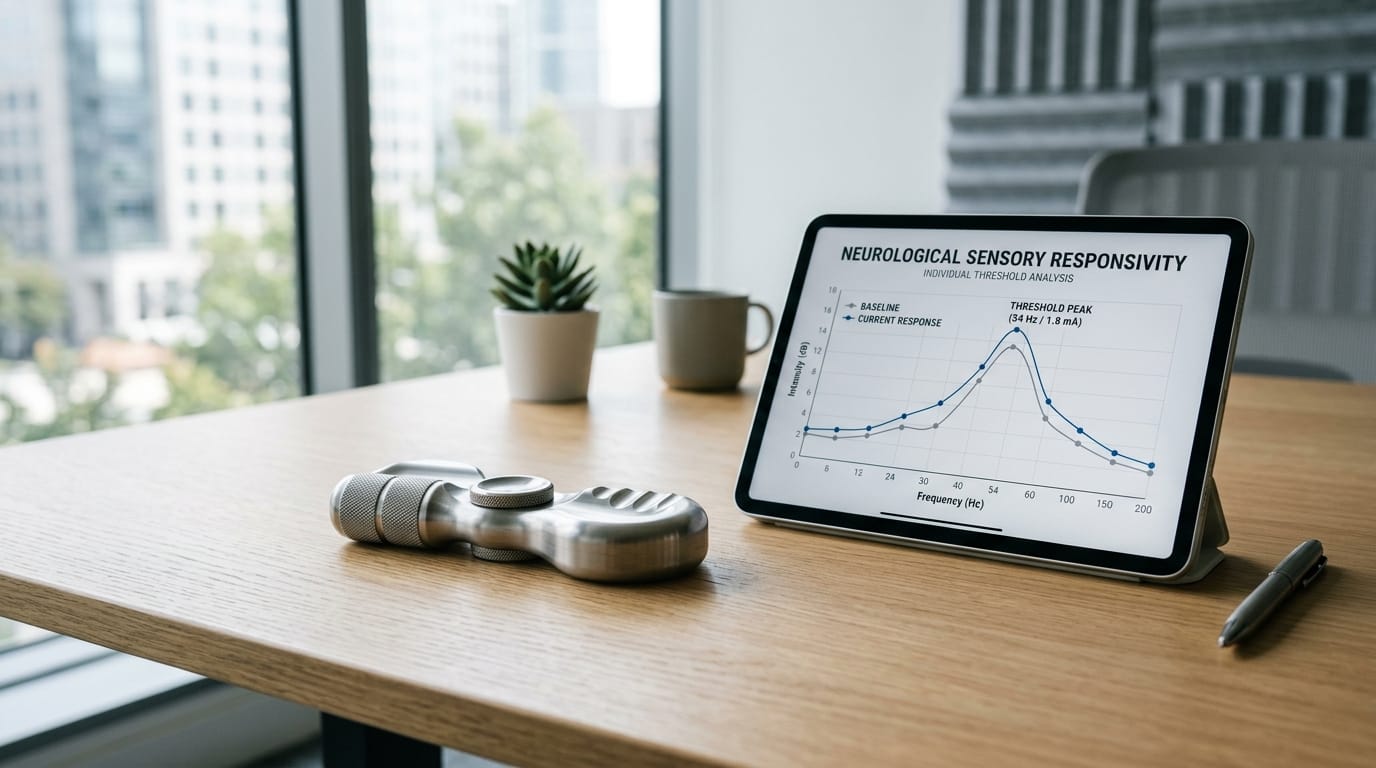
To understand why a tactile tool might soothe one professional while distracting another, we must look to the four quadrants of sensory processing. As explored in the Adult’s Guide to Sensory Processing, individuals operate on a spectrum of neurological thresholds. For instance, the Sensitive Avoider experiences high neurological input with a low threshold, meaning they are easily overwhelmed by strong stimuli like crowded rooms or intense scents. Conversely, ‘Seekers’ require higher intensity inputs to maintain focus, a dynamic that explains why 65% of first-time adopters maintain sensory tool use after six months, rising to 45% who integrate these devices into their daily habits a year later.
The market has evolved significantly since ASMR transitioned from a niche subculture to a wellness framework, and the erratic ‘fidget spinner’ trend has matured into a sophisticated landscape of multimodal tools. Engineering now prioritizes specific acoustic and haptic profiles; while magnetic office sliders typically remain under 30dB, silent-roller designs are engineered to operate in the ultra-quiet 3-8dB range, accommodating those with lower sensory thresholds. Furthermore, we are seeing Grade A clinical backing for weighted tools in treating anxiety, and high-precision metal domes—which provide tactile actuation points between 40% and 60%—are now standard.
Data indicates that tactile stress relief tools can reduce cortisol levels by 31%, and productivity metrics show focus duration improves by 28% when these tools are utilized during breaks. As we look toward a future of integrated haptic feedback in office furniture, understanding whether you are a Seeker, Avoider, Sensitive, or Low Registration type is essential for selecting the right intervention. By aligning tool mechanics with your unique neurological profile, you move from reactive fidgeting to proactive sensory regulation.
The Trigger-Tool Matrix: Matching Specific Sensations to Physical Gadgets
As ASMR has evolved from a niche subculture into a robust wellness framework, the hardware utilized to induce sensory relaxation has undergone a parallel maturation. We now see a shift toward multimodal devices that synthesize auditory and tactile inputs. According to research on sensory play available at SuperSpace, the integration of tactile and auditory stimuli—specifically smooth surfaces paired with a satisfying magnetic click—provides the most immediate sensory regulation. This efficacy is underscored by clinical data showing that tactile stress relief tools reduce cortisol levels by 31%, with workplace focus duration improving by 28% when such tools are utilized during breaks.
For the modern office environment, the hardware must balance sensory feedback with professional discretion. Magnetic sliders, which rely on metal dome snap ratios of 40% to 60% for clear actuation, typically operate below 30dB, while advanced silent-roller designs achieve near-total stealth in the 3-8dB range. The transition from the era of novelty fidget spinners to sophisticated adult-oriented sensory tools has been profound: 65% of first-time adopters maintain regular use after six months, and 45% solidify their usage as a daily habit after one year. As we look toward a future where haptic feedback is integrated directly into standard office furniture, the current emphasis remains on these specialized instruments to manage anxiety and enhance cognitive flow.
Material Science of Calm: Why Metal, Silicone, and Wood Feel Different
The evolution of sensory regulation tools—from the early normalization of fidget spinners to the current mainstream adoption of professional-grade stress relief instruments—highlights a profound physiological shift in workplace wellness. Research indicates that tactile stress relief tools are capable of reducing cortisol levels by 31%, with 65% of first-time adopters maintaining regular use after six months. As these implements become central to productivity, material science dictates their therapeutic efficacy. According to industry analysis, ‘Metal domes offer sharper tactile feedback. The snap ratio can reach 40% to 60%. That means users clearly feel the actuation point. The click is precise and clean. Silicone domes deliver a softer and quieter response.’ This structural distinction provides users with a spectrum of sensory stimulation: metal’s sharp actuation promotes alertness and high-fidelity feedback, while silicone provides a softer, noise-dampening experience that encourages grounding and calm.
Acoustics remain a critical design constraint; magnetic sliders for office use typically register noise levels below 30dB, while advanced silent-roller designs are engineered to operate in the ultra-quiet 3-8dB range. Beyond immediate sensory satisfaction, the long-term impact on professional output is significant, as focus duration improves by 28% when tactile tools are utilized during workplace breaks. Furthermore, data confirms that 45% of users integrate these sensory desk tools as a permanent daily habit after one year of use. As we move toward a future defined by the integration of haptic feedback into standard office furniture and surfaces, the clinical validation of these non-weighted tools continues to grow, supplementing the established efficacy of weighted devices, which already possess Grade A clinical backing for treating sleep and anxiety issues. By mastering the tactile-auditory interface, modern professionals are successfully shifting from erratic stress responses to a framework of multimodal, intentional regulation.
Contextual Fit: Selecting Tools for the Office, Bedroom, and Commute
In the evolving landscape of wellness, the integration of tactile stress relief has shifted from the niche origins of early ASMR to a standardized pillar of modern productivity. As clinical data confirms that these tools reduce cortisol levels by 31% and boost focus duration by 28% during brief intervals, the necessity of selecting the right instrument for one’s specific environment has never been more critical. The current market transition toward multimodal sensory tools—those blending tactile, auditory, and visual feedback—demands a sophisticated approach to selection, particularly in shared professional spaces.
For the office environment, discretion is paramount. To maintain professional decorum, users should prioritize instruments designed for acoustic anonymity. Magnetic sliders and silent-roller mechanisms represent the gold standard, often engineered to operate within the 3-8dB range or, at most, remain below 30dB. As noted in the Titan Fidget 2026 Guide, a high-quality tool must provide “near-silent operation—no audible sound above ambient office noise (under 30dB).” Utilizing devices with clear tactile actuation points, such as those with metal dome snap ratios between 40% and 60%, allows the user to achieve neurological stimulation without disrupting colleagues.
The long-term utility of these interventions is robust, with 65% of adopters maintaining regular use after six months and 45% integrating these sensory aids as permanent daily habits within one year. When transitioning to the bedroom, the focus shifts from silent focus to grounding and regulation; here, weighted tools—which carry Grade A clinical backing for treating sleep and anxiety disorders—are most efficacious. Looking toward the future, we anticipate the seamless integration of haptic feedback directly into office furniture. Until then, choosing tools that respect the acoustic and social boundaries of our environments remains the most effective path to sustained physiological and professional wellness.
From Purchase to Practice: Building a Sustainable Sensory Ritual
As we bridge the divide between temporary relief and longitudinal health, we must recognize that the evolution of sensory tools—from the niche origins of Why Your Brain Craves Tactile Satisfaction and Everyday ASMR to the current multimodal wave—has laid a foundation for institutional wellness. However, the data reveals a behavioral bottleneck: while 65% of adopters maintain use for six months, that retention rate shifts to 45% by the one-year mark. As noted in the 2026 Zenify Guide, “the barrier isn’t effectiveness; it’s the gap between buying tools and building habits around them.”
Closing this gap requires treating your workspace as an extension of your neurological regulation system. Given that tactile stress relief tools can reduce cortisol by 31% and extend focus duration by 28% during breaks, these implements should be viewed as clinical assets rather than clutter. To succeed, integrate tools that respect the acoustic privacy of the modern office; select magnetic sliders operating under 30dB or silent-roller designs at 3–8dB. Whether you prefer the precise 40% to 60% snap ratio of a metal dome or the stability of weighted tools with Grade A clinical backing, the key is spatial intentionality. By keeping these tools in a dedicated ‘sensory zone’ on your desk, you trigger a Pavlovian response that shifts your brain into a state of deep work. As we look toward a future of haptic-integrated office furniture, your current desk setup is the first iteration of a long-term strategy for cognitive longevity.
Frequently Asked Questions
To identify effective triggers, experiment with diverse auditory and tactile stimuli while monitoring your physiological responses. Keep a sensory journal to track which sounds, textures, or visual patterns consistently induce relaxation. Consulting a sensory integration specialist can also help personalize your approach based on your unique neurological processing requirements.
While ASMR is often self-directed, clinicians suggest high-fidelity audio equipment for precise trigger reception and textured tactile aids for grounding. It is essential to select tools that avoid overstimulation. We recommend discussing your specific sensory needs with a healthcare provider to ensure your chosen instruments support rather than overwhelm your nervous system.
Yes, evidence suggests that tailored ASMR interventions can significantly lower cortisol levels and heart rate in individuals with anxiety. By matching specific triggers to personal preferences, these tools create a controlled sensory environment that promotes autonomic nervous system regulation, providing a non-invasive, accessible method for managing stress effectively at home.
Expert Resources