
The Executive Fidget: Professional Sensory Tools for the Office
By Kevin Lee | 5/1/2026
The Modern Office: Why Sensory Regulation is the New Ergonomics
In the evolving landscape of 2026, the definition of a high-performance environment has shifted from mere physical posture to the deliberate management of the nervous system. While traditional ergonomics focused exclusively on lumbar support and screen height, modern HR departments now treat burnout as a board-level risk, necessitating sensory regulation as a core strategic intervention. This transition is long overdue, as the 2025 Spring Health Mental Health Report highlights that 44% of employees report higher stress levels compared to five years ago, often exacerbated by open-plan office ambient noise that typically ranges from 60 to 70 dB.
Sensory tools, once unfairly dismissed as niche internet culture or childhood artifacts, have matured into essential wellness infrastructure. Research indicates that tactile stress relief tools can reduce cortisol levels by 31% and improve focus duration by 28%, according to a Zenify 2026 sensory guide. As we look toward a future where AI handles routine tasks, our human-centered cognitive capacity becomes our greatest asset, making the Why Your Brain Craves Tactile Satisfaction and Everyday ASMR phenomenon a biological imperative. Modern professional-grade devices are now precision-engineered; silent-operation fidget tools are benchmarked to produce no more than 30 dB of sound, ensuring they complement rather than disrupt the workspace.
The efficacy of these tools lies in neurology, not novelty. Bilateral stimulation through repetitive hand movements activates both brain hemispheres to interrupt physiological stress responses, offering a grounding mechanism during high-pressure cycles. As executive-level tools increasingly incorporate luxury materials like tungsten and carbon fiber, it is clear that the industry standard is rising. As noted in the primary industry research, “Your workspace should actively support your mental health, not merely accommodate it.” By Kevin Lee.
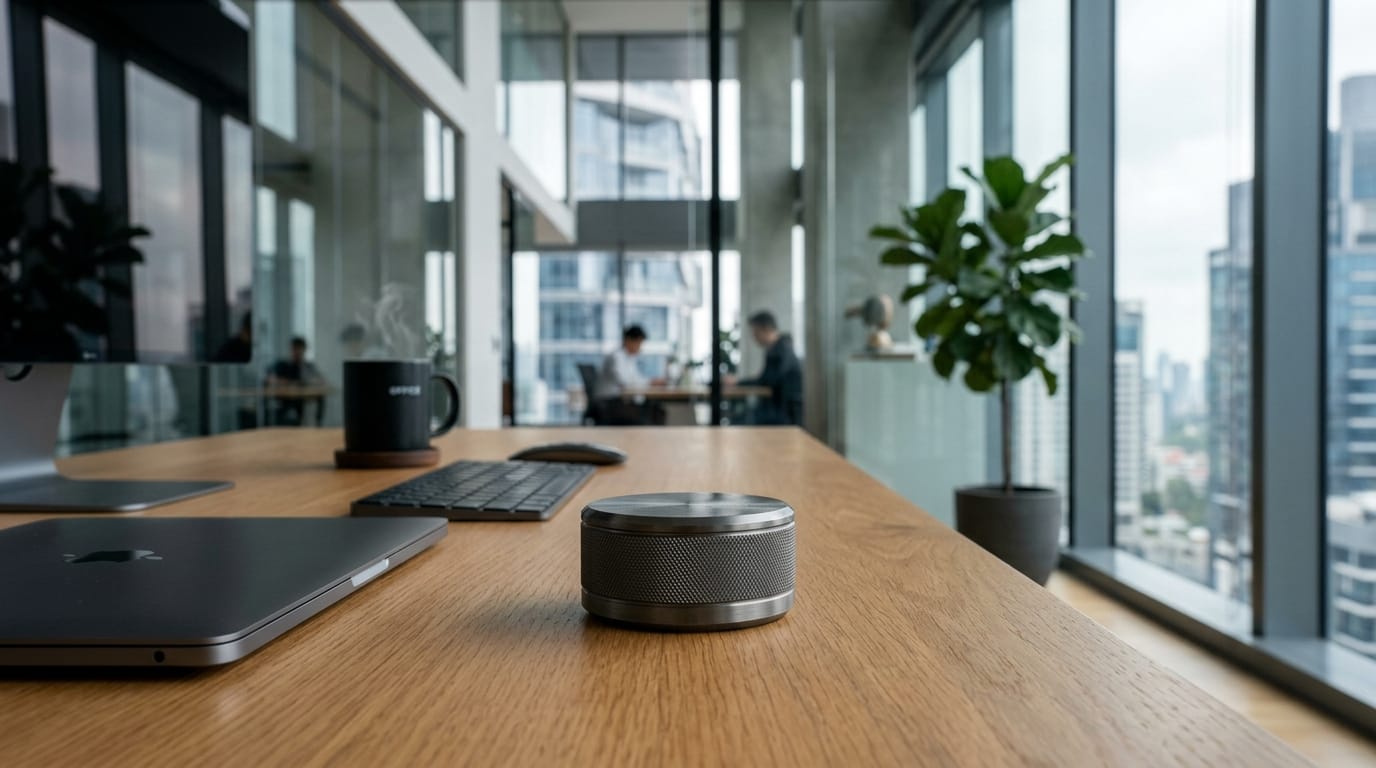
Defining the ‘Executive Fidget’: Discretion, Silence, and Aesthetics
As we navigate a 2026 corporate landscape where the 2025 Spring Health Mental Health Report reveals that 44% of employees face escalated stress compared to five years ago, the evolution of ergonomic intervention has shifted. Traditional ergonomics, long restricted to the physical calibration of chairs and keyboards, now encompasses sensory regulation. HR departments are increasingly addressing burnout as a board-level risk, positioning tactile regulation not as a childhood relic or niche internet phenomenon, but as a strategic professional requirement.
The efficacy of these tools is rooted in bilateral stimulation; by engaging both brain hemispheres, repetitive hand movements interrupt the neural stress response, clinical data suggests. This sensory regulation can reduce cortisol levels by 31% and extend focus duration by 28%. However, in an open-plan office where ambient noise typically fluctuates between 60 and 70 dB, the ‘executive fidget’ must meet rigid technical benchmarks to ensure professional discretion. According to the Titan Fidget Guide, the industry gold standard is defined by ‘near-silent operation — no audible sound above ambient office noise (under 30dB).’ Achieving this silence requires high-tolerance engineering and premium materiality, with luxury substrates like tungsten and carbon fiber rapidly becoming the standard for the modern executive. As AI integration renders routine tasks invisible, these physical, high-aesthetic tools serve as a necessary anchor for human-centered emotional regulation, ensuring that self-soothing remains as discreet as it is effective.
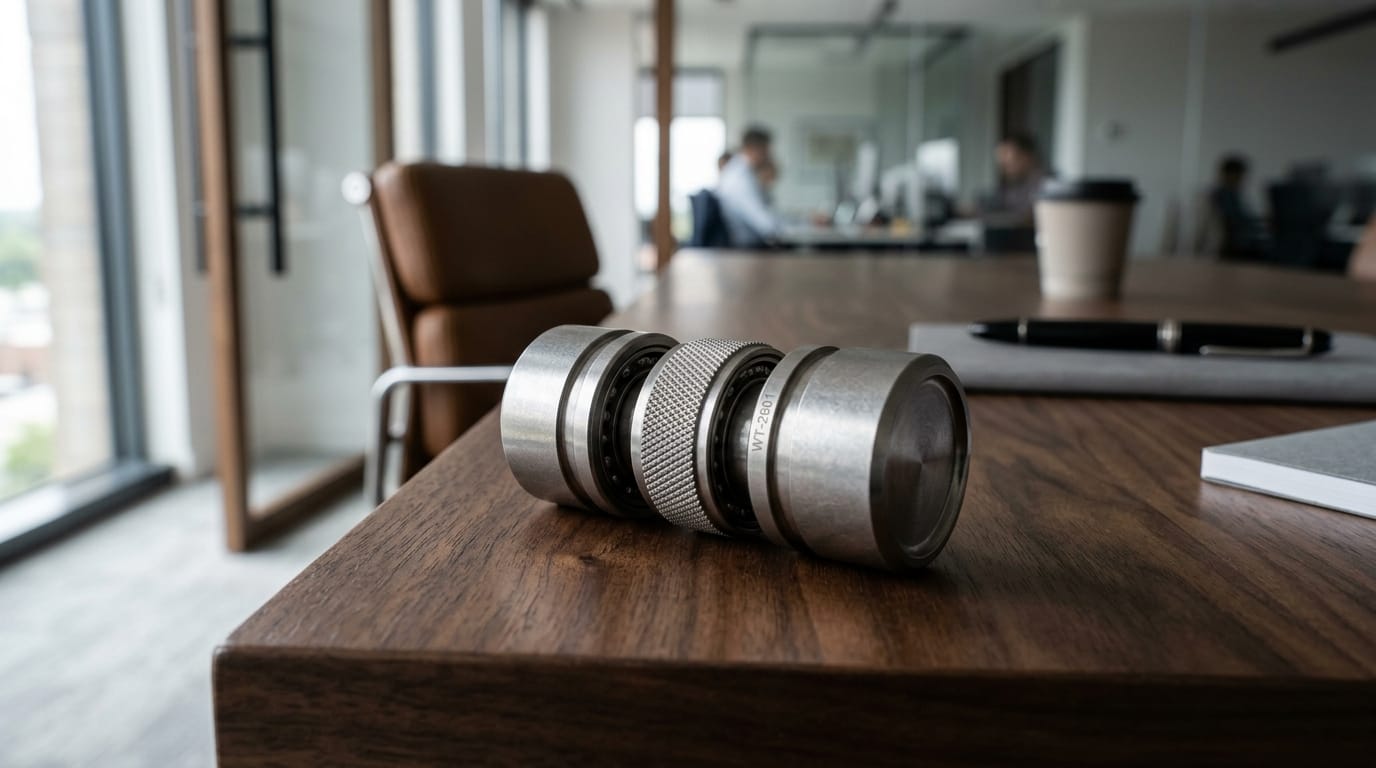
The Top 2026 Tools for Virtual Meetings and Shared Desks
In the contemporary landscape of 2026, where HR departments have elevated burnout to a board-level risk, sensory regulation has transitioned from niche internet culture to a strategic corporate intervention. As open-plan office environments typically generate ambient noise between 60 and 70 dB, the introduction of silent-operation fidget tools—benchmarked to produce no more than 30 dB—is essential for maintaining cognitive equilibrium. Clinical data suggests that these tactile interventions can reduce cortisol levels by 31% and extend focus duration by 28%, a critical metric given that the 2025 Spring Health Mental Health Report highlights a 44% surge in employee stress levels compared to five years ago.
For virtual meetings and shared desk environments, the objective is to leverage bilateral stimulation, which utilizes repetitive hand movements to engage both brain hemispheres and effectively interrupt acute stress responses. Among the most effective instruments is the ONO roller. As noted in industry guidance on desk tools, “ONO offers up another option: two frictionless Rollers that you can smoothly and silently turn in your hand.” Alongside magnetic putty and weighted tactile plates, these tools represent a shift in focus from traditional physical ergonomics to sensory regulation. As we look toward a future where AI handles routine infrastructure, human-centered performance—supported by high-end, durable sensory tools crafted from tungsten or carbon fiber—will become the defining metric of executive excellence.
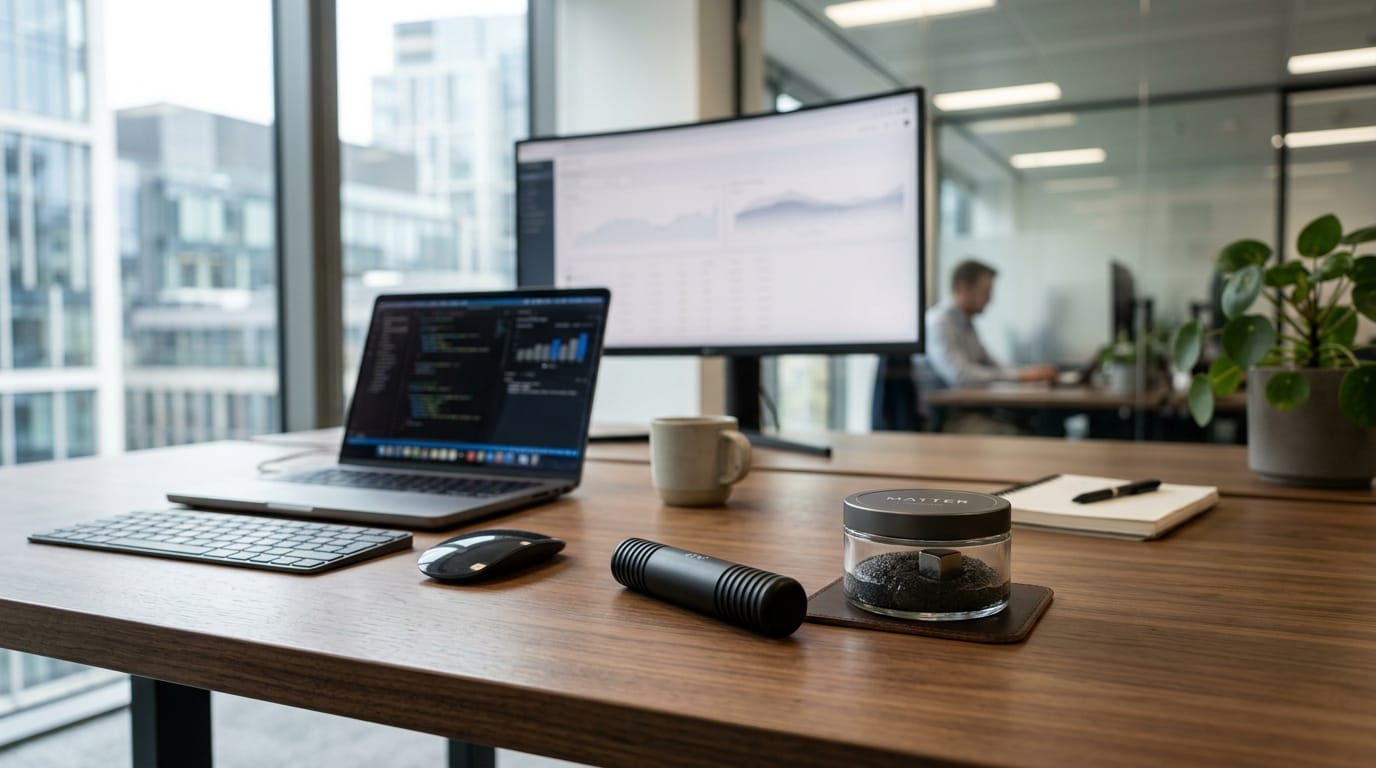
Hidden in Plain Sight: The Rise of 2-in-1 Professional Accessories
The integration of sensory regulation into the professional sphere has undergone a radical shift. Historically, behaviors such as stimming and fidgeting were relegated to niche internet subcultures or dismissed as childhood habits, while office ergonomics remained strictly tethered to physical posture. By 2026, however, the landscape has transformed; HR departments now view employee burnout as a board-level risk, necessitating strategic interventions. This evolution is vital, as the 2025 Spring Health Mental Health Report indicates that 44% of employees now report higher stress levels than they did five years ago.
Multi-functional tools, such as the fidget pen, have become the standard for discreet neuro-regulation. These instruments leverage bilateral stimulation—repetitive hand movements that activate both brain hemispheres—to effectively interrupt physiological stress responses. Clinical benchmarks confirm that these tactile aids can reduce cortisol levels by 31% while improving focus duration by 28%. Crucially, these tools are engineered for the modern workplace; silent-operation fidget accessories are strictly capped at 30 dB, ensuring they remain imperceptible amidst the 60 to 70 dB ambient noise of an open-plan office. As noted in a professional guide on adult sensory tools, the device “easily blends into almost any setting, offering a ‘hidden in plain sight’ experience… it acts like Superman in disguise.”
Looking toward the future, the rise of invisible AI infrastructure will heighten the demand for human-centered competencies like emotional intelligence, further necessitating the normalization of these sensory aids. As these devices gain institutional adoption, we expect a transition toward luxury manufacturing, with high-end tools increasingly crafted from materials like tungsten and carbon fiber to suit the executive suite.
Workplace Etiquette: How to Integrate Sensory Breaks Without Social Friction
In the professional landscape of 2026, where HR departments now address burnout as a board-level risk, sensory regulation has transitioned from a fringe internet phenomenon to a core component of executive wellness. Historically, office ergonomics prioritized physical spinal alignment; however, we have entered an era where neurological equilibrium is just as critical. Data from the 2025 Spring Mental Health Report indicates that 44% of employees face higher stress levels than they did five years ago, necessitating a shift in how we approach the high-decibel, open-plan office environment, where ambient noise typically fluctuates between 60 and 70 dB.
To mitigate this sensory overload, the implementation of tactile stress-relief tools is increasingly common, as these interventions can decrease cortisol levels by 31% and extend focus duration by 28%. When selecting equipment, adherence to specific engineering standards is vital; silent-operation fidget tools are now benchmarked to produce no more than 30 dB of sound, ensuring they remain unobtrusive to colleagues. By engaging in bilateral stimulation—repetitive movements that activate both brain hemispheres—employees can effectively interrupt acute stress responses during high-stakes discussions.
Navigating corporate social expectations requires a nuanced approach. As noted in Korn Ferry insights, meeting etiquette now emphasizes choosing low-noise, unobtrusive tools, while keeping them out of the camera frame or on the table edge during video calls. As AI infrastructure becomes more prevalent, the premium placed on human-centered skills will only grow, making these sensory practices essential. We are already seeing a shift toward luxury, professional-grade sensory tools crafted from tungsten and carbon fiber, signaling a future where regulation is as standard as the workstation itself.
The Psychology of Tactile Grounding in High-Pressure Environments
In the landscape of 2026, the corporate approach to wellness has shifted from purely physical ergonomics to the critical management of sensory regulation. With the 2025 Spring Health Mental Health Report indicating that 44% of employees now report higher stress levels than in 2020, organizations are treating burnout as a board-level risk. This evolution moves beyond the outdated view of fidgeting as a childhood behavior, positioning sensory regulation as a vital strategic intervention. As Why Your Brain Craves Tactile Satisfaction and Everyday ASMR explores, the human neuro-architecture remains deeply tethered to sensory input, even in highly digital workspaces.
The efficacy of tactile tools in these high-pressure environments—where ambient noise often hovers between 60 to 70 dB—is rooted in profound neurological shifts. By employing silent-operation tools benchmarked at no more than 30 dB, professionals can engage in grounding without disrupting the work environment. The primary neurological benefit stems from bilateral stimulation: “Repetitive hand movements (squeezing, rolling, raking) activate both brain hemispheres,” a mechanism that helps interrupt physiological stress responses (Zenify World Guide, 2026). Clinical data supports this, demonstrating that tactile stress relief tools can reduce cortisol levels by 31% while simultaneously improving focus duration by 28%.
As we look toward a future where AI infrastructure demands higher emotional intelligence from human workers, the role of premium sensory tools—increasingly manufactured from high-durability materials like tungsten and carbon fiber—will become an essential component of the executive toolkit. By grounding the nervous system through intentional tactile engagement, professionals can navigate the complexities of modern labor with greater cognitive resilience. Author: Kevin Lee.
Frequently Asked Questions
Yes, sensory tools like high-quality executive fidgets act as grounding mechanisms during stressful meetings. By providing tactile stimulation, these devices help regulate the nervous system, lower cortisol levels, and enhance cognitive focus. Integrating them into your daily workflow can prevent mental fatigue and support long-term emotional regulation in professional settings.
Modern clinical perspectives increasingly view professional sensory tools as legitimate ergonomic aids for executive functioning. For adults managing neurodivergence, anxiety, or high-pressure roles, these tools provide discreet, non-disruptive sensory input. They are designed with professional aesthetics, ensuring they remain appropriate for boardrooms while supporting individual cognitive health and sustained task concentration.
Selecting a tool depends on your sensory profile and office requirements. For auditory sensitivity, choose silent, haptic devices rather than clickers. For high-energy anxiety, weighted or tactile resistance tools are superior. Prioritize ergonomic designs that fit easily into your hand, allowing for subconscious use that does not detract from your professional tasks.
Expert Resources