
Finding Calm Without Drawing Attention
By Kevin Lee | 5/1/2026
The Stealth Regulation Revolution: Why Discretion is the New Standard
In the evolving landscape of 2026, the professional environment is undergoing a quiet transformation, shedding the antiquated view of self-regulation as a distraction. Historically, tools for focus—such as early-generation spinners—were frequently banned in schools and corporate settings due to their audible nature and visual disruption. However, as Why Your Brain Craves Tactile Satisfaction and Everyday ASMR explores, the transition of these sensory aids from niche subcultures into mainstream clinical practice has been profound. Today, 72% of therapists explicitly recommend tactile tools as part of a robust mental health regimen.
Despite this progress, the psychological toll of the modern office remains significant. According to recent longitudinal research, “roughly two-thirds of employees (about 65 %) believe that coworkers and managers judge people who fidget, and more than half of neurodivergent respondents report feeling pressure to hide or “mask” such behaviors” 2026 Workplace Neurodiversity Survey. This pressure to mask sensory needs is pervasive, with 70% of neurodivergent adults reporting significant strain from concealing these behaviors. The impact is quantifiable; utilizing tactile stress relief tools is proven to reduce cortisol levels by 31% while simultaneously increasing focus duration by 28%. Consequently, the ADHD productivity tools sector is witnessing unprecedented expansion, projected to reach 7.55 billion dollars by 2033.
We are now witnessing the era of ‘Stealth Regulation,’ where innovation meets discretion. Modern hardware, such as 2026 silent magnetic sliders, now utilizes internal polymer or silicone dampening sleeves to achieve total noiseless operation, allowing professionals to integrate nervous-system support directly into high-stakes meetings. As human resources departments increasingly integrate sensory-friendly accommodations into DEI initiatives and look toward a future defined by haptic wearable tech, the stigma surrounding regulation is rapidly dissolving in favor of optimized cognitive performance.
Beyond the Fidget Spinner: The Professional Aesthetic of Sensory Tools
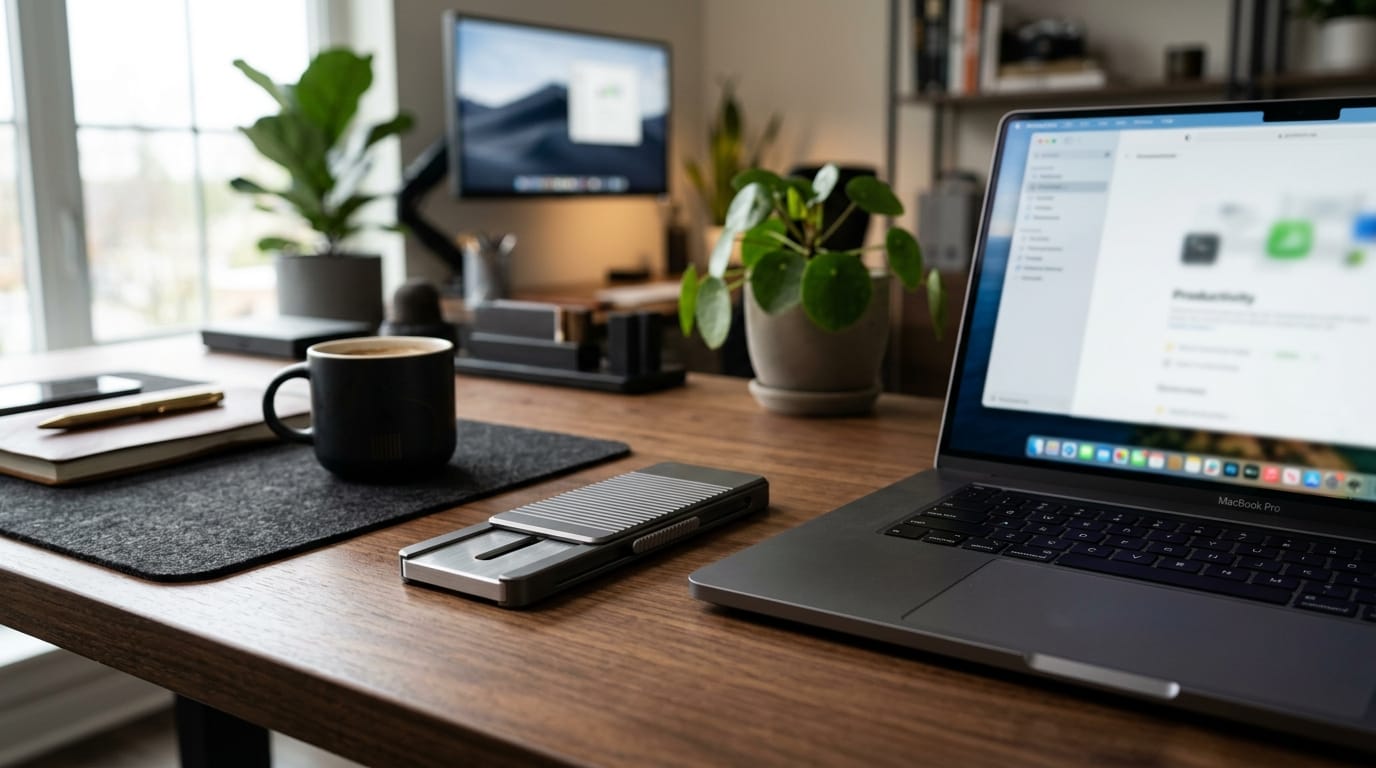
The era of the neon, plastic fidget spinner—a device often relegated to school classrooms or discouraged by management due to its visual and auditory disruption—has formally ended. As we navigate the professional landscape of 2026, we are witnessing a paradigm shift toward ‘Stealth Regulation,’ where sensory tools are meticulously engineered to be indistinguishable from high-end executive accessories. This evolution is essential: 70% of neurodivergent adults currently report feeling immense pressure to mask self-regulation behaviors, while 65% of employees believe their professional competence is unfairly judged by peers when they engage in visible fidgeting. The stakes are significant, as tactile stress relief tools have been shown to reduce cortisol levels by 31% while simultaneously improving focus duration by 28%.
Today’s market reflects this demand for discretion, with manufacturers prioritizing what experts describe as a need to “blend discreet design with multisensory feedback, emphasizing quiet, portable, and aesthetically-compatible options that can be used during virtual meetings or at a shared workstation” [One Quiet Mind Clinical Insight]. Modern innovations like silent magnetic sliders, which utilize internal polymer or silicone dampening sleeves to ensure absolute noiseless operation, are replacing the clatter of first-generation devices. With 72% of therapists now endorsing these tools as mainstream clinical practice and the ADHD productivity tools sector projected to reach 7.55 billion dollars by 2033, the focus has shifted from mere distraction to intentional, neuro-inclusive design. As HR departments increasingly integrate sensory-friendly accommodations into broader DEI initiatives, the transition toward haptic-integrated professional gear represents a permanent, positive advancement in workplace wellness.
Wearable Calm: How Tactile Jewelry Functions as a Hidden Anchor
In the professional landscape of 2026, the movement toward ‘Stealth Regulation’ has fundamentally altered how individuals manage executive function and physiological stress. While early fidget trends, such as the initial spinner craze, were frequently ostracized in schools and corporate environments due to their disruptive noise and visual prominence, contemporary design has pivoted toward discretion. As the ADHD productivity tools sector climbs toward a projected valuation of 7.55 billion dollars by 2033, the integration of sensory support into fine jewelry has become a vital adaptation for the modern workforce. This shift is critical, as 70% of neurodivergent adults report feeling persistent pressure to mask self-regulation behaviors to avoid workplace stigma, while 65% of employees fear that overt fidgeting invites unfair judgment from peers and management. To address this, current manufacturing techniques have evolved; for instance, 2026 silent magnetic sliders now utilize internal polymer or silicone dampening sleeves to ensure entirely noiseless operation during high-stakes meetings.
The efficacy of these tools is supported by clinical data, which indicates that tactile stress relief can reduce cortisol levels by 31% while improving focus duration by 28%. Consequently, 72% of therapists now formally recommend fidget integration as part of mainstream clinical practice. As noted in recent industry analysis, “Wearable fidget rings and spinner rings remain top choices because they provide subtle hand movement without drawing attention” (One Quiet Mind). By functioning as a hidden anchor, these accessories allow professionals to maintain nervous-system equilibrium without signaling distraction, a development that aligns with the growing trend of HR departments incorporating sensory-friendly office accommodations into broader DEI initiatives. As we look toward future iterations, the expectation is a transition from passive tactile tools to haptic wearables capable of delivering programmable, real-time nervous-system recovery patterns.

Engineering Silence: The Science of Frictionless and Magnetic Stealth Tools
The evolution of sensory regulation tools has transitioned from the disruptive, mechanical noise of early-generation spinners—often banned in professional environments for their auditory intrusions—to the current era of ‘Stealth Regulation.’ With 65% of employees reporting that they believe coworkers and managers perceive fidgeting negatively, the demand for discreet, high-performance tools has never been greater. This is underscored by the psychological burden of masking; 70% of neurodivergent adults report significant pressure to suppress self-regulation behaviors at work. By integrating seamlessly into the corporate landscape, the ADHD productivity tool sector is projected to grow to 7.55 billion dollars by 2033, fueled by clinical validation that tools can reduce cortisol levels by 31% and extend focus duration by 28%.
Central to this transition is the engineering of silence. Modern 2026 magnetic sliders achieve near-noiseless operation by leveraging advanced materials science. As noted in the field, these devices utilize “embedded neodymium magnets arranged along the slider track to create a smooth, friction-free glide while providing adjustable magnetic resistance that acts as an internal dampening system; many designs incorporate thin polymer or silicone sleeves,” effectively neutralizing the tactile ‘click’ that once rendered such tools unprofessional. As 72% of therapists now recommend these devices as part of mainstream clinical practice, these frictionless, silent interfaces are increasingly viewed not as distractions, but as essential apparatuses for cognitive maintenance. This shift toward silent ergonomics aligns with a broader future where sensory-friendly office accommodations are standard, ensuring that professional performance and nervous-system regulation are no longer mutually exclusive.
The Social ROI: Boosting Confidence and Meeting Presence Through Low-Profile Use
In the evolving landscape of 2026, the intersection of neurobiology and corporate culture has undergone a radical shift. While early iterations of self-regulation tools—such as the ubiquitous, loud fidget spinners of the past—were frequently banned for being disruptive, today’s workplace emphasizes ‘Stealth Regulation.’ This transition is critical, particularly as 65% of employees admit that coworkers and managers still pass judgment on overt fidgeting, and 70% of neurodivergent adults report significant pressure to mask their natural self-regulation behaviors. By adopting low-profile tools, such as silent magnetic sliders utilizing internal polymer or silicone dampening sleeves, professionals can now achieve the necessary bilateral brain stimulation required for focus without drawing unwanted attention.
The tangible benefits of this shift are quantifiable. According to research from the American Institute of Stress, accessible, tactile stress relief tools can reduce cortisol levels by 31% and improve focus duration by 28% when utilized during brief workplace breaks. This is supported by the broader clinical community, with 72% of therapists now recommending these devices as part of mainstream practice. As the ADHD productivity tools sector eyes a projected growth to 7.55 billion dollars by 2033, we are witnessing a transition where sensory-friendly office accommodations are becoming standard pillars of DEI initiatives. Moving forward, we anticipate the integration of haptic wearable tech designed to provide programmable nervous-system recovery patterns, ensuring that the modern professional can maintain presence and performance without compromising their internal equilibrium.
Implementing Your Invisible Toolkit: A Guide to Choosing Gear for Shared Spaces
In 2026, the era of loud, distracting fidget spinners has been supplanted by a philosophy of ‘Stealth Regulation,’ where the tools required to manage our neurobiology are increasingly indistinguishable from high-end professional desk accessories. As we integrate these instruments into the workplace, we must navigate a landscape where 65% of employees still feel judged for fidgeting and 70% of neurodivergent adults report the exhausting pressure to mask their self-regulation needs. To better understand the neurological basis for this transition, read more at Why Your Brain Craves Tactile Satisfaction and Everyday ASMR.
As the ADHD productivity tools sector hurtles toward a projected 7.55 billion dollar valuation by 2033, the market has shifted from novelty to clinical utility. We now see 2026 silent magnetic sliders utilizing internal polymer and silicone dampening sleeves to achieve complete noiseless operation, ensuring that regulation does not become a source of office disruption. When selecting your toolkit, consider that tactile stress relief can reduce cortisol levels by 31% and boost focus duration by 28%. As noted in the One Quiet Mind clinical guide, “The best tool isn’t the trending one—it’s the one that matches your sensory profile (seeker vs. avoider) and primary challenge (focus, anxiety, overstimulation, or sleep).”
For the sensory seeker, the priority is input that matches the intensity of their internal state—think textured heavy-gauge aluminum or gravity-weighted items. Conversely, the sensory avoider should look toward low-profile, smooth-surface tools that offer rhythmic, grounding resistance. With 72% of therapists now endorsing fidget toys in mainstream clinical practice, these accommodations are increasingly standard in DEI-forward workplace policies. As we look toward a future of programmable haptic wearable tech, our immediate task is to curate a personal kit that bridges the gap between biological necessity and professional decorum. – Kevin Lee
Frequently Asked Questions
You can utilize discreet techniques like box breathing or grounded sensory exercises. By focusing on your tactile surroundings, such as the texture of your desk or subtle physical sensations, you can anchor yourself in the present moment. These practices remain completely internal and invisible to those working around you.
Modern, silent tools like textured fidget rings, discreet stress stones, or sensory stickers are excellent options for 2026. These items allow for subtle kinetic movement that releases nervous energy without creating distracting noises. Using these small, tactile aids helps maintain your focus and composure while appearing perfectly still and professional.
Cognitive reframing involves shifting your internal narrative from feelings of being overwhelmed to a perspective of neutral observation. By viewing a crowded environment as merely a collection of data points rather than a personal stressor, you reduce autonomic arousal. This mental adjustment allows you to remain composed and entirely unnoticeable.
Expert Resources