
The 5-Minute Sensory Micro-Break at Your Desk
By Kevin Lee | 4/30/2026
The Stigma Shift: From Fidget Toys to Executive Focus Aids
For years, the professional landscape viewed sensory fidgets through a lens of skepticism, often dismissing them as childish distractions or niche internet curiosities. Yet, the evolution of neuro-inclusive workplace design has necessitated a complete reevaluation. We are currently witnessing a seismic shift as corporate wellness pivots toward ‘nervous-system safety,’ recognizing that sensory regulation is not merely a preference, but a physiological imperative. As 72% of therapists now recommend these tools for managing stress and focus, the stigma is rapidly dissolving. To understand why our brains react so positively to these inputs, see Why Your Brain Craves Tactile Satisfaction and Everyday ASMR.
This transition is grounded in hard science. Bilateral stimulation through repetitive hand movement is proven to restore parasympathetic balance following intense cognitive exertion. Furthermore, brief sensory micro-breaks lasting between two and five minutes have been shown to reduce self-reported cognitive fatigue by 25%. In high-stakes environments, professionals are increasingly turning to ‘high-discretion tools’—devices specifically engineered to be used in crowded or professional areas without drawing undue attention. Regarding the utility of these implements, one clinical review notes, it acts like Superman in disguise.
As we look toward 2033, with the ADHD productivity tools sector projected to reach 7.55 billion dollars, the integration of these devices into elite workspaces is accelerating. We are moving toward a future where adaptive environmental controls and dedicated sensory pods become standard, effectively reframing sensory regulation as ‘prescribed nervous-system medicine’ rather than an optional accessory. For the modern executive, the ability to modulate one’s own internal state is the ultimate high-performance skill.

The Science of the 5-Minute Reset: Grounding and Bilateral Stimulation
Once relegated to the fringes of internet subculture, the use of fidgeting and sensory-based regulation has matured into a cornerstone of clinical wellness. As we pivot from viewing these behaviors as mere distractions to recognizing them as legitimate tools for neurological maintenance, the data confirms a significant shift: 72% of therapists now advocate for the use of fidget tools to manage stress and sustain executive focus. This is a vital evolution for the modern workforce, where corporate culture is increasingly prioritizing ‘nervous-system safety’ over outdated stigmas. As noted in the 2026 Guide to Desk Stress Relief, “Bilateral Stimulation: Repetitive hand movements (squeezing, rolling, raking) activate both brain hemispheres,” providing a tangible mechanism for restoring parasympathetic balance after intense cognitive load. By engaging in brief, 2-to-5-minute sensory micro-breaks, individuals can reduce self-reported cognitive fatigue by as much as 25%.
The efficacy of these practices lies in their ability to interrupt stress-signal loops through high-discretion tools—devices engineered for professional environments that allow for regulation without disrupting others. As the ADHD productivity tools sector hurtles toward a projected 7.55 billion dollar valuation by 2033, we are seeing a move toward integrating sensory regulation as ‘prescribed nervous-system medicine.’ Looking ahead, the architectural landscape of our offices will likely mirror this shift, with dedicated sensory pods and adaptive environmental controls becoming standard features in high-performance workspaces. For the professional, the five-minute reset is no longer an act of avoidance; it is a calculated, neuro-scientific intervention designed to recalibrate focus in an increasingly demanding information age.
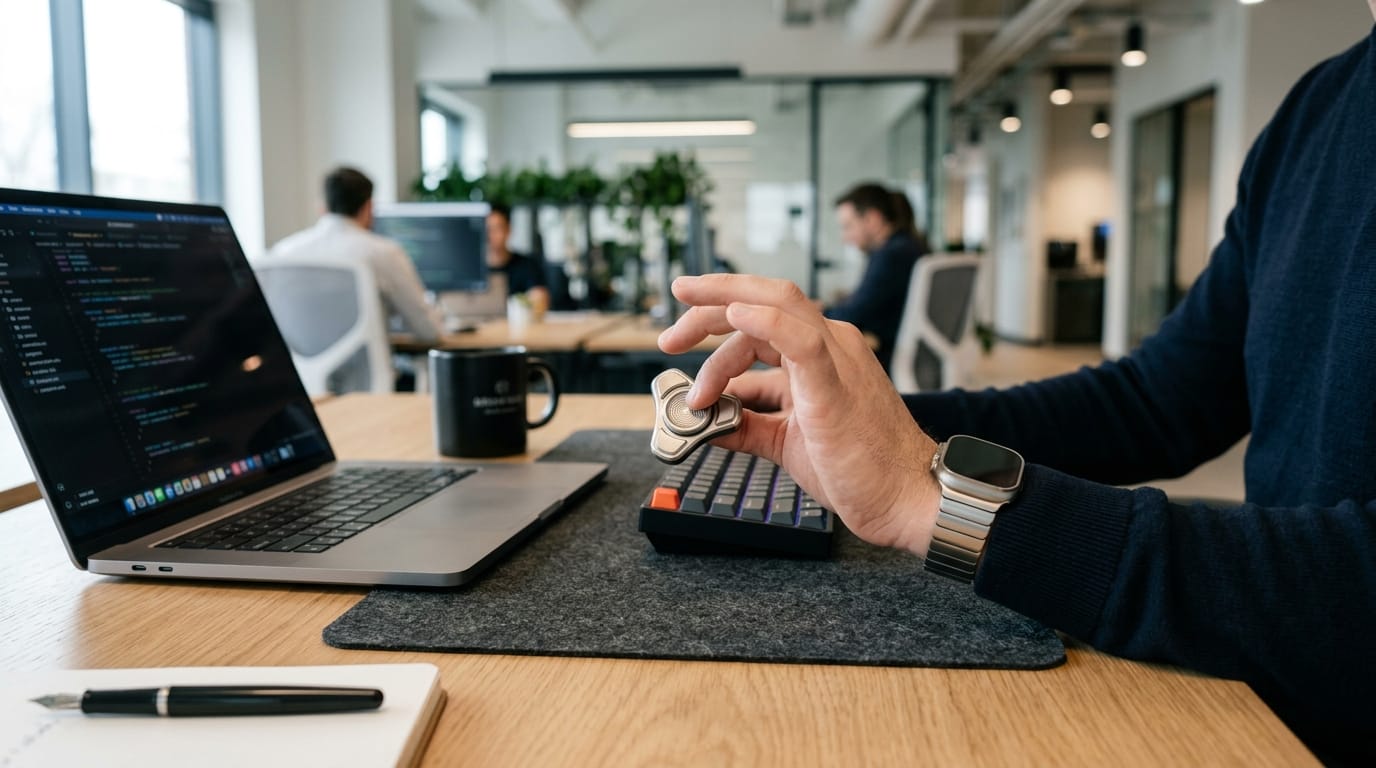
The ‘Quiet’ Toolkit: A Guide to Discreet Haptic Tools for 2026
As we navigate the 2026 landscape of high-performance workspaces, the integration of nervous-system safety has evolved from a nascent trend into a clinical standard. With the ADHD productivity tools sector projected to reach 7.55 billion dollars by 2033, the professional environment has pivoted away from viewing sensory regulation as a distraction. Instead, it is increasingly reframed as prescribed nervous-system medicine, where 72% of therapists now recommend tactile aids to manage cognitive load. In an era where open-plan offices can overwhelm the senses, these tools offer a vital mechanism for grounding.
The efficacy of these devices lies in their utility for bilateral stimulation, a technique that helps restore parasympathetic balance after intense cognitive exertion. Research indicates that brief sensory micro-breaks lasting only 2 to 5 minutes can reduce self-reported cognitive fatigue by 25%. To facilitate this, current tools emphasize high discretion—the ability to utilize haptic feedback in crowded environments without drawing external attention. Material quality and mechanical silence are paramount in this evolution.
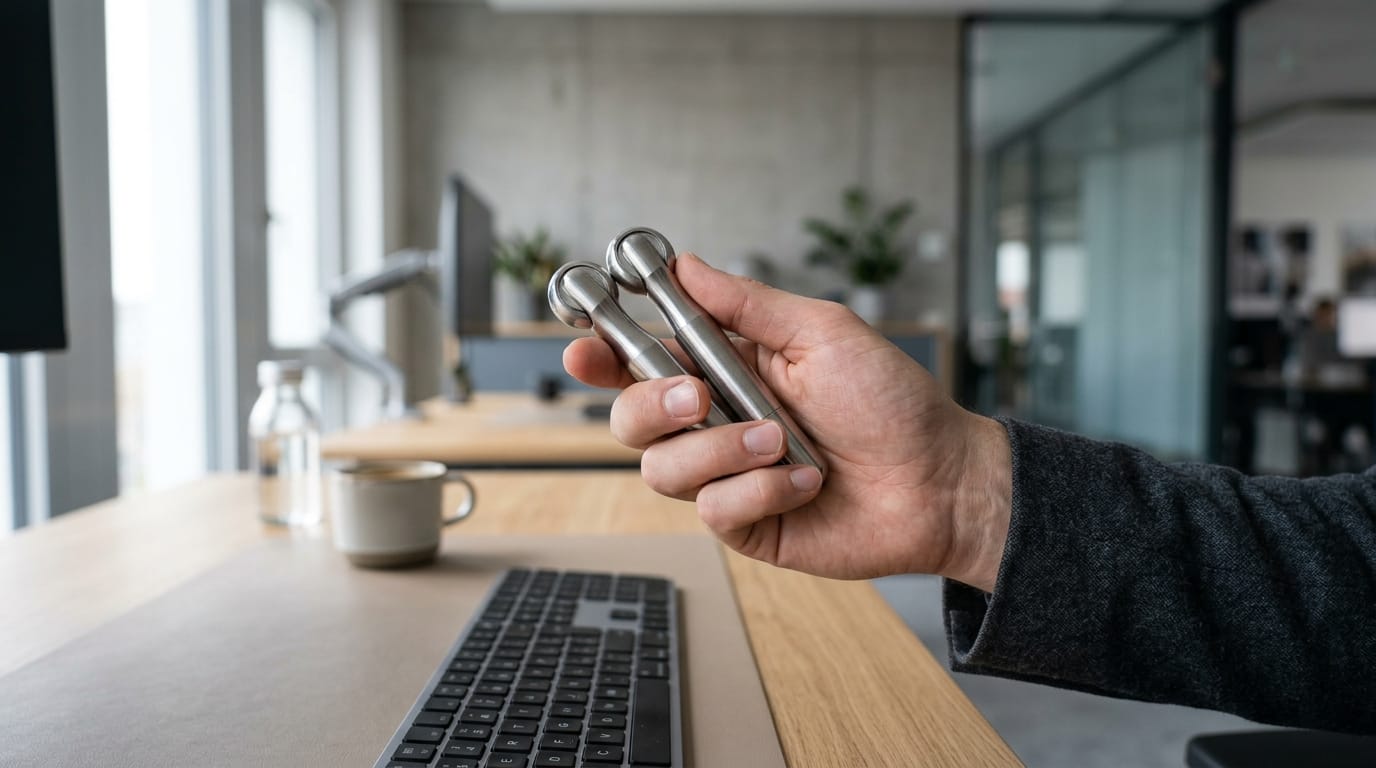
Leading the market are devices engineered for seamless, near-silent manipulation. According to PlusPlusUSA, “ONO offers up another option: two frictionless Rollers that you can smoothly and silently turn in your hand.” Such tools represent the shift from the noisy, kinetic fidget toys of the past toward sophisticated, professional-grade instruments designed for the modern executive. As adaptive environmental controls continue to emerge, these portable haptic solutions ensure that sensory regulation remains accessible, silent, and effective in any setting.
Integration Strategies: Habit Stacking Your Sensory Micro-Breaks
In the evolving landscape of 2026 corporate wellness, the transition from viewing fidgeting as a distraction to recognizing it as ‘prescribed nervous-system medicine’ is complete. As the ADHD productivity tools sector marches toward a projected 7.55 billion dollar valuation by 2033, the focus has shifted toward high-discretion tools—devices designed for professional environments that mitigate cognitive load without drawing unwanted attention. Clinical evidence remains compelling: brief sensory micro-breaks of just 2 to 5 minutes can reduce self-reported cognitive fatigue by 25%. Furthermore, 72% of therapists now advocate for these tools, specifically noting that bilateral stimulation through hand movement is essential for restoring parasympathetic balance after intense cognitive exertion.
To build these interventions into a standard workday, practitioners recommend the methodology of habit stacking. As noted by experts at Dr. Axe, one must “attach the new habit to a strong sensory cue (sound of a coffee grinder, smell of toothpaste, etc.).” By anchoring a discrete sensory micro-break—such as using a silent, high-discretion tactile device—to an existing, high-frequency trigger like the completion of a morning email cycle or the sound of a desktop notification, employees can preemptively regulate their nervous systems. This integration of sensory regulation into daily workflow reflects the broader shift toward ‘nervous-system safety’ in open-plan offices, moving well beyond the early, niche internet subcultures of ASMR toward a standardized model for high-performance, neuro-inclusive work environments.
Corporate Etiquette: Using Sensory Tools in Shared Workspaces and Meetings
As the ADHD productivity tools sector accelerates toward a projected 7.55 billion dollar valuation by 2033, the integration of sensory regulation into the professional sphere has undergone a radical transformation. Once dismissed as childish, fidgeting has evolved from niche internet subculture into a cornerstone of clinical wellness. We are currently witnessing a paradigm shift where nervous-system safety—the intentional management of one’s physiological state—is becoming a benchmark for the modern open-plan office. With 72% of therapists now endorsing fidget tools for stress management and cognitive focus, the imperative is no longer about suppression, but about professional integration.
The efficacy of these practices is supported by data, which indicates that brief sensory micro-breaks of just 2-5 minutes can reduce self-reported cognitive fatigue by 25%. Such regulation is essential for restoring parasympathetic balance, particularly through bilateral stimulation techniques that utilize hand movement to ground the nervous system after taxing tasks. However, in shared environments, the burden of etiquette remains paramount. Experts emphasize the selection of “quiet, portable, and aesthetically-compatible options that can be used during virtual meetings or at a shared workstation,” as noted by One Quiet Mind. The gold standard for high-discretion tools lies in their capacity to operate silently and unobtrusively in crowded areas.
Looking ahead, the movement toward ‘prescribed nervous-system medicine’ suggests that adaptive environmental controls and dedicated sensory pods will soon be standard in high-performance workplaces. Until then, employees must master the art of discreet regulation, ensuring their tools harmonize with virtual meeting decorum. By prioritizing professional-grade sensory aids, we foster environments that honor both the individual’s need for regulation and the collective requirement for a focused, collaborative workspace. – Kevin Lee
Summary: Creating a Recovery-Friendly Desk Environment
As we navigate the evolving landscape of corporate wellness, the transition from viewing fidgeting as a distraction to embracing it as a clinical necessity marks a milestone in occupational health. The stigma once surrounding niche sensory tools has dissolved; today, 72% of therapists actively recommend fidget devices to optimize cognitive focus and stress management. This shift underscores a broader movement toward ‘nervous-system safety’ in the workplace, where adaptive environmental controls and sensory regulation are increasingly reframed as essential medicine for the modern professional. As noted in the Zenify 2026 Desk Stress Relief Guide, “Your workspace should actively support your mental health, not merely accommodate it.”
The growth of the ADHD productivity tool sector, projected to reach 7.55 billion dollars by 2033, highlights the high demand for high-discretion tools—devices engineered for use in professional, open-plan environments without compromising social or workplace decorum. By incorporating brief sensory micro-breaks of just 2-5 minutes, professionals can reduce self-reported cognitive fatigue by 25%. These periods of bilateral stimulation, which facilitate parasympathetic nervous system restoration, are vital for maintaining equilibrium after high-stakes tasks. To understand the psychological mechanisms behind this, readers may consult our report on Why Your Brain Craves Tactile Satisfaction and Everyday ASMR.
Looking ahead, we anticipate a future where dedicated sensory pods and neuro-inclusive design are standard components of high-performance architecture. Ultimately, these intentional sensory breaks function as a form of ‘mental ergonomics’—a disciplined approach to prevent burnout by honoring our biological requirement for regulation. By curating a recovery-friendly desk environment, we transform the office from a source of strain into a platform for sustainable, long-term cognitive health. — Kevin Lee
Frequently Asked Questions
Yes, research indicates that five-minute sensory grounding techniques effectively downregulate the nervous system, mitigating cumulative stress. By intentionally shifting focus away from screens toward tactile or auditory stimuli, you interrupt the cycle of chronic cognitive fatigue. This simple habit preserves mental energy, fosters emotional regulation, and promotes long-term workplace sustainability.
In office settings, prioritize discreet, evidence-based activities. Options include using noise-canceling headphones with white noise, practicing box breathing while feeling the texture of your desk, or using a smooth tactile object like a stress stone. These brief interventions stimulate the parasympathetic nervous system, helping to stabilize your physiological response to professional pressure.
For optimal results, aim to integrate a sensory micro-break every ninety minutes throughout your workday. Aligning these pauses with the body’s natural ultradian rhythms prevents the onset of mental exhaustion. Consistently practicing these short, five-minute reset periods enhances your sustained attention, cognitive clarity, and overall productivity throughout the entire afternoon.
Expert Resources