
How Repetitive Hand Movements Improve Focus at Work
By Kevin Lee | 4/30/2026
The Active Hand Paradox: Why Fidgeting Actually Improves Focus
For years, the twitching pen or the rhythmic tap of fingers was dismissed as a sign of restlessness, yet 2026 clinical data paints a radically different picture. Fidgeting has transitioned from a social faux pas to a strategic cognitive tool, with 72% of therapists now recommending fidget toys for stress and focus management. This shift reflects a deepening understanding of Why Your Brain Craves Tactile Satisfaction and Everyday ASMR. When we engage in movement, we are not losing focus; we are performing an act of sensory grounding. As noted by experts, “Sensory Grounding: Touch receptors send signals to your brain that compete with stress signals” (Zenify World 2026 Guide).
This paradox is rooted in neuro-physiology. Isometric hand-squeezing, for instance, boosts attentional focus and working-memory performance by increasing motor-cortical arousal. We have moved far beyond the late 2010s era of the fidget spinner; today, the ADHD productivity tools sector is projected to grow to $7.55 billion by 2033. Professional environments are reflecting this change as workspaces evolve from merely ‘accommodating’ sensory needs to ‘actively supporting’ mental health through design. Practitioners now recommend that users place monitors 20-26 inches away to maintain ergonomic health while utilizing these tactile tools, often alongside 2-5 minute micro-breaks that are clinically shown to clear executive function bottlenecks. Looking forward, the horizon of wellness tech points toward the integration of subconscious vibro-tactile stimulation into wearable devices for non-invasive brainwave entrainment, proving that our hands are essential conduits for a calmer, more productive mind.
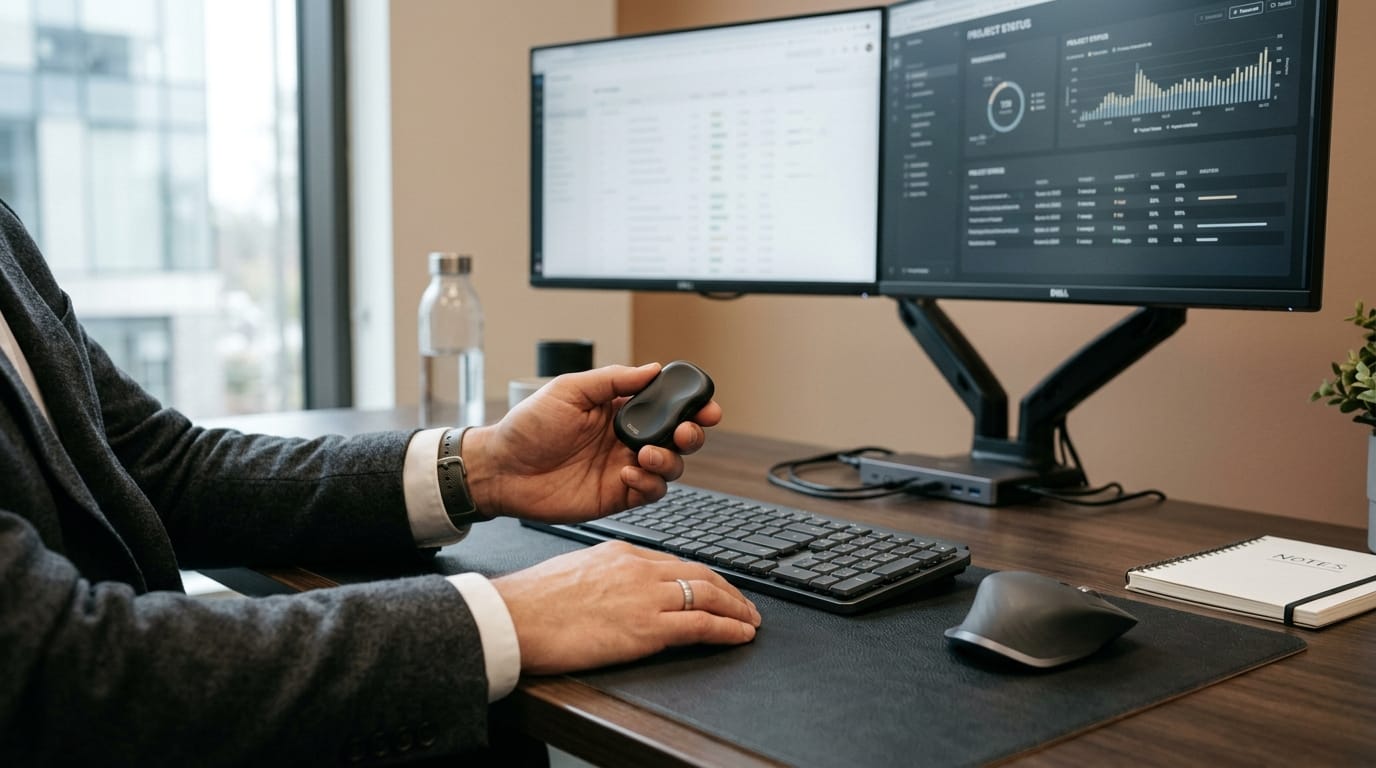
Neurological Mechanics: Bilateral Stimulation and Proprioception in the Office
In the evolving landscape of 2026, the transition of fidgeting from niche internet subcultures to a mainstream clinical imperative reflects a deeper understanding of neuro-ergonomics. With the ADHD productivity tools sector projected to reach $7.55 billion by 2033, professionals are increasingly embracing multimodal, ‘hidden in plain sight’ tools to mitigate the cognitive noise of high-stress environments. As noted in the latest 2026 professional wellness guide, “Bilateral Stimulation: Repetitive hand movements (squeezing, rolling, raking) activate both brain hemispheres,” a mechanism that stabilizes attentional focus and working-memory performance by increasing motor-cortical arousal. This physiological engagement acts as a grounding anchor for the executive function, effectively clearing the bottlenecks that occur during prolonged cognitive strain.
The efficacy of these tools is underscored by clinical data: 72% of therapists now formally recommend fidget devices as integral components of stress management. While weighted tools currently hold ‘Grade A’ clinical backing for reducing anxiety, the broader integration of isometric hand-squeezing provides a discrete method for neuro-regulation. To ensure these benefits do not compromise physical well-being, occupational therapists advise that users maintain a monitor distance of 20-26 inches while utilizing these tools. By pairing these devices with mandatory 2-5 minute micro-breaks, workers can achieve a state of neurological equilibrium, shifting workspaces from mere ‘accommodating’ environments to proactive, design-supported wellness zones that anticipate the future of non-invasive brainwave entrainment technology. – Kevin Lee
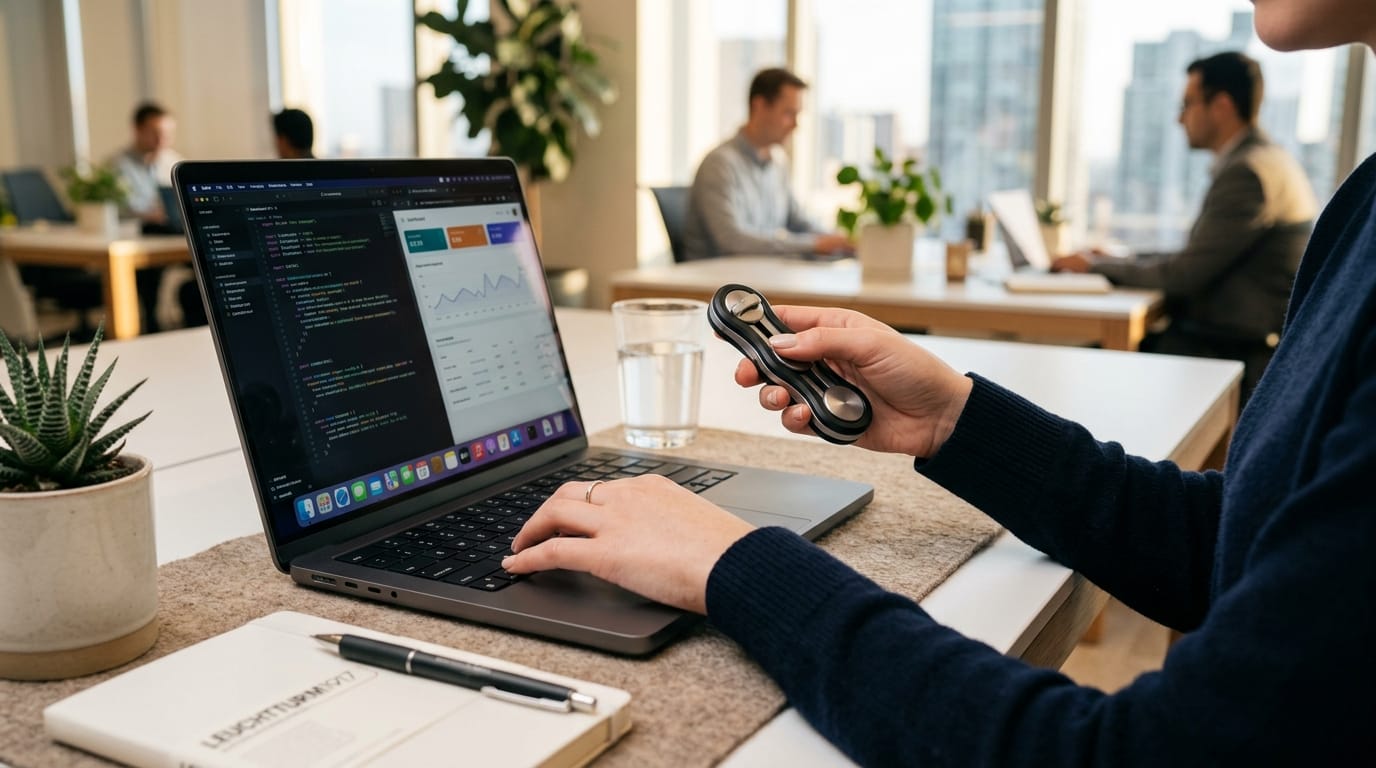
The 2-Minute Reset: How Micro-Breaks Clear Executive Function Bottlenecks
In the evolving landscape of 2026, the transition of fidgeting from a niche internet subculture to a cornerstone of clinical wellness is complete. As the ADHD productivity tools sector hurtles toward a projected $7.55 billion valuation by 2033, we are seeing a shift toward ‘hidden in plain sight’ professional accessories that serve a dual purpose: physiological regulation and cognitive restoration. The modern desk tool is no longer a mere distraction; it is a deliberate mechanism of Micro-Break Enforcement. As noted in the Zenify 2026 guide, ‘The act of using a desk tool creates a 2-5 minute mental break,’ providing the necessary neurological pivot to clear executive function bottlenecks.
The efficacy of these tools lies in their ability to engage the brain through sensory pathways that remain underutilized during sedentary screen time. Clinical research demonstrates that isometric hand-squeezing—a primary function of many tactile desk toys—boosts attentional focus and working-memory performance by increasing motor-cortical arousal. This is particularly relevant as 72% of therapists now actively recommend these instruments for stress management. For those utilizing weighted sensory tools, which hold ‘Grade A’ clinical backing for reducing anxiety and improving overall sleep architecture, the benefit is twofold. However, to maximize these gains, ergonomics remains paramount; occupational therapists continue to advise that users maintain a monitor distance of 20-26 inches to preserve posture while engaging with desk-based sensory aids. Looking ahead, the integration of subconscious vibro-tactile stimulation into wearable tech promises to further blur the line between workspace design and non-invasive brainwave entrainment, ensuring that our environments no longer just accommodate sensory needs, but actively support cognitive health.
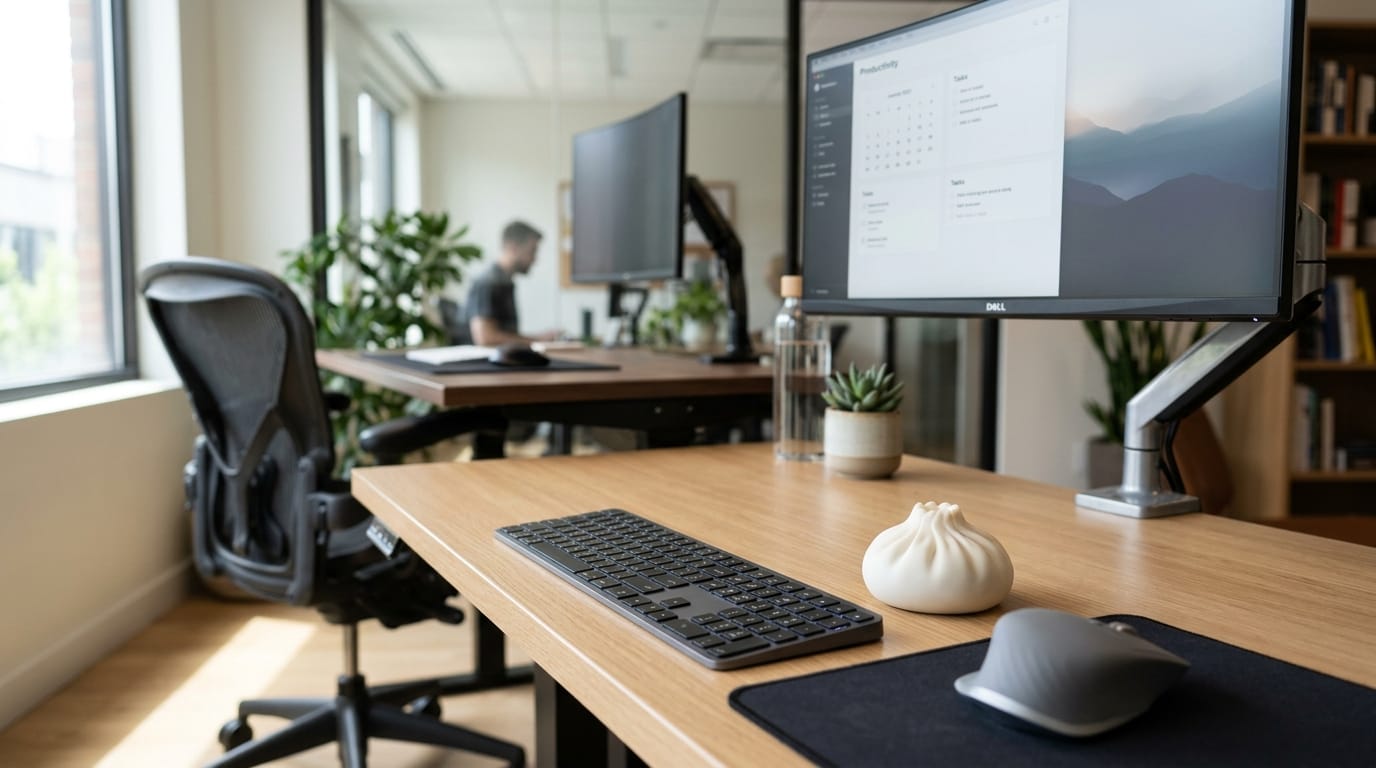
Choosing Your Trigger: Squeezing vs. Rolling vs. Rhythmic Tapping
As we navigate the sophisticated workspace landscape of 2026, the evolution of sensory regulation has moved far beyond the initial, rudimentary fidget spinners of the late 2010s. With the ADHD productivity tools sector projected to reach $7.55 billion by 2033, the market now prioritizes multimodal, professional-grade devices. Clinical consensus remains clear: 72% of therapists now advocate for these tools to manage stress and sustain focus, particularly when integrated into brief, 2-5 minute micro-breaks that effectively clear executive function bottlenecks.
The mechanics of our chosen trigger play a pivotal role in cognitive performance. Isometric hand-squeezing, for instance, is proven to boost attentional focus and working-memory performance by heightening motor-cortical arousal. According to One Quiet Mind, “classic stress‑relief squishy toys—especially the 2026‑updated dumpling‑style stress balls—continue to be favored” for their ergonomic resistance and tactile feedback. These weighted tools, which hold ‘Grade A’ clinical backing for anxiety reduction, represent a shift toward “hidden in plain sight” accessories that blend into professional environments.
For those preferring kinetic movement over static pressure, frictionless rollers have emerged as the modern alternative to rhythmic tapping, offering a discreet, auditory-neutral experience that supports deep work. Regardless of the chosen modality, occupational therapists emphasize the importance of workstation configuration, advising users to maintain a monitor distance of 20-26 inches to preserve ergonomic health during these sessions. Looking forward, we anticipate a transition from these manual tools to wearable health-tech that utilizes subconscious vibro-tactile stimulation for non-invasive brainwave entrainment, further solidifying the workplace as a space that actively supports mental health through deliberate sensory design.
Sustainability and Etiquette: Ergonomic Use and Workplace Integration
As we navigate 2026, the normalization of sensory-supportive accessories has shifted from niche internet subcultures to essential clinical wellness practices. With the ADHD productivity tools sector projected to hit $7.55 billion by 2033, professionals are increasingly seeking ‘hidden in plain sight’ accessories that balance performance with workplace decorum. Experts note that the ‘Fidget Pen’ is a prime example of this evolution, as it easily blends into almost any setting, offering a ‘hidden in plain sight’ experience.
To integrate these tools effectively, ergonomics must remain a priority. Occupational therapists emphasize that monitors should be placed 20-26 inches away to maintain physical alignment while engaging with desk tools. Furthermore, while 72% of therapists now recommend fidget toys for stress management, etiquette requires choosing silent, multimodal tools that avoid distracting colleagues. For those seeking physiological regulation, isometric hand-squeezing is a highly effective, discreet technique that boosts attentional focus and working-memory performance by increasing motor-cortical arousal. We also observe a growing shift toward weighted tools, which carry ‘Grade A’ clinical backing for reducing anxiety.
Sustainability in the workplace also requires strategic behavioral pacing. Implementing micro-breaks of 2-5 minutes is clinically shown to clear executive function bottlenecks, preventing the cognitive exhaustion often associated with high-stimulus environments. As workspaces evolve from merely ‘accommodating’ sensory needs to ‘actively supporting’ mental health, the future will likely see the integration of subconscious vibro-tactile stimulation into wearable tech. Until then, maintaining an ergonomic and socially conscious toolkit remains the gold standard for long-term professional health.
Conclusion: Rebranding Fidgeting as Sensory Regulation
The evolution of fidgeting from a stigmatized habit to a validated clinical intervention marks a pivotal shift in cognitive hygiene. As we move beyond the era of novelty spinners, 2026 trends now favor multimodal tools and professional, ‘hidden in plain sight’ accessories. The data is clear: 72% of therapists now advocate for fidget tools to manage stress, and the ADHD productivity sector is on track to reach $7.55 billion by 2033. This transformation underscores why your brain craves tactile satisfaction and everyday ASMR—it is a functional response to executive function fatigue.
Clinical evidence supports this paradigm shift; for instance, isometric hand-squeezing is now recognized for boosting working-memory performance through increased motor-cortical arousal, while weighted tools have received ‘Grade A’ backing for anxiety mitigation. To optimize these benefits, occupational therapists emphasize maintaining ergonomic monitor placement between 20-26 inches and incorporating 2-5 minute micro-breaks to clear cognitive bottlenecks, as detailed in this 2026 desk stress relief guide. As Zenify World aptly notes, “Your workspace should actively support your mental health, not merely accommodate it.”
Looking toward the future, we anticipate the integration of subconscious vibro-tactile stimulation into wearable health-tech to facilitate non-invasive brainwave entrainment. Workspaces are no longer static environments; they are being reimagined as active sensory-support hubs. By prioritizing these neuro-inclusive design principles, we can transition from merely surviving the workday to actively regulating our cognitive state for sustained health and performance. – Kevin Lee
Frequently Asked Questions
Yes, research indicates that repetitive motions, often called fidgeting, can regulate arousal levels in the brain. By providing a mild, consistent sensory input, these movements help individuals with attention deficits maintain alertness and filter out environmental distractions, ultimately allowing for deeper concentration and sustained engagement with complex workplace projects throughout the day.
Low-impact, non-disruptive movements are best for professional settings. Options like clicking a silent pen, using a stress ball, or manipulating a smooth tactile stone are ideal. These activities engage the motor cortex without requiring visual attention, letting your mind focus on tasks while the body releases excess physical energy efficiently.
Generally, these movements are safe when performed gently and intermittently. However, it is crucial to avoid excessive force or awkward wrist positions to prevent repetitive strain injuries like tendonitis or carpal tunnel syndrome. Always prioritize ergonomics and take periodic breaks to stretch your hands and wrists during your daily work routine.
Expert Resources