
Are Fidget Tools Just Childish Toys?
By Kevin Lee | 4/28/2026
Introduction: The Stigma of ‘Childish’ Toys
For years, the professional landscape viewed sensory regulation tools with skepticism, often labeling them as juvenile distractions. This perception originated largely from the 2017 viral phenomenon of the fidget spinner, which cemented a ‘toy’ association that modern brands are still actively deconstructing. As industry analysts note, ‘Loud, primary-colored plastic toys that create visual clutter are falling out of favor,’ replaced by a new wave of discreet, professional-grade instruments. Today, the global sensory toys market is projected to reach 6.16 billion USD by 2035 with an 11% CAGR, reflecting a significant shift in consumer behavior.
While some office workers still fear the optics of appearing unprofessional, the data suggests that these tools are becoming standard equipment for the modern workforce. Currently, 62% of adult office workers utilize fidget tools for stress relief, while 42% cite clinical anxiety management as their primary motivation. The scientific rationale for this adoption is compelling: a 2024 study linked fidgeting to larger pupil diameters, serving as a physiological marker for more efficient information processing. For a deeper understanding of this neurological mechanism, see Why Keeping Your Hands Busy Helps Calm Your Mind.
The market evolution is characterized by a pivot toward sophisticated, ergonomic design. Modern innovations—such as the ONO Roller Titanium edition, which commands price points exceeding 100 GBP—prioritize tactile discretion suitable for high-stakes meetings. Furthermore, the landscape is becoming increasingly high-tech; in 2024, 39% of new sensory toy launches integrated digital elements like haptic feedback. Looking ahead to 2026 and beyond, we anticipate the integration of AI-driven, emotionally aware haptic feedback into screen-free sensory tools, further cementing these devices as essential cognitive aids rather than mere playthings.
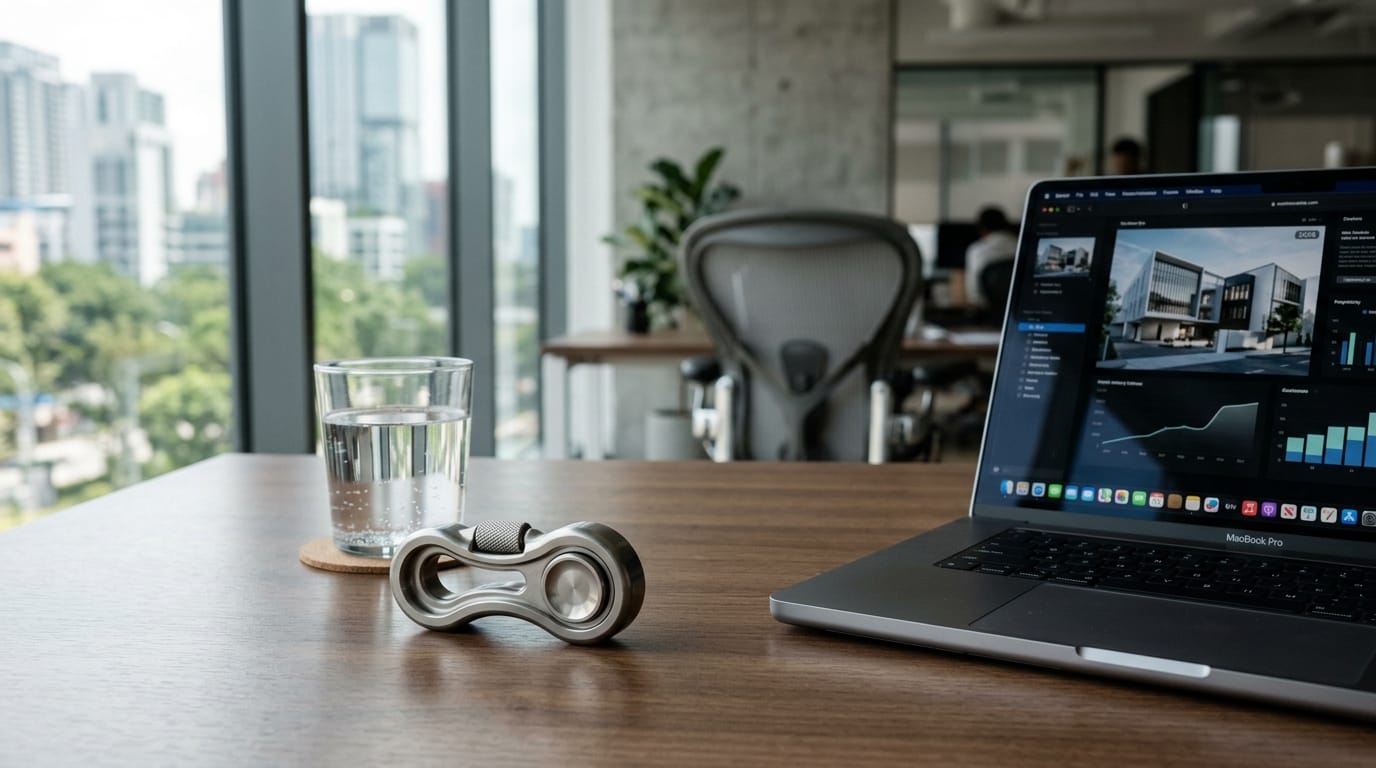
The Evolution: From Playthings to Desk Accessories
The trajectory of the sensory tool market has undergone a significant transformation since the viral, albeit transient, fidget spinner craze of 2017. While that era established a broad association with play, the industry has since pivoted toward sophisticated, utilitarian design. As noted in industry analysis, “The market is maturing from ‘general sensory play’ to products targeting highly specific developmental or therapeutic needs” (Startinal Toys Market Trends). This professionalization is reflected in a market trajectory poised to reach 6.16 billion USD by 2035 with a steady 11% CAGR.
Today, the workplace has become the primary laboratory for these advancements. Data suggests that 62% of adult office workers now utilize fidget tools specifically for stress mitigation, while 42% of consumers cite anxiety relief as their primary motivation for purchase. The modern professional aesthetic prioritizes subtlety; the market is increasingly favoring ‘quiet’ and ‘discreet’ devices—such as the ONO Roller—that allow for sensory regulation during high-stakes meetings without drawing unwanted attention. This shift has elevated the status of these items into premium desk accessories, with artisanal titanium editions now commanding price points exceeding 100 GBP.
The efficacy of these tools is increasingly supported by neurological research. A 2024 study linked rhythmic fidgeting to larger pupil diameters, a physiological marker signaling more efficient information processing and heightened cognitive engagement. As brands innovate, 39% of 2024 product launches have integrated digital elements, such as haptic feedback. Looking toward 2026 and beyond, we anticipate the next frontier: the integration of AI-driven, emotionally aware haptic feedback into screen-free tools, further blurring the line between personal wellness devices and professional productivity enhancers.

Design for Adults: Muted Colors and Premium Materials
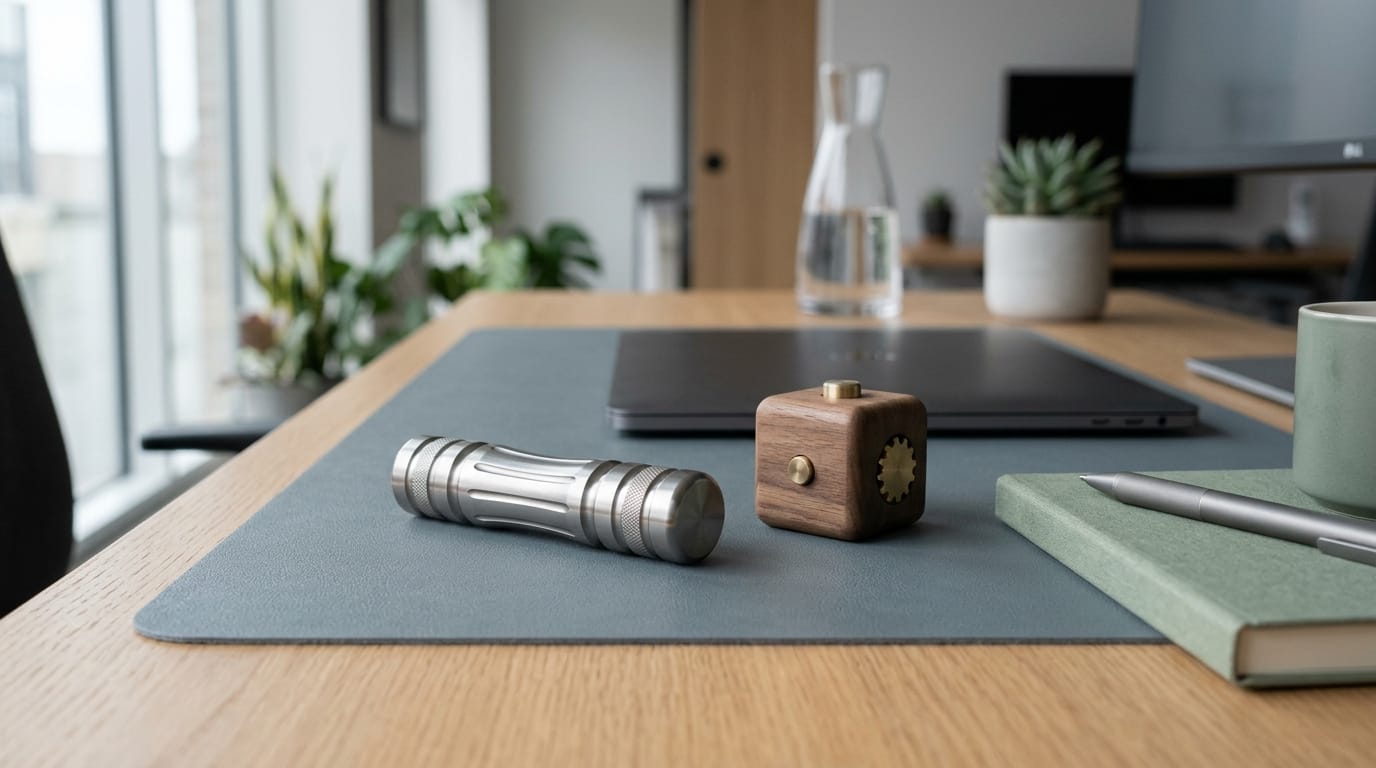
As the global sensory toys market projects a growth toward 6.16 billion USD by 2035 with an 11% CAGR, the narrative surrounding fidget tools is undergoing a profound clinical and aesthetic maturation. Once unfairly tethered to the ephemeral viral trends of 2017, sensory devices are transitioning into essential EDC (Everyday Carry) instruments for the professional sector. With 62% of adult office workers utilizing these tools for stress management and 42% citing specific anxiety relief, designers are moving away from the bright, chaotic plastics of the past toward sophisticated, professional-grade materials. According to industry analysts, “The trend is towards toys that use sophisticated, muted color palettes (like the popular Morandi colors), natural wood finishes, and minimalist designs.” This shift caters to a user base that demands tools which are both quiet and discreet during meetings.
The market’s premium evolution is further evidenced by the emergence of CNC-machined titanium devices, such as the ONO Roller Titanium edition, which command price points exceeding 100 GBP. This shift toward high-tactility materials—metal, stone, and weighted wood—aligns with the physiological benefits of sensory regulation. A 2024 study suggests that controlled fidgeting may correlate with larger pupil diameters, serving as a biological indicator of more efficient information processing. As we look toward the 2026-2030 period, where 39% of new tools already incorporate digital elements like haptic feedback, these high-end, discreet devices serve as the essential bridge between analog comfort and future-facing, AI-integrated sensory support.
The Science of Fidgeting: Why It’s Not Just for Kids
While the 2017 viral phenomenon of fidget spinners initially relegated sensory regulation to the realm of children’s novelties, the market has undergone a significant maturation. By 2026, the perception of these tools has shifted toward professional utility, as evidenced by a global sensory toys market projected to reach 6.16 billion USD by 2035 with an 11% CAGR. Today, 62% of adult office workers rely on these tools primarily for stress relief, while 42% cite direct anxiety management as their primary motivation for purchase. Modern consumers are increasingly opting for discreet, tactile instruments like the Fidget Pen and the ONO Roller, which are designed to integrate seamlessly into corporate environments without causing distraction.
The neurological basis for this habit is rooted in sensory regulation. As noted in recent industry analysis, “Repetitive, small movements—like clicking, twisting, or spinning—can help regulate the nervous system, reduce anxiety, and improve concentration.” This is further supported by clinical observations; a 2024 study linked fidgeting to larger pupil diameters, a physiological marker indicating more efficient information processing during cognitive tasks. The market is responding to this biological demand with high-precision engineering, such as premium titanium tools like the ONO Roller Titanium edition, which command price points exceeding 100 GBP. Looking toward the future of 2026-2030, the sector is poised for further innovation, with 39% of new sensory toys already integrating haptic feedback—a precursor to upcoming advancements in AI-driven, emotionally aware sensory devices.
Modern Use Cases: Professional and Personal Settings
The integration of sensory regulation tools into the professional sphere has undergone a marked evolution since the transient, viral trends of 2017. While earlier iterations were often dismissed as mere novelties, today’s corporate landscape recognizes these instruments as essential implements for cognitive maintenance. Currently, 62% of adult office workers utilize fidget tools primarily for stress relief, transitioning the market toward discreet, quiet designs such as the Fidget Pen and the ONO Roller. These high-end instruments, with premium models like the titanium-crafted ONO Roller often exceeding 100 GBP, prioritize silent operation to facilitate use during high-stakes board meetings without disrupting professional decorum.
This adoption is supported by emerging neuro-physiological evidence; a 2024 study linked rhythmic fidgeting to increased pupil diameters—a biometric marker associated with more efficient information processing and heightened executive focus. As companies seek to optimize productivity, The Business Research Company notes that “major trends in the forecast period include rising adoption of stress toys in corporate wellness programs.” This shift aligns with broader market projections, which value the global sensory toys market at 6.16 billion USD by 2035 with an 11% CAGR.
Beyond the office, individual utility remains high, with 42% of consumers purchasing these tools specifically for anxiety management. The sector is currently experiencing a technological pivot, with 39% of 2024’s new product launches integrating digital elements like haptic feedback. Looking ahead, the trajectory for 2026-2030 points toward the inclusion of AI and emotionally aware haptic response systems, further embedding these tools into the daily workflow of the modern, high-performance professional.
Conclusion: Reframing Sensory Tools as Mature Tools
As we transition beyond the 2017 viral phenomenon of the fidget spinner, the categorization of sensory devices is undergoing a critical evolution. What was once dismissed as a transient trend has matured into a sophisticated pillar of modern mental wellness. As outlined by Future Data Stats, the global market is projected to reach 6.16 billion USD by 2035 with an 11% CAGR, signaling that sensory support is no longer a peripheral niche. The medical consensus is clear: “In the elderly and adult markets, sensory toys support cognitive rehabilitation, emotional regulation, and physical therapy.”
The efficacy of these tools is supported by both behavioral data and biological markers; specifically, a 2024 study linked fidgeting to larger pupil diameters, serving as a physiological proxy for more efficient information processing. This utility explains why 62% of adult office workers now utilize these tools for stress relief, while 42% cite direct anxiety management as their primary motivation for purchase. The market itself is shifting toward discreet, professional-grade instruments—such as the ONO Roller Titanium edition—that prioritize functionality over play. We invite you to explore further insights into the psychological mechanics of these interventions in our analysis, Why Keeping Your Hands Busy Helps Calm Your Mind.
Looking ahead, the integration of technology is already underway, with 39% of new sensory products in 2024 incorporating haptic feedback. By 2030, we expect these tools to feature advanced AI-driven emotional awareness, further cementing their status as essential assets for cognitive longevity. As clinical journalist Kevin Lee, I posit that reframing these instruments as mature, evidence-based wellness gadgets is not merely a branding exercise, but a necessary step toward inclusive, proactive mental healthcare.