
The Mess and Maintenance of Magnetic Putty
By Kevin Lee | 5/1/2026
The Allure of the Magnetic: Why We Reach for Putty
In an era where sensory wellness has evolved from niche internet subcultures into a cornerstone of clinical practice, magnetic putty has emerged as a premier tool for focus and anxiety regulation. As the ADHD productivity tools sector hurtles toward a projected 7.55 billion dollar valuation by 2033, we are seeing a significant shift in how neurodivergent individuals manage sensory input in professional environments. According to experts at Everyday Health, “Magnetic toys can make for a highly satisfying sensory experience. They often have a cool texture, make a satisfying sound, and are fun to watch as they gravitate toward each other.” This visceral, gravitating sensation is precisely what fuels the modern demand for such tactile interventions.
The efficacy of these tools is supported by clinical observation; currently, 72% of therapists now recommend fidget tools to assist with self-regulation, a stark contrast to the early days when such products were primarily associated with safety recalls regarding ingestion hazards. As we explore Why Your Brain Craves Tactile Satisfaction and Everyday ASMR, it becomes clear that modern users require more than just utility—they require aesthetic compatibility. Innovations like silicone-coated magnetic tools have been engineered to deliver silent tactile clicks, making them ideal for the modern shared workspace.
However, the integration of these tools into a professional workflow necessitates mindful maintenance. While modern laptops utilizing SSDs are largely immune to magnetic interference, physical integrity remains a factor; high-strength Neodymium magnets must be kept 2 to 3 feet away from sensitive sensors and traditional hard drives to prevent damage. Furthermore, to maintain the product’s performance, magnetic putty requires regular cleaning with a damp microfiber cloth to strip away skin oils that eventually degrade its physical properties. As the industry moves toward 2026, where multimodal tools combining tactile and auditory input are set to become the standard, the focus is shifting away from mere acquisition toward the deliberate cultivation of sensory habits.
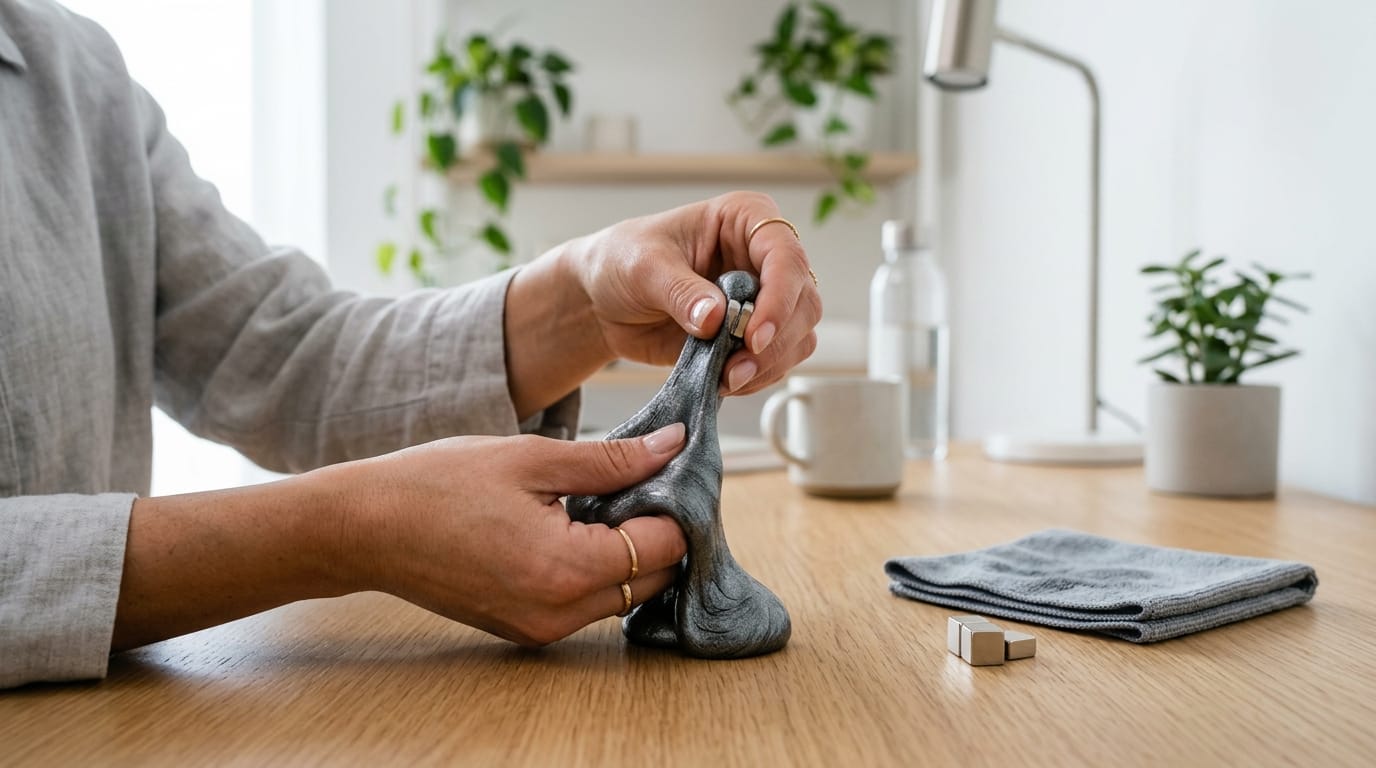
The ‘Pebble’ Problem: Analyzing the Physical Mess and Workspace Clutter
As sensory modulation tools transition from niche digital subcultures into mainstream clinical wellness, the ADHD productivity tools sector is rapidly expanding, with projections placing its valuation at 7.55 billion dollars by 2033. With 72% of therapists now endorsing fidget toys for focus and anxiety regulation, the professional environment has seen an influx of tactile devices. However, this shift introduces logistical friction, particularly concerning magnetic putty. While modern laptops utilizing SSDs are immune to magnetic fields, the physical reality of loose magnetic components remains a nuisance in the contemporary office. As noted in a report on sensory interventions, “It’s messy if dropped (picture all those tiny magnetic pebbles rolling about).”
This ‘pebble’ problem is not merely a matter of tidiness; it carries technical risks. Neodymium magnets must be kept 2 to 3 feet away from traditional hard drives and sensitive internal sensors to prevent hardware interference. Furthermore, the maintenance of magnetic putty requires regular cleaning with a damp microfiber cloth to remove skin oils that degrade its tactile effectiveness. As we move toward 2026, where multimodal tools—combining tactile and auditory stimulation—are expected to become the industry standard, the market is pivoting toward professional designs. Newer silicone-coated magnetic tools are being engineered specifically to mitigate these physical hazards, offering silent tactile feedback that fits a professional aesthetic while preventing the scatter-risk inherent in traditional putty compositions.
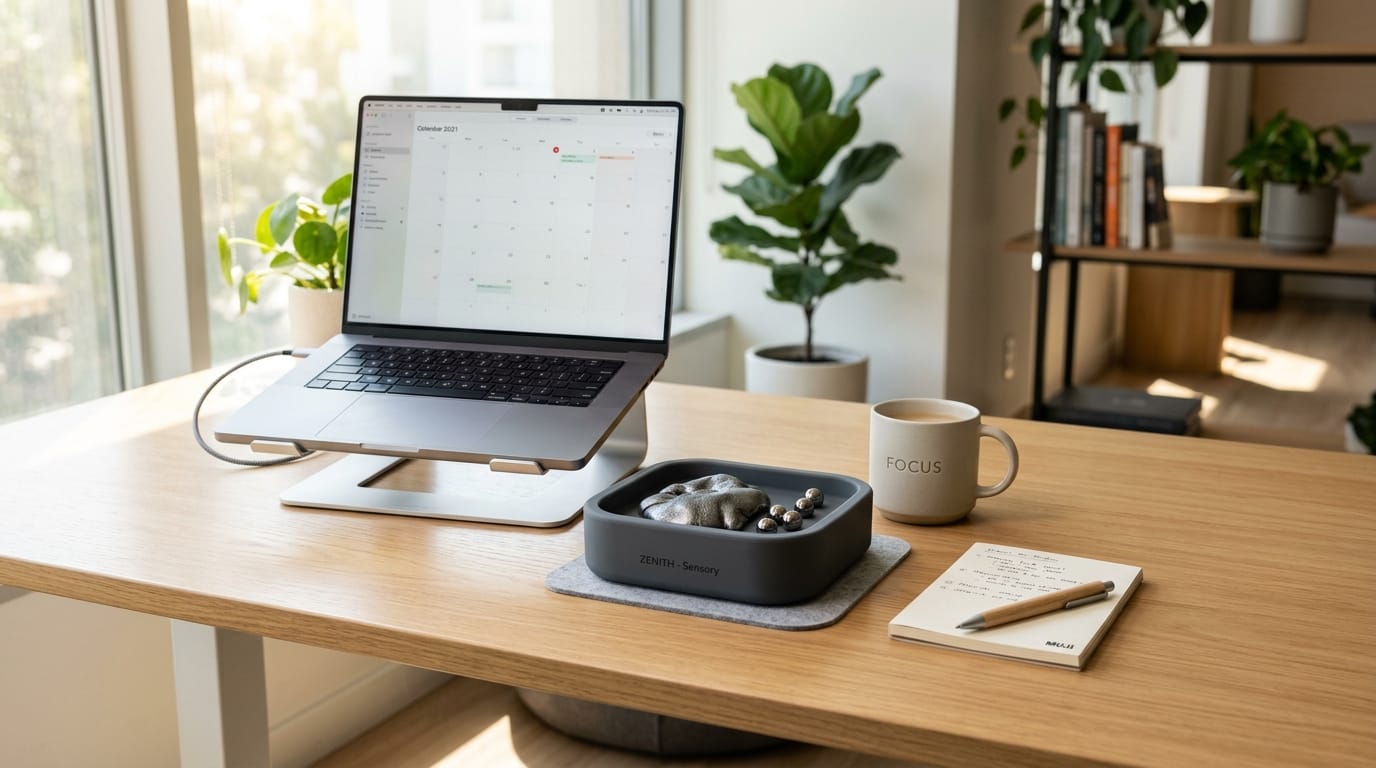
Maintenance and Hygiene: The Hidden Lifespan of Loose Sensory Media
As the ADHD productivity tools sector marches toward a projected 7.55 billion dollar valuation by 2033, the integration of these sensory aids into professional environments has necessitated a shift from casual usage to disciplined maintenance. With 72% of therapists now recommending fidget toys for focus and anxiety regulation, the longevity of these materials—particularly magnetic putty—has become a clinical concern. Unlike silicone-coated magnetic tools designed for silent tactile engagement in shared workspaces, magnetic putty is uniquely susceptible to environmental degradation.
The primary antagonists to the integrity of magnetic sensory media are accumulated skin oils and office particulates. Over time, these contaminants compromise the silicone matrix, leading to a loss of elasticity and magnetic responsiveness. To maintain efficacy, users must adhere to strict cleaning protocols, utilizing only a slightly damp microfiber cloth to gently remove debris. As noted by industry experts, “Avoid abrasive pads, strong solvents such as acetone or lacquer thinner, and excessive heat, as these can degrade the silicone matrix and the embedded iron particles.”
Proper storage is equally vital to ensuring a long operational lifespan. While modern laptops utilizing solid-state drives (SSDs) are immune to the interference of magnetic fields, users must remain vigilant regarding physical force and legacy hardware. Neodymium-infused media should be stored at a minimum distance of two to three feet from traditional hard drives and sensitive internal sensors to prevent localized hardware damage. By treating these tools as medical-grade assets rather than disposable novelties, users can better align with the future of multimodal wellness, where habit formation and tool longevity replace the cycle of constant replacement.
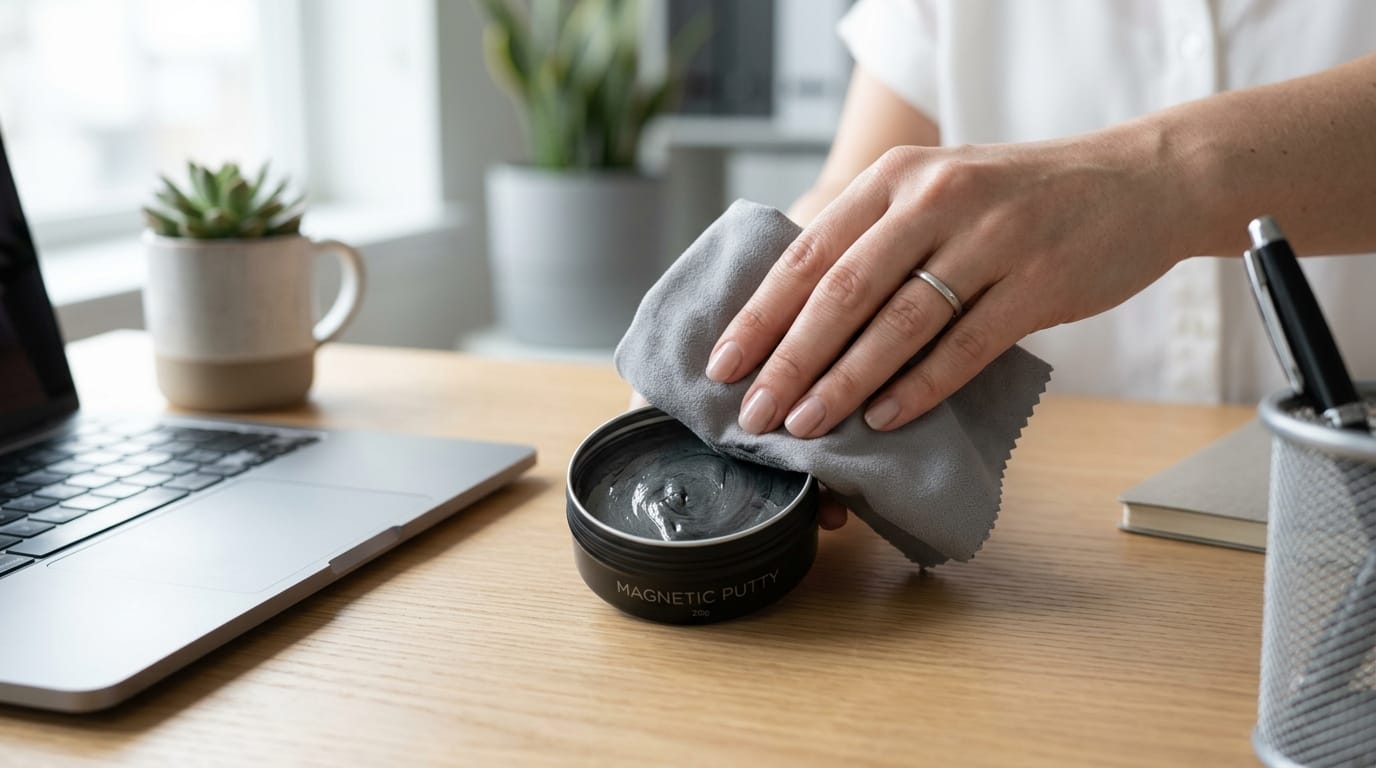
Safety and Liability: Beyond the Choking Hazard for Professional Environments
As the ADHD productivity tools sector eyes a projected valuation of 7.55 billion dollars by 2033, the integration of sensory regulation into corporate workflows has matured significantly. Where once ASMR and sensory aids were relegated to niche subcultures, 72% of therapists now recommend fidget tools for focus and anxiety regulation in professional settings. However, as these devices move from clinical offices to open-plan workspaces, the focus on safety must evolve beyond the standard warning that such items are not for small children because it poses a choking hazard. Professional environments introduce unique liabilities regarding magnetic interaction with office infrastructure. While modern laptops utilizing solid-state drives (SSDs) are immune to data corruption from magnetic fields, the physical durability of external casings remains a concern. To prevent damage to traditional hard drives or sensitive internal sensors, high-strength neodymium magnets should be kept at a clearance of two to three feet. Furthermore, maintenance is paramount; for instance, magnetic putty requires regular cleaning with a damp microfiber cloth to remove skin oils that degrade its material integrity. As we move toward a 2026 standard defined by multimodal tools, manufacturers are responding with silicone-coated magnetic instruments specifically engineered to provide silent tactile feedback, ensuring that sensory support does not infringe upon the professional or digital safety of a shared workspace.
The Rise of Contained Magnetics: Sliders, Enclosed Pellets, and Haptic Coins
The landscape of sensory regulation has shifted dramatically from the messy, often hazardous, magnetic putties of the past—which previously faced safety recalls due to ingestion risks—toward refined, professional-grade instruments. As we approach 2026, the ADHD productivity tools sector is projected to reach an impressive 7.55 billion dollars, driven by a new clinical consensus: 72% of therapists now recommend these devices to support focus and anxiety regulation in high-pressure work environments. Modern innovation focuses on containment and aesthetic integration, moving away from loose materials to precision-engineered sliders, haptic coins, and enclosed pellets.
For the professional, these tools offer a discreet outlet for nervous energy. Devices like those discussed in Plus-Plus USA’s guide to desk toys emphasize this transition, noting that “Odds Silicone Magnets are designed to sit smoothly in the palm of your hand for quiet fidgeting and a satisfying sensory experience.” These silicone-coated tools are specifically designed to offer silent tactile clicks and rolls, ensuring they remain unobtrusive in shared workspaces. As we move toward a future where multimodal tools—combining tactile and auditory feedback—become the clinical standard, the emphasis is shifting from mere acquisition to the cultivation of healthy, repeatable usage habits.
Clinicians and users alike must remain mindful of technical safety. While contemporary laptops utilizing Solid State Drives (SSDs) are generally immune to magnetic fields, strong neodymium magnets can still cause physical damage to sensitive equipment. As a standard precaution, these devices should be kept at least 2 to 3 feet away from traditional hard drives or sensitive internal sensors to maintain workplace hardware integrity. By prioritizing these contained, ergonomic designs, we can successfully merge the therapeutic necessity of sensory grounding with the rigorous demands of the modern corporate environment.
Decision Matrix: When to Use Putty vs. When to Go Contained
As the ADHD productivity tools sector is projected to reach 7.55 billion dollars by 2033, the integration of tactile regulation into professional life has evolved from niche subculture interest to a clinical standard. With 72% of therapists now recommending fidget tools for focus and anxiety regulation, understanding the ergonomics of your workspace is critical. As noted in Everyday Health, “High discretion means it can easily be used at a desk.” This metric of ‘discretion’ serves as our primary guide for tool selection. When choosing between loose magnetic putty and contained tactile tools, evaluate the environmental impact first; while modern laptops with SSDs are resilient to magnetic fields, physical damage from strong magnets remains a concern for sensitive internal hardware. Therefore, standard protocol dictates that neodymium magnets be kept 2 to 3 feet away from traditional hard drives and delicate sensors. For those working in open-office environments, silence is paramount. Silicone-coated magnetic tools are specifically designed to offer silent tactile clicks and rolls, ensuring that your quest for sensory regulation does not disrupt your colleagues. Conversely, if you opt for magnetic putty, prepare for routine maintenance; the substance requires regular cleaning with a damp microfiber cloth to remove skin oils that compromise its physical properties. Whether you gravitate toward the fluid nature of putty or the structured feedback of a clicker, understanding Why Your Brain Craves Tactile Satisfaction and Everyday ASMR will help you build sustainable habits. As we move toward 2026, where multimodal tools—combining tactile and auditory feedback—become the gold standard, prioritizing workspace health and tool-habit formation will ensure your sensory support remains a discreet, effective professional asset.
Frequently Asked Questions
Yes, ingesting magnetic putty is a severe medical emergency. Because it contains high-powered neodymium magnets, these pieces can attract each other across intestinal walls, causing perforations, blockages, or necrosis. If you suspect ingestion, seek immediate emergency care and do not wait for symptoms like abdominal pain or vomiting to appear.
While generally safe for tactile play, some users may experience contact dermatitis due to chemical residues or stabilizers within the putty. If your skin develops redness, itching, or rashes after handling, discontinue use immediately. Always wash hands thoroughly after contact to prevent accidental ingestion or transfer of particles to sensitive areas.
Magnetic putty fragments can cause serious corneal abrasions or ocular irritation. If particles enter your eye, do not rub it, as the magnetic properties may increase trauma. Flush the eye gently with sterile saline or clean water immediately, and consult an ophthalmologist to ensure all debris is safely and completely removed.