
Frictionless Rolling: The Neurology of Smooth Motion for Focus
By Kevin Lee | 5/1/2026
The Anatomy of Smooth: Defining Frictionless Rolling
In 2026, the perception of fidgeting has undergone a profound clinical rehabilitation. What began as the 2017 viral phenomenon of the fidget spinner has matured into a sophisticated landscape of multimodal tools, reflecting a market for ADHD productivity instruments projected to reach $7.55 billion by 2033. As we explore Why Your Brain Craves Tactile Satisfaction and Everyday ASMR, it becomes evident that the sensory experience of ‘frictionless rolling’ has emerged as a distinct therapeutic category. For the 46-69% of children—and an increasing number of adults—exhibiting sensory over-responsivity, this precise tactile input is not merely a distraction; it is a mechanism for neurological regulation.
The clinical efficacy of these tools lies in their physical construction. Industry benchmarks show that hybrid bearings, utilizing silicon-nitride balls, reduce internal friction and vibration by approximately 40% compared to traditional steel, providing a tactile experience characterized by low shear force and near-silent operation. While full-ceramic bearings remain the gold standard for absolute silence, their relative brittleness necessitates a balance between durability and auditory feedback. As noted by PlusPlusUSA, “ONO offers up another option: two frictionless Rollers that you can smoothly and silently turn in your hand.”
This silent motion is more than a preference; it is a physiological necessity. Frictionless tactile stimulation supports parasympathetic dominance, effectively lowering cortisol levels in high-pressure environments. Mechanistically, unilateral hand tasks evoke bilateral reflex EMG responses via transcallosal pathways, bridging the gap between localized movement and systemic neurological calming. With 72% of therapists now integrating these tools into mainstream clinical practice, the future of the field looks toward the integration of micro-sensors into these high-precision bearings. By monitoring user stress levels in real-time, we are moving toward a workspace design that treats neurodiversity as a core operational focus, rather than an afterthought.
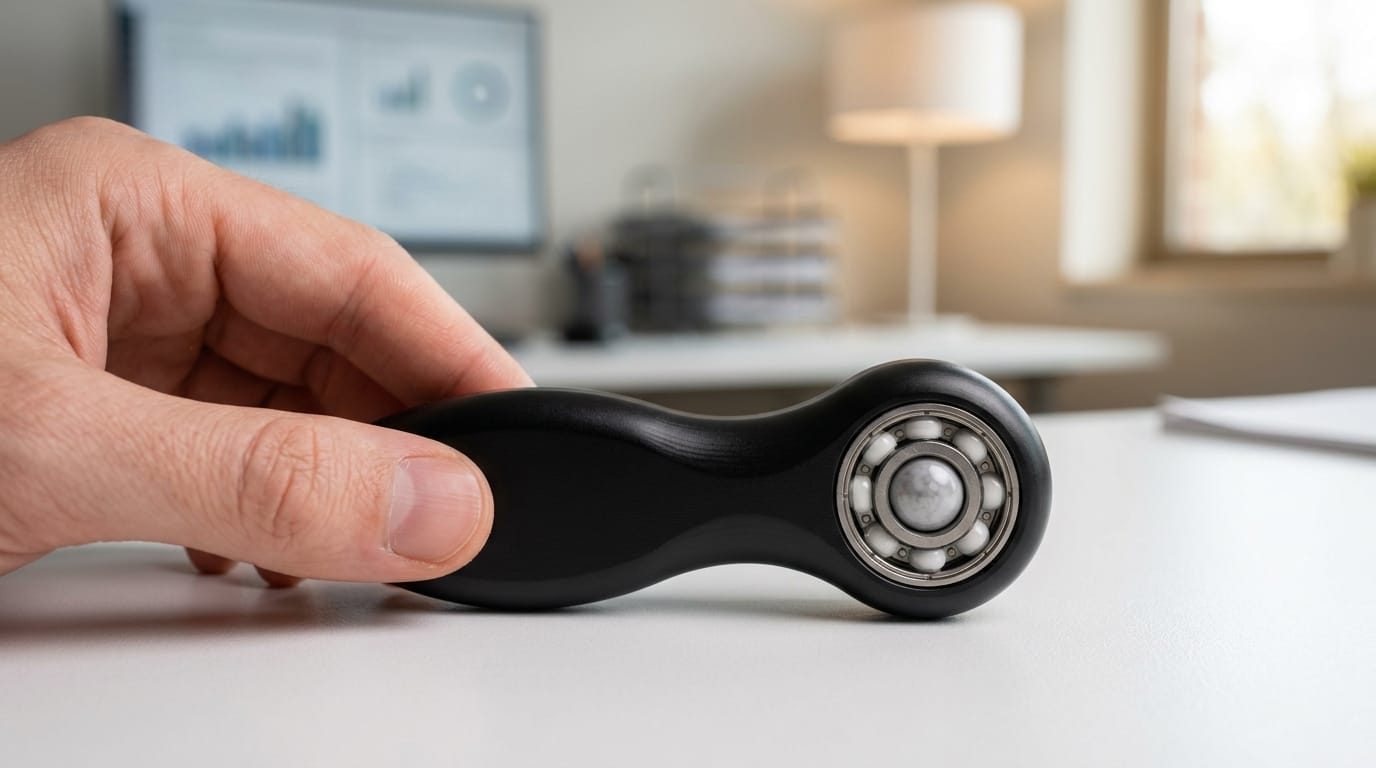
Neurological Feedback Loops: How Low-Friction Stimuli Reduces Cognitive Load
In the landscape of modern neuro-wellness, the transition from the crude, high-friction fidget spinner craze of 2017 to the high-precision sensory tools of 2026 marks a paradigm shift in therapeutic strategy. As 72% of therapists now integrate fidget tools into mainstream clinical practice, the focus has moved toward ‘multimodal’ implements engineered for specific neural outcomes. This shift is critical given that 46-69% of children with ADHD exhibit sensory over-responsivity, a condition that necessitates carefully regulated input rather than chaotic tactile engagement. High-intensity, high-friction fidgeting often triggers significant neural activation, which can inadvertently increase cognitive load. Conversely, as noted in recent neuro-clinical observations, frictionless tactile stimulation—delivered through low-friction or passive skin contact that minimizes shear forces—produces relatively modest activation of the dorsolateral prefrontal cortex and supplementary motor area, allowing the somatosensory system to convey subtle information without heavily engaging motor-planning networks.
This ‘quiet neural profile’ supports parasympathetic dominance, effectively tempering stress levels. Engineering these tools requires a mastery of material science; for instance, hybrid bearings utilizing silicon-nitride balls reduce internal friction and vibration by approximately 40% compared to traditional steel variants. While full-ceramic bearings remain the gold standard for absolute silence, their relative brittleness necessitates the current preference for hybrid models in professional environments. The efficacy of these tools is further validated by the fact that unilateral hand tasks evoke bilateral reflex EMG responses via transcallosal pathways, suggesting that even simple, low-friction stimulation can foster balanced neurological activity. As the ADHD productivity tools sector is projected to reach $7.55 billion by 2033, we expect to see the integration of micro-sensors into these hybrid bearings, allowing for real-time stress monitoring. This evolution underscores a broader future where neurodiversity is no longer a peripheral concern but a foundational pillar of workspace design and human resource strategy.

One Hand, Two Hemispheres: The Science of Bilateral Stimulation in Rolling
In the landscape of 2026, the movement from niche sensory subcultures toward integrated clinical wellness is complete. With 72% of therapists now endorsing fidget tools in mainstream practice, we are seeing a shift from the novelty of the 2017 fidget spinner craze to high-precision, multimodal engineering. Central to this evolution is the mechanism of bilateral stimulation. As noted by the Zenify World 2026 Guide, “Bilateral Stimulation: Repetitive hand movements (squeezing, rolling, raking) activate both brain hemispheres,” a process that fosters a sense of groundedness and focus. Physiologically, unilateral hand tasks evoke bilateral reflex EMG responses via transcallosal pathways, effectively engaging the brain’s regulatory centers to soothe anxiety.
The efficacy of these tools now relies on frictionless tactile feedback, which supports parasympathetic dominance and stress reduction—a critical requirement given that 46-69% of children with ADHD exhibit sensory over-responsivity. To achieve this, engineers are leveraging sophisticated components: hybrid bearings with silicon-nitride balls reduce internal friction and vibration by approximately 40% compared to traditional steel models, while full-ceramic bearings remain the gold standard for absolute silence, albeit with higher brittleness. As the ADHD productivity tools sector hurtles toward a projected $7.55 billion valuation by 2033, the future of these devices lies in the integration of micro-sensors within hybrid bearings to monitor user stress levels in real-time. This technological maturation mirrors a broader corporate shift, as neurodiversity is increasingly recognized as a foundational pillar of human resource design and professional workspace architecture.
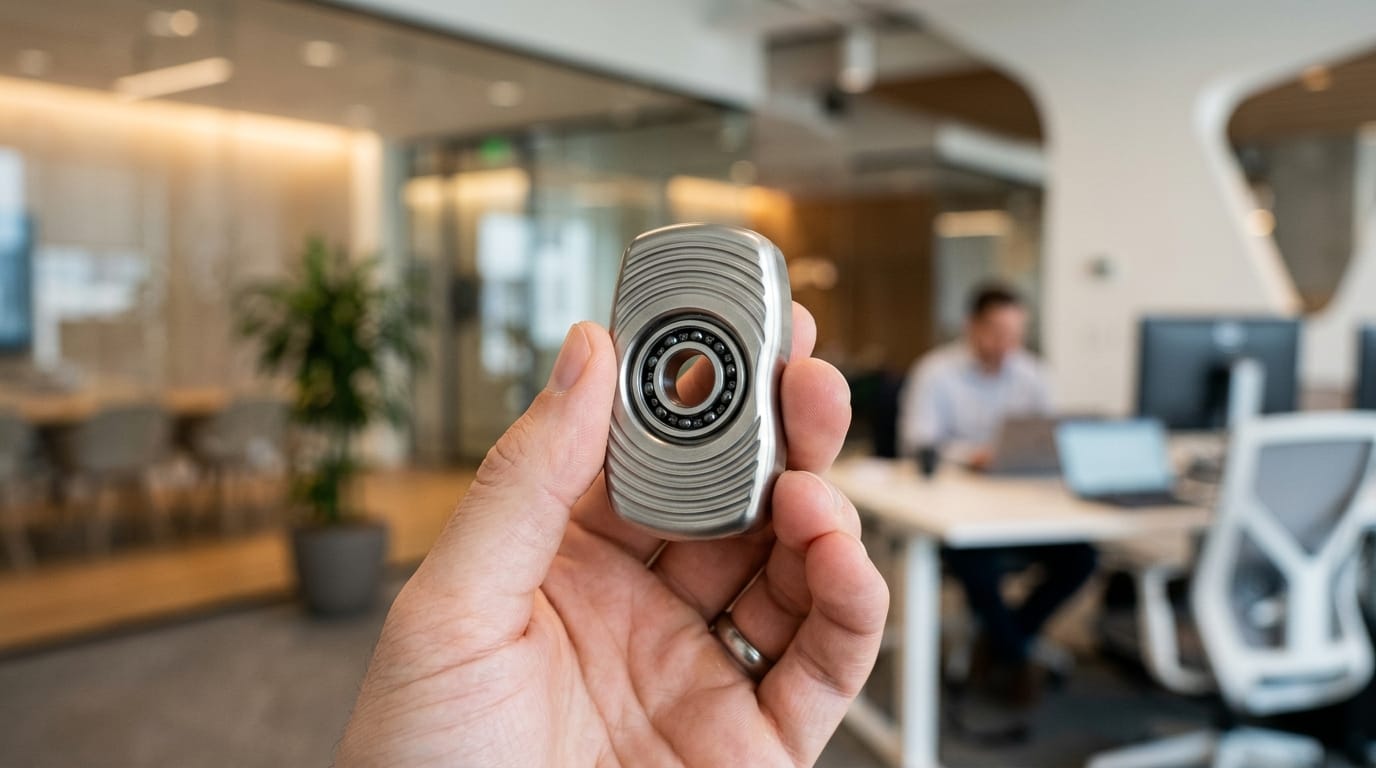
Material Matters: Ceramic Bearings and the Physics of Silence
In 2026, the sensory tool landscape has evolved from the rudimentary plastic fidget spinners of 2017 into an arena of high-precision mechanical engineering. With 72% of therapists now recommending tactile fidget tools as part of mainstream clinical practice, the focus has shifted toward ‘multimodal’ instruments that prioritize auditory and haptic subtlety. This transition is essential, as 46-69% of children with ADHD exhibit sensory over-responsivity, requiring regulated, non-distracting input to maintain focus. The ADHD productivity tools sector is projected to reach $7.55 billion by 2033, driven by the understanding that frictionless tactile stimulation effectively supports parasympathetic dominance and systemic stress reduction.
At the center of this technical revolution are advanced bearing materials. Hybrid bearings, utilizing silicon-nitride balls, have been shown to reduce internal friction and mechanical vibration by approximately 40% compared to traditional steel components. For applications requiring near-absolute auditory neutrality, however, designers have pivoted toward full-ceramic compositions. As noted in industry standards, full-ceramic bearings are prized for their inherently low-noise operation, making them the preferred choice for ultra-quiet, high-precision sensing applications. While these materials are more brittle than steel counterparts, their ability to deliver smooth, silent feedback is unmatched.
The clinical efficacy of these high-precision tools relies on physiological reality: unilateral hand tasks evoke bilateral reflex EMG responses via transcallosal pathways, meaning the quality of sensory feedback directly impacts cognitive regulation. Looking ahead, the integration of micro-sensors into these hybrid bearings will soon allow for real-time monitoring of user stress levels, further cementing the role of neuro-inclusive design in the modern workplace. As neurodiversity becomes a core focus of HR and organizational architecture, the physics of silence has transitioned from a mere manufacturing preference to a medical imperative.
From Fidgeting to Flow: Practical Workday Applications
In the evolving landscape of 2026, the perception of sensory regulation tools has undergone a profound transformation. Moving past the 2017 fidget spinner craze—which initially categorized these tools as ephemeral novelties—we now recognize that 72% of therapists actively prescribe sensory input as a standard element of clinical practice. This shift is mirrored by an ADHD productivity market projected to reach $7.55 billion by 2033, signaling a transition toward high-precision engineering for the neurodivergent professional. Because 46-69% of children with ADHD exhibit sensory over-responsivity, the transition to adulthood necessitates discreet, regulated input tools that maintain professional decorum.
For the modern office, silent operation is the gold standard. To achieve this, manufacturers now utilize hybrid bearings with silicon-nitride balls, which reduce internal friction and vibration by approximately 40% compared to traditional steel variants. While full-ceramic bearings offer near-absolute silence, their relative brittleness often makes hybrid iterations the preferred choice for daily durability. These tools are far more than mere distractions; frictionless tactile stimulation supports parasympathetic dominance and stress reduction. Furthermore, unilateral hand tasks evoke bilateral reflex EMG responses via transcallosal pathways, essentially engaging the brain’s regulatory centers without requiring conscious cognitive effort.
Integrating these tools into a workspace requires a balance of form and function. As one industry analysis notes, The Fidget Pen easily blends into almost any setting, offering a ‘hidden in plain sight’ experience… it acts like Superman in disguise. This “hidden in plain sight” capability is vital for managing social stigma while harnessing the benefits of multimodal sensory input. Looking toward the future, the next iteration of workspace ergonomics will likely involve the integration of micro-sensors into these bearings to monitor physiological stress levels in real-time, further solidifying the role of neurodiversity-affirming technology in the corporate sector.
Summary: Engineering the Ideal Sensory Environment
As we synthesize the developments of the past decade, it is clear that sensory regulation has moved from the fringes of internet subculture to the center of professional productivity. With 72% of therapists now endorsing fidget tools as standard clinical practice, the transition from novelty items to high-precision instruments is complete. The shift toward hybrid bearings—which reduce vibration by 40% using silicon-nitride—reflects a sophisticated understanding that our tools must meet the neurological needs of the user. As noted by the experts at Zenify, “Your workspace should actively support your mental health, not merely accommodate it.” This imperative is essential given that up to 69% of children with ADHD struggle with sensory over-responsivity.
We now understand the biomechanical reality behind these tools: unilateral hand engagement triggers bilateral reflex EMG responses via transcallosal pathways, a phenomenon further explored in our analysis of Why Your Brain Craves Tactile Satisfaction and Everyday ASMR. As the ADHD productivity sector tracks toward a $7.55 billion valuation by 2033, the future of workspace design will rely on integrating real-time micro-sensor feedback. By prioritizing frictionless motion, we are not merely providing a distraction; we are making a deliberate choice to foster parasympathetic dominance. In an age of infinite digital noise, selecting an instrument that offers regulated, tactile input is a vital strategy for achieving sustained, active focus. – Kevin Lee
Frequently Asked Questions
Frictionless rolling refers to the brain’s ability to transition between cognitive tasks without experiencing ‘mental drag’ or executive function fatigue. By optimizing neural pathways, the brain achieves a state of fluid movement, allowing for sustained attention and deeper focus, similar to how mechanical systems operate efficiently when friction is removed.
By minimizing cognitive friction, the brain conserves metabolic energy and reduces the neural strain typically associated with task switching. This ‘frictionless’ state promotes neuroplasticity and strengthens connectivity between the prefrontal cortex and sensory processing regions, enabling individuals to maintain high-level concentration for longer periods without the common symptoms of burnout.
Yes, adopting consistent sleep hygiene, specific mindfulness protocols, and structured cognitive breaks can help regulate neurotransmitter levels. These practices act as a lubricant for the brain’s executive systems, reducing internal resistance. When neural architecture is supported by these habits, the brain moves more naturally between complex tasks, enhancing overall productivity.
Expert Resources