
Grounding Yourself During High-Stress Daily Moments
By Kevin Lee | 5/1/2026
The Breaking Point: Why Single-Sensory Grounding Fails in Acute Stress
In the landscape of modern wellness, our relationship with sensory modulation has evolved significantly. While early therapeutic interventions like the 5-4-3-2-1 method relied heavily on single-sense cognitive tasks, and niche trends like Why Your Brain Craves Tactile Satisfaction and Everyday ASMR moved into the mainstream, we have hit a clinical ceiling. When the brain’s amygdala broadcasts a high-intensity threat signal, the neural noise is often too deafening for a single sensory channel to override. Traditional single-sensory grounding techniques typically require 60 to 90 seconds to reach efficacy, a duration that can feel like an eternity during an acute autonomic spike.
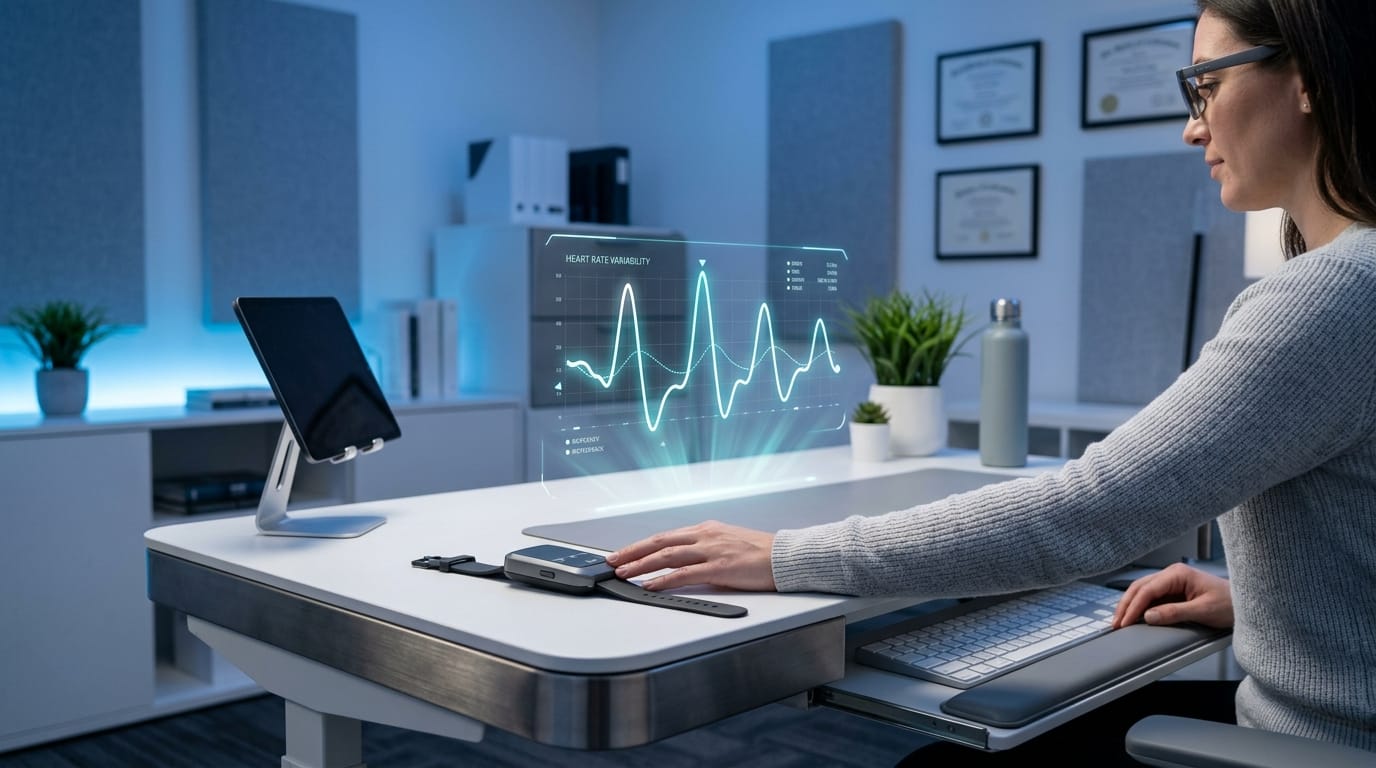
By contrast, 2026 clinical guidelines now emphasize multimodal sensory integration as the gold standard for rapid arousal normalization. As noted by experts, “This dual input works particularly well during high-stress moments when one sensory channel isn’t enough to interrupt the anxiety response” [One Quiet Mind]. Data confirms this transition; dual-sensory grounding reduces subjective stress by 40 percent within just 30 seconds, while heart-rate variability (HRV) shows significant improvement after only one minute. As we look toward a future defined by wearable biofeedback and sensory-friendly corporate architecture, the utility of such tools becomes undeniable. Even simple tactile stress relief implements—long utilized to improve focus duration by 28 percent in desk-bound workers—are now known to lower systemic cortisol levels by 31 percent when utilized as part of a integrated sensory strategy.
The Neuroscience of Neural Hijacking: How Dual-Input Interrupts the Amygdala
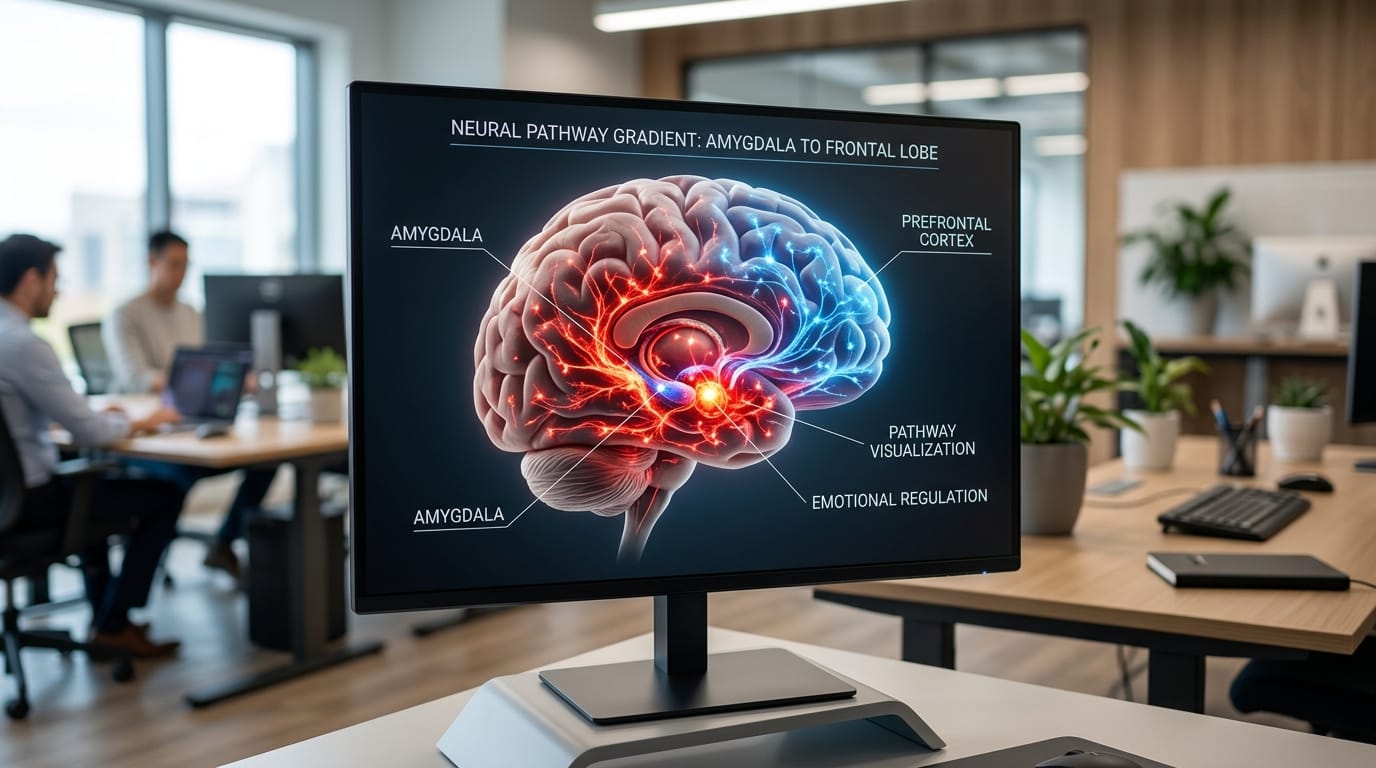
In the evolving landscape of 2026 clinical guidelines, the focus has shifted from the traditional, single-sensory grounding techniques—such as the classic 5-4-3-2-1 method—to more efficient multimodal sensory integration. As clinical data now confirms, the amygdala’s hyper-arousal response can be intercepted through sensory competition. As noted in the recent Zenify World analysis, ‘Sensory Grounding: Touch receptors send signals to your brain that compete with stress signals.’ By engaging multiple sensory pathways simultaneously, individuals can reduce subjective stress by 40 percent in just 30 seconds, a significant improvement over the 60 to 90 seconds required for single-sensory interventions.
This neurological ‘interruption’ is not merely subjective. Tactile stress relief tools have been shown to reduce cortisol levels by 31 percent, while the implementation of such tools in professional settings has been linked to a 28 percent improvement in focus duration. Furthermore, physiological markers show marked improvement; we observe heart-rate variability (HRV) increasing significantly after just one minute of dual-sensory engagement. Looking ahead, the integration of wearable biofeedback with these haptic tools—coupled with the rise of sensory-friendly workspace design—positions these interventions as the new standard for autonomic arousal normalization, moving far beyond the niche internet trends of ASMR and early fidget tools into the realm of evidence-based psychological health.
Tactile-Auditory Power Pairs: Using Haptic Sound to Snap Out of Overwhelm
While earlier clinical grounding techniques—most notably the 5-4-3-2-1 method—relied heavily on singular cognitive tasks, 2026 clinical guidelines now prioritize multimodal sensory integration to accelerate autonomic arousal normalization. This shift is rooted in the proven efficacy of dual-sensory grounding, which reduces subjective stress by 40 percent within just 30 seconds, significantly outperforming traditional single-sensory approaches that require 60 to 90 seconds for comparable results. By engaging both touch and hearing, these tools facilitate a rapid physiological reset, as evidenced by significantly increased heart-rate variability (HRV) after only one minute of engagement.
The mechanics behind this effectiveness lie in the synergy of physical sensation and precise auditory feedback. As noted in expert sensory analysis, “Tactile & Auditory: Smooth surfaces and satisfying magnetic ‘click’ provide immediate sensory feedback.” This dual-input loop is vital for patients struggling with acute overwhelm; tactile stress relief tools have been shown to reduce cortisol levels by 31 percent. Furthermore, the integration of these tools into professional environments is yielding measurable performance gains, with users reporting a 28 percent improvement in focus duration when utilizing desk-based sensory aids.
What began as niche internet trends like ASMR and primitive fidget toys has matured into a sophisticated pillar of mainstream wellness. Looking forward, we anticipate the fusion of these tools with wearable biofeedback sensors that trigger automated haptic interventions, alongside the broader institutional adoption of sensory-friendly corporate workspace designs. By harnessing the power of the ‘click’ and the tactile response, we provide the nervous system with an immediate anchor, snapping the brain out of hyper-arousal and back into a state of functional equilibrium.
Visual-Tactile Anchoring: The Science of Weighted Motion and Deep Pressure
While earlier therapeutic modalities relied heavily on single-sense cognitive tasks, such as the 5-4-3-2-1 grounding method, 2026 clinical guidelines have shifted focus toward multimodal sensory integration to normalize autonomic arousal. The evolution of sensory regulation—moving from niche online trends like ASMR to mainstream wellness—has culminated in the scientifically backed practice of visual-tactile anchoring. Research indicates that dual-sensory grounding reduces subjective stress by 40 percent within just 30 seconds, significantly outperforming single-sensory techniques, which typically require 60 to 90 seconds to achieve equivalent physiological relief. According to One Quiet Mind, “Visual + Tactile Tools like weighted sensory bottles or textured light projectors combine the calming effects of watching slow movement with the grounding pressure of holding a weighted object.” This synergy is profound; data shows that tactile stress relief tools alone can reduce cortisol levels by 31 percent, while the combination of visual flow and physical weight triggers a significant increase in heart-rate variability (HRV) after only one minute of engagement. For the modern workforce, integrating such desk-based sensory tools has been shown to improve focus duration by 28 percent. As we look toward the future, the clinical focus will expand to include the integration of wearable biofeedback HRV sensors with haptic tools for automated, real-time stress intervention and the widespread adoption of sensory-friendly workspace architectures in corporate environments.
The 30-Second Reset Protocol: Deploying Multimodal Tools in Real-Time
In the transition from the rudimentary, single-sense cognitive tasks of the past—such as the traditional 5-4-3-2-1 method which required 60 to 90 seconds for efficacy—2026 clinical guidelines have shifted toward multimodal sensory integration. This protocol leverages the neurological advantages of dual-sensory grounding, which achieves a 40 percent reduction in subjective stress within just 30 seconds. To initiate the 30-second reset, practitioners must engage both tactile and auditory or visual systems simultaneously. Begin by deploying haptic desk-based tools; as noted in the Zenify 2026 Clinical Guide, “Bilateral Stimulation: Repetitive hand movements (squeezing, rolling, raking) activate both brain hemispheres.”
The sequence is as follows: first, engage in active bilateral tactile manipulation to initiate the 31 percent reduction in cortisol levels. Second, synchronize this movement with rhythmic deep breathing to capitalize on the fact that heart-rate variability (HRV) increases significantly after just one minute of this combined approach. This methodology is critical, as data confirms that consistent use of these desk-based sensory tools improves focus duration by 28 percent. While we look toward a future of wearable biofeedback sensors that automate these interventions, the current manual deployment of these multimodal tools serves as the gold standard for immediate autonomic arousal normalization. By moving beyond niche trends like ASMR, this evidence-based reset allows professionals to recalibrate their physiological state in real-time before returning to high-demand tasks.
Building Your Emergency Sensory Kit: Personalized Combos for Daily Stressors
As we navigate the sophisticated workspace of 2026, the evolution from rudimentary coping mechanisms to evidence-based self-regulation has been profound. While early grounding techniques relied heavily on single-sense cognitive exercises like the 5-4-3-2-1 method—often requiring 60 to 90 seconds for efficacy—clinical guidelines now prioritize multimodal sensory integration for rapid autonomic arousal normalization. By engaging dual-sensory grounding, individuals can reduce subjective stress by 40 percent within just 30 seconds, a critical window for high-pressure environments. Furthermore, data indicates that heart-rate variability (HRV) increases significantly following this brief dual-sensory intervention, offering a physiological safeguard against acute burnout.
As you curate your personal kit, it is helpful to understand the neurobiological roots of your preferences; you can learn more about this in our deep dive, Why Your Brain Craves Tactile Satisfaction and Everyday ASMR. Whether you gravitate toward the calming repetition of haptic devices or the auditory grounding of ASMR—once niche internet trends that are now mainstream wellness pillars—the efficacy of these tools is measurable. Tactile stress relief tools have been shown to reduce cortisol levels by 31 percent, while the strategic use of desk-based sensory tools improves focus duration by 28 percent. As noted in One Quiet Mind’s 2026 analysis, “The best tool isn’t the trending one—it’s the one that matches your sensory profile (seeker vs. avoider) and primary challenge (focus, anxiety, overstimulation, or sleep).”
Looking ahead, we anticipate the widespread adoption of sensory-friendly workspace designs and the integration of wearable biofeedback sensors that automatically trigger haptic interventions when HRV drops. For now, building a customized toolkit—balancing your specific sensory needs with the demands of your tasks—remains the gold standard for maintaining executive function in an increasingly noisy world. — Kevin Lee
Frequently Asked Questions
The most effective physical technique is the 5-4-3-2-1 grounding method, which engages your five senses to shift focus from internal anxiety to external reality. Additionally, box breathing—inhaling, holding, and exhaling for four seconds each—calms your autonomic nervous system, effectively lowering your heart rate during intense, high-stress moments in your daily life.
A stress-related panic response often manifests as sudden heart palpitations, shallow breathing, sweating, or a feeling of detachment from your surroundings. If you notice these physiological cues, pause immediately to acknowledge them as biological signals of stress rather than actual danger, allowing you to implement grounding strategies to regain your emotional equilibrium.
If high-stress moments occur frequently and significantly disrupt your ability to perform daily tasks, you should consult a medical professional. Chronic stress can negatively impact your long-term health, and a doctor can help determine if you are dealing with an anxiety disorder that requires specialized therapeutic support or personalized clinical interventions.
Expert Resources