
Why Your Brain Craves Tactile Satisfaction and Everyday ASMR
By Kevin Lee | 4/30/2026
Introduction: The Universal Urge to Click and Roll
For decades, the rhythmic click of a pen or the nervous tapping of a foot were viewed merely as signs of distraction or, at best, niche behaviors relegated to developmental therapy settings. Once dismissed as mere internet subcultures, sensory engagement has undergone a radical transformation. We now recognize that the universal urge to fidget is not a failure of attention, but a biological mechanism for nervous system regulation. As discussed in our previous coverage on Why Your Brain Craves Tactile Satisfaction and Everyday ASMR, our physical interaction with our environment is a prerequisite for cognitive stability. Today, what was once considered a childish habit has evolved into a mainstream clinical intervention for adult stress, focus, and productivity.
The shift in perception is evidenced by the rapid commercial expansion of the sector. According to One Quiet Mind, 72% of therapists now recommend fidget toys for stress and focus management, and the ADHD productivity tools sector is projected to grow from $2.4 billion in 2025 to $7.55 billion by 2033. This growth is rooted in empirical success: research indicates that weighted handheld tools can reduce salivary cortisol levels within 5-10 minutes of use, while proprioceptive training can lead to a 26% gain in motor and sensory performance in healthy adults. Furthermore, as we navigate an increasingly digitized world, clinicians note that physical fidget tools require significantly less cognitive load than digital sensory apps, making them superior for grounding. With 95.8% of children with ASD and up to 69% of children with ADHD exhibiting sensory processing differences that these tools address, the medical community is now looking toward a future of ‘multimodal’ innovation—tools that integrate tactile, auditory, and olfactory stimuli to offer more potent regulation for the modern, overstimulated brain.

The Neuroscience of Sensory Grounding: Signal Competition in the Brain
Once relegated to the fringes of internet subculture or confined to pediatric developmental settings, sensory tools have evolved into a cornerstone of clinical nervous system regulation for the modern adult. This paradigm shift reflects a growing scientific consensus: our brains are not merely processors of mental stress but systems governed by competing sensory inputs. As noted in the 2026 Zenify Guide, “Sensory Grounding: Touch receptors send signals to your brain that compete with stress signals.” This biological ‘gate control’ mechanism is the mechanism by which physical touch effectively overrides the physiological markers of psychological strain.
The efficacy of this intervention is profound, with weighted handheld tools capable of reducing salivary cortisol levels within a 5-10 minute window. This immediacy underscores why 72% of therapists now integrate fidget tools into their treatment plans for stress and focus management. While the ADHD productivity tools market is currently surging toward a projected $7.55 billion valuation by 2033, the preference for analog devices remains robust; clinical observation confirms that physical fidget tools require significantly less cognitive load than digital sensory applications, allowing for seamless integration into high-pressure work environments. This is particularly vital given that 95.8% of children with ASD and up to 69% of children with ADHD experience sensory processing differences, a reality that necessitates these tools throughout the lifespan. Beyond mere symptom management, the application of proprioceptive training—the deliberate use of resistance and tactile feedback—has been shown to yield a 26% gain in motor and sensory performance in healthy adults. Looking ahead, the medical community is shifting focus toward ‘multimodal’ tools that layer tactile, auditory, and olfactory stimuli to achieve even more potent nervous system stabilization.

Bilateral Stimulation: How Repetitive Motion Syncs Your Hemispheres
Once relegated to niche internet subcultures or strictly pediatric developmental therapy, sensory regulation has evolved into a cornerstone of adult cognitive health. Today, we recognize that what was once dismissed as simple fidgeting is, in fact, a powerful physiological mechanism. As noted in the 2026 Zenify Guide to Desk Stress Relief, “Bilateral Stimulation: Repetitive hand movements (squeezing, rolling, raking) activate both brain hemispheres.” This synchronization is not merely a tactile preference; it is a clinical intervention that directly modulates the autonomic nervous system.
The efficacy of this approach is supported by robust data: 72% of clinicians now actively recommend fidget tools for managing adult stress and focus. This shift reflects a broader market trajectory, with the ADHD productivity tool sector projected to reach $7.55 billion by 2033. Unlike digital sensory applications, which often demand additional processing power, physical fidget tools utilize proprioceptive input to reduce cognitive load. The physiological impact is swift, with weighted handheld tools capable of lowering salivary cortisol levels in as little as 5-10 minutes. This is critical for neurodivergent populations; with 95.8% of children with ASD and up to 69% of children with ADHD exhibiting sensory processing differences, these tools provide a necessary anchor for neural stabilization.
Beyond immediate stress mitigation, we are seeing a shift toward long-term performance gains. Research indicates that consistent proprioceptive training can lead to a 26% improvement in motor and sensory processing in healthy adults. Looking ahead, the field is evolving beyond simple mechanical tools, moving toward ‘multimodal’ interventions that integrate tactile, auditory, and olfactory stimuli to achieve even more potent nervous system regulation. As these sensory strategies become mainstream, the integration of bilateral motion remains a primary, evidence-based pillar for maintaining focus in an increasingly high-stimulation landscape.
The Digital Antidote: Why Tactile Tools Beat Doom-Scrolling
Historically, ASMR and repetitive fidgeting were marginalized as niche internet subcultures or viewed exclusively as remedial tools for children with developmental needs. Today, however, the landscape has shifted; sensory tools have emerged as mainstream clinical interventions for adult stress, focus, and productivity. This evolution is underscored by a market projection estimating the ADHD productivity tool sector will reach $7.55 billion by 2033. For individuals navigating sensory processing differences—which affect 95.8% of children with ASD and up to 69% of children with ADHD—these interventions offer critical stabilization. Currently, 72% of therapists now formally recommend fidget tools for effective stress and focus management.
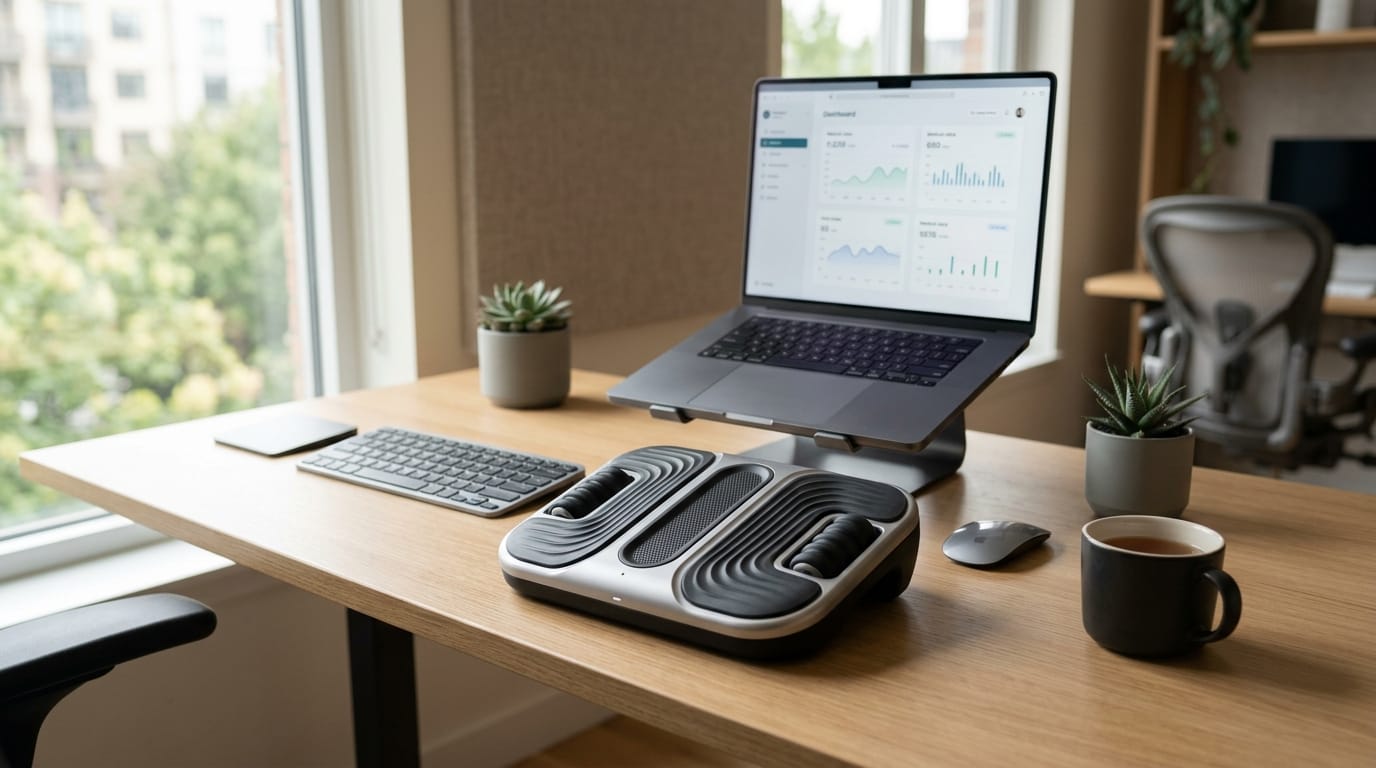
The shift away from digital platforms is driven by physiological demand rather than preference. While digital sensory apps attempt to mimic relief, they often impose a high cognitive load, effectively competing with the brain’s limited attentional resources. In contrast, physical fidget tools require significantly less cognitive load, allowing for deeper nervous system regulation. This is corroborated by a 2026 comparative study, which concluded that tangible fidget tools outperform equivalent digital sensory apps in terms of intuitive use, requiring less cognitive load and enabling quicker encoding and retrieval of actions (Source: 2026 sensory play study). Data further indicates that weighted handheld tools can reduce salivary cortisol levels within just 5-10 minutes of use, while proprioceptive training through these devices can drive a 26% gain in motor and sensory performance in healthy adults. Looking ahead, the field is rapidly evolving toward ‘multimodal’ tools that combine tactile, auditory, and olfactory stimuli for even more potent nervous system regulation, effectively positioning the physical fidget as a superior antidote to the fatigue of doom-scrolling.
Habit Loops: Using Micro-Breaks to Enforce Cognitive Resets
Once dismissed as niche subcultures or interventions reserved exclusively for developmental pediatrics, sensory tools have evolved into mainstream clinical mainstays for adult stress and cognitive optimization. As the ADHD productivity tools market surges toward a projected $7.55 billion valuation by 2033, the focus has shifted from mere acquisition to intentional integration. Clinical data underscores this shift: 72% of therapists now recommend tactile aids like fidget toys for effective stress and focus management, largely because physical tools impose significantly less cognitive load than digital sensory alternatives. This transition is critical, as recent studies indicate that proprioceptive training can yield a 26% improvement in sensory performance, while weighted handheld devices have been shown to reduce salivary cortisol levels within just 5-10 minutes of use. As noted in the Zenify 2026 Guide to Desk Stress Relief, “the barrier isn’t effectiveness; it’s the gap between buying tools and building habits around them.” By leveraging the established fact that up to 69% of individuals with ADHD navigate sensory processing differences, professionals can adopt ‘multimodal’ micro-breaks—brief, ritualized intervals of tactile or auditory engagement—to enforce the nervous system regulation necessary to prevent burnout.
Conclusion: Redefining Fidgeting as a Focus Essential
The evolution of sensory tools from niche subcultures to mainstream clinical interventions marks a critical shift in how we approach cognitive performance. Once relegated to developmental pediatrics, these tools are now recognized as essential for adult nervous system regulation, evidenced by the fact that 72% of therapists now actively recommend fidget devices for stress and focus management. As we navigate this transition, it becomes clear that Why Your Brain Craves Tactile Satisfaction and Everyday ASMR is not merely a preference, but a biological imperative.
The data reinforces this shift: with weighted handheld tools capable of reducing salivary cortisol levels within 5-10 minutes of use, the physiological benefits of these devices are quantifiable. Furthermore, physical fidget tools offer a distinct advantage over digital sensory apps by requiring significantly less cognitive load, allowing the user to remain tethered to their primary tasks. As noted in the 2026 Guide to Desk Stress Relief Tools, “Your workspace should actively support your mental health, not merely accommodate it.” This philosophy is supported by the 95.8% of children with ASD and 69% of children with ADHD who experience relief through sensory processing, and by the 26% gain in motor and sensory performance observed in healthy adults utilizing proprioceptive training.
Looking toward the future, the ADHD productivity tools market is projected to reach $7.55 billion by 2033, driven by a move toward ‘multimodal’ tools that integrate tactile, auditory, and olfactory stimuli. By redefining fidgeting as a legitimate ergonomic necessity rather than a distraction, we empower professionals to optimize their internal environments, turning the modern workspace into a hub for sustainable focus and mental resilience.
Frequently Asked Questions
The brain craves tactile input because sensory stimulation triggers the release of dopamine and oxytocin. These neurochemicals promote feelings of safety, connection, and emotional regulation. Historically, touch was vital for survival and social bonding, so our neural pathways remain hardwired to find physical engagement inherently soothing and deeply rewarding.
While ASMR is not currently a clinical prescription, emerging 2026 research highlights its efficacy in lowering heart rates and reducing cortisol levels. Many patients find it serves as a powerful, non-invasive therapeutic tool for managing mild anxiety and insomnia, though it should complement rather than replace traditional medical intervention.
Relying excessively on specific textures or stimuli for regulation can sometimes lead to sensory dependency, where individuals struggle to self-soothe without external triggers. It is important to cultivate a diverse range of coping mechanisms. If sensory seeking becomes compulsive or disruptive to daily functioning, consulting a healthcare professional is recommended.