
Why Your Last Fidget Toy Failed: The Sensory Match Secret
By Kevin Lee | 4/29/2026
Introduction: The One-Size-Fits-All Fidget Fallacy
For many, the quest for focus begins with a simple tactile trigger, yet the path to finding the right tool is often paved with discarded gadgets that never quite hit the mark. While the 2017 fidget spinner craze brought mass awareness to the category, it also shackled the concept to a ‘childish toy’ stigma, leaving many professionals to struggle in silence. Today, as the sensory tools market surges toward an expected USD 6.16 billion valuation by 2035 from its current USD 2.46 billion baseline, we are seeing a necessary evolution: the transition from child-centric designs to professional-grade, aesthetically mature instruments. Yet, market expansion does not guarantee individual efficacy. As noted by Business Research Insights, approximately 33% of adult fidget-toy users report dissatisfaction with their product choice, a clear indication that a one-size-fits-all approach is failing the modern workforce.
Understanding this frustration requires a shift in perspective. Research suggests that sensory needs are as unique as a fingerprint, rooted in the AASP-identified quadrants of Low Registration, Sensation Seeking, Sensory Sensitivity, and Sensation Avoiding. While 76% of adults prioritize tactile feedback, a product that provides soothing regulation for one individual may serve as a major distraction for another. We know that Why Keeping Your Hands Busy Helps Calm Your Mind, particularly when tools like magnetic devices facilitate rhythmic movement—a technique shown to boost working memory by 10-15% in adults with ADHD. However, as 39% of new 2024 launches pivot toward digital integration like light and vibration, the industry risks overcomplicating a physiological necessity. As we look toward a future of AI-driven, emotionally aware sensory experiences, we must first address why current mass-market solutions miss the mark, and how to align specific tools with the complex sensory profiles that define our cognitive performance.

The Science of Sensory Preference: Why Your Brain Craves Specific Feedback
As the global sensory toys market approaches a valuation of USD 2.46 billion in 2026—a figure projected to climb to USD 6.16 billion by 2035—we must look beyond the ‘childish’ stigma left by the 2017 fidget spinner craze. To understand why 76% of adult fidget-tool purchasers prioritize tactile feedback, we must first look at the neurological blueprint of the individual. Historically relegated to pediatric development, sensory tools are maturing into professional-grade assets, yet a disconnect persists; approximately 33% of adult users report dissatisfaction with their product choice, often due to a mismatch between their neurological processing style and the tool’s intensity.
This is where the Adolescent/Adult Sensory Profile (AASP) becomes essential. As noted in the AASP technical documentation, “Using quadrant scores—Low Registration, Sensation Seeking, Sensory Sensitivity, and Sensation Avoiding, the profile contains 15 questions in each quadrant.” These four distinct quadrants categorize how brains filter stimuli: Sensation Seekers might require the high-intensity input of rhythmic magnetic tools—which have been shown to boost working memory by 10-15% in adults with ADHD—whereas those with Sensory Sensitivity might find such inputs overwhelming. As the market evolves, with 39% of 2024 product launches integrating digital light or vibration, understanding these profiles is critical for the future of corporate wellness programs, where personalized, screen-free, and emotionally aware haptic feedback will likely define the next generation of stress management.
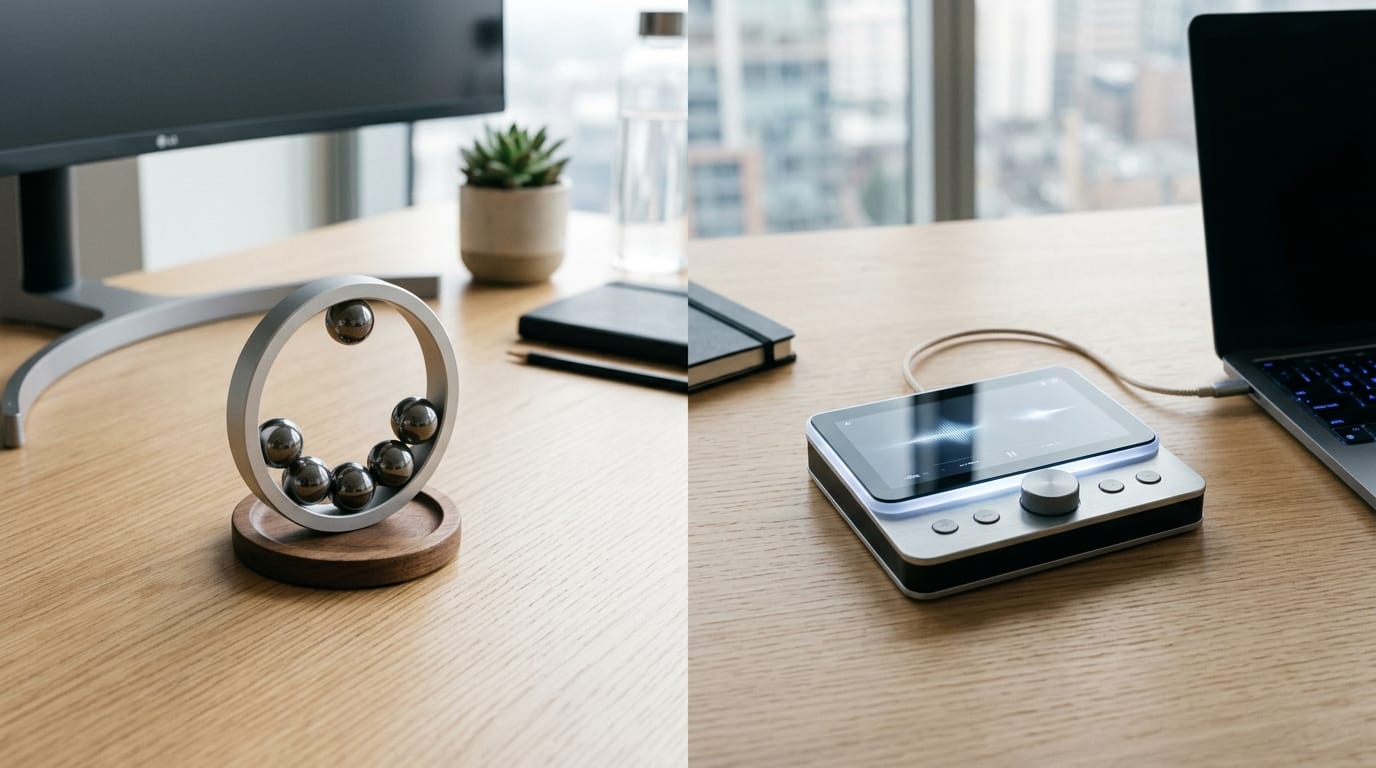
A Guide to Sensory Profiles: Tactile, Visual, Auditory, and Resistance
As we transition from the rudimentary fidget-spinner craze of 2017—which often cast sensory tools as trivial novelties—into a new era of professional-grade utility, understanding individual sensory needs has become critical. The global sensory toys market, valued at USD 2.46 billion in 2026 and projected to hit USD 6.16 billion by 2035, reflects this maturation. As noted in The Self-Care Spot, “First, we’ll start by simply labeling the eight aspects of your sensory system. You’re likely familiar with the ‘five senses,’ but may not realize there are three more.” By identifying where an individual falls within the AASP quadrants—Low Registration, Sensation Seeking, Sensory Sensitivity, or Sensation Avoiding—users can move beyond the ‘childish toy’ stigma of the past toward tools that facilitate genuine neurological regulation.
Tactile feedback remains the cornerstone of this evolution; 76% of adult fidget-tool purchasers rate it as extremely important. However, the market is currently seeing a 33% user dissatisfaction rate, largely due to a mismatch between sensory profiles and tool design. To bridge this gap, innovation is accelerating: 39% of 2024 product launches integrated digital elements like light, sound, or haptic vibration. Furthermore, the functional efficacy of these tools is supported by clinical trends, such as rhythmic fidgeting with magnetic tools, which has been shown to boost working memory by 10-15% in adults with ADHD. As we look toward a future of AI-integrated, screen-free sensory experiences and widespread corporate wellness adoption, matching the specific modality—tactile, visual, auditory, or resistance—to the individual’s unique sensory profile is the next frontier of neuro-ergonomics.
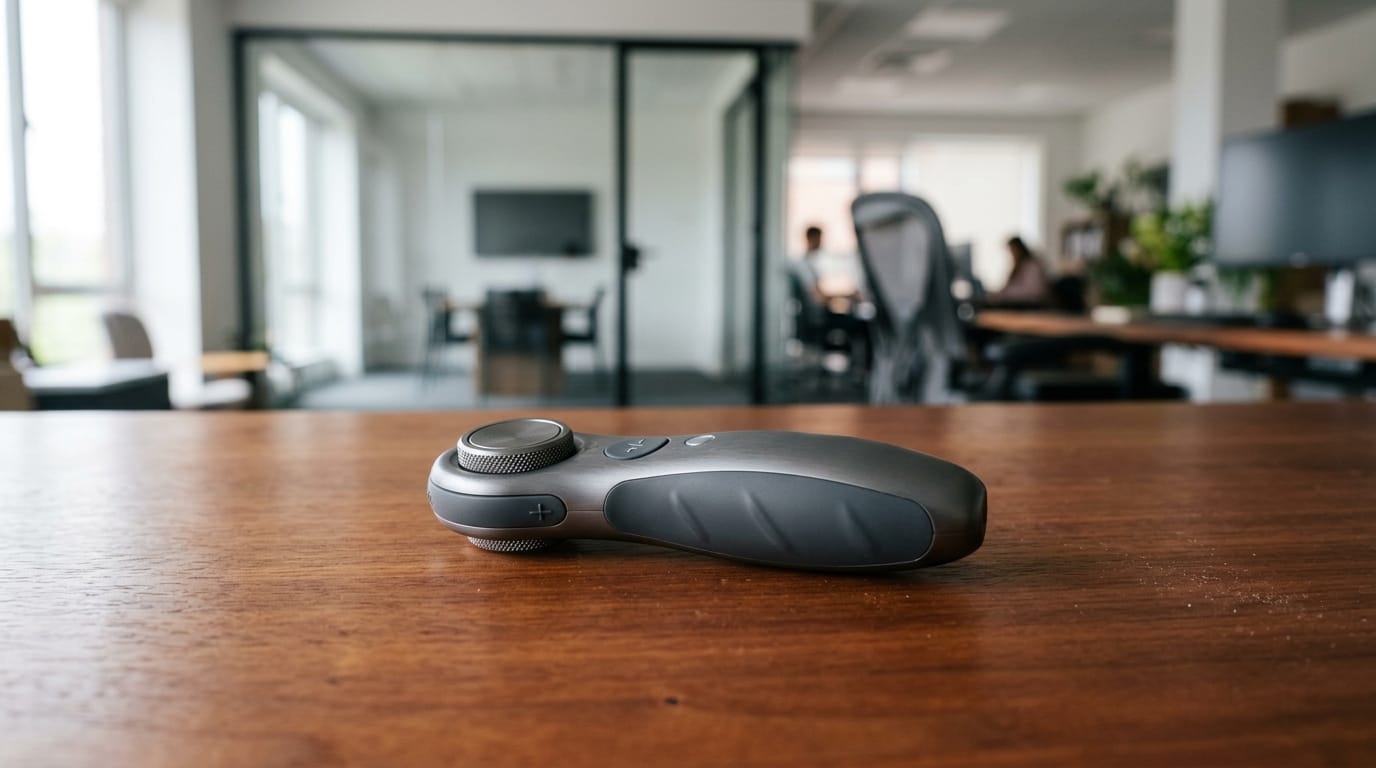
Common Mismatches: Why Your Last Toy Failed (Case Studies)
As the global sensory toys market expands toward a projected USD 6.16 billion valuation by 2035, the primary driver of failure for adult users remains a fundamental mismatch between neurological profile and tool functionality. Despite 76% of purchasers emphasizing the importance of tactile feedback, approximately 33% of adult fidget-toy users report dissatisfaction with their product choice. This dissonance often stems from a misunderstanding of the AASP four quadrants: Low Registration, Sensation Seeking, Sensory Sensitivity, and Sensation Avoiding. For instance, an employee with high Sensory Sensitivity may attempt to self-regulate using a high-intensity vibrating device—a common trend in the 39% of new toys integrating digital elements—only to find that the stimulation exacerbates, rather than mitigates, their workplace stress. Conversely, a user requiring high-resistance input often finds soft, yielding tools ineffective. As noted in clinical discussions, “Some folks find that the putty is a bit tough, too,” illustrating that resistance level is a highly individual variable that general-purpose tools frequently overlook (Everyday Health). While early tools were sequestered to developmental disorders and later stigmatized by the 2017 fidget spinner craze, the maturation of professional-grade equipment requires a more diagnostic approach. Whether it is an ill-timed rhythmic clicker in a silent boardroom or the use of a low-resistance tool for a Sensation Seeker, the data confirms that when the sensory input fails to align with the neurological demand, the potential for a 10-15% increase in working memory—often achieved through precise magnetic tool usage—is entirely lost.
How to Find Your Perfect Match: A Personal Experimentation Framework
With the global sensory toys market projected to reach USD 6.16 billion by 2035 from its 2026 valuation of USD 2.46 billion, the transition from the crude fidget spinners of 2017 to professional-grade, aesthetically pleasing tools for the modern office is nearly complete. Despite this growth, approximately 33% of adult users report dissatisfaction with their choices, often due to a lack of alignment between the tool and their innate sensory processing style. As the AASP identifies four distinct quadrants—Low Registration, Sensation Seeking, Sensory Sensitivity, and Sensation Avoiding—finding your optimal device requires moving beyond mere trends.
To build your custom framework, adopt a structured sensory journal. As noted by the The Self Care Spot, “A sensory profile is a way of mapping out your sensory needs and preferences. It considers each sense, one by one, helping to identify your responsiveness to sensory input and determine your ‘just right’ sensory experience.” Start by logging your stress levels and focus periods over a 14-day window alongside your interaction with various textures and inputs. With 76% of adults identifying tactile feedback as critical, testing is essential: for instance, evaluate if you are among those who benefit from the 10-15% increase in working memory associated with rhythmic fidgeting using magnetic tools.
The current landscape is rapidly evolving, with 39% of 2024 launches integrating digital light, sound, or haptic elements. As we look toward a future of AI-driven, emotionally aware sensory experiences, your journal should prioritize whether you prefer screen-free, analog tactile resistance or tech-integrated haptics. By documenting which specific stimuli regulate your nervous system, you transition from impulsive purchasing to intentional self-regulation, ensuring your tools—not just your stress—evolve with the demands of the modern workplace.
Conclusion: Embracing the Journey, Not the Gadget
As we conclude our analysis of the sensory landscape, it becomes evident that the pursuit of the ‘perfect’ fidget tool is less about acquisition and more about self-discovery. While the market has expanded from its 2017 origins—when the fidget spinner craze unfortunately cemented a ‘childish’ stigma—to a USD 2.46 billion industry projected to hit USD 6.16 billion by 2035, the real value lies in understanding one’s own neurological profile. The AASP framework, which classifies individuals into quadrants of Low Registration, Sensation Seeking, Sensory Sensitivity, and Sensation Avoiding, provides the roadmap for this introspection. For many, this process involves Why Keeping Your Hands Busy Helps Calm Your Mind, yet the path to optimization is rarely linear.
Data reveals that while 76% of adults prioritize tactile feedback, approximately 33% report dissatisfaction with their initial purchases. We should reframe this dissatisfaction not as a failure, but as a crucial data point; it signifies the transition of the industry from mass-market novelty to precision-engineered support. As noted by industry analysts, “The market is maturing from ‘general sensory play’ to products targeting highly specific developmental or therapeutic needs.” With 39% of 2024 launches now integrating sophisticated light and vibration, and the clinical evidence confirming that rhythmic magnetic manipulation can boost working memory by 10-15% in ADHD populations, the tools of tomorrow promise even greater efficacy.
Ultimately, whether you gravitate toward professional-grade office implements or the emerging AI-integrated haptic devices of the near future, the goal remains the same: autonomic regulation. By viewing your previous product trials as personalized data, you have moved beyond the gadget to a more nuanced understanding of your own sensory requirements. As corporate wellness programs increasingly adopt these tools to mitigate workplace stress, we look forward to a future where sensory maintenance is as standard as ergonomic seating. – Kevin Lee
Frequently Asked Questions
Sensory matching aligns a device’s specific tactile feedback with your nervous system’s unique threshold. When the resistance and texture harmonize with your brain’s processing style, the device effectively regulates dopamine levels. This prevents sensory overload, turning a simple distraction into a targeted, therapeutic tool for sustained emotional and cognitive regulation.
Most generic fidget toys lack variable sensory input, leading to habituation where your brain stops perceiving the stimulation as novel. Without intentional sensory matching, the tactile feedback becomes predictable and ineffective. Our 2026 approach emphasizes shifting stimuli, ensuring your device continues to satisfy your specific neurological requirements for long-term stress management.
Yes, identifying your sensory profile involves observing whether you prefer high-resistance tactile input, repetitive rhythmic motion, or subtle auditory feedback. By matching these preferences to clinical device categories, you avoid the ‘one-size-fits-all’ trap. Proper alignment ensures the toy addresses your specific sensory seeking or avoidance patterns for maximum therapeutic success.
Expert Resources