
Quiet Desk Toys for Professional Meetings
By Kevin Lee | 4/25/2026
Introduction: The Meeting Fidget Dilemma
In the high-stakes environment of 2026, the corporate boardroom has undergone a quiet revolution, yet the biological mandate for somatic engagement remains in conflict with the social pressure of sedentary performance. “You know that restless feeling when your hands just need something to do during an important Zoom call? I’ve been there, awkwardly clicking pens until my colleagues gave me that look,” admits a contributor at ToyGear360. This tension between professional stillness and the neurological necessity for movement is exactly Why Keeping Your Hands Busy Helps Calm Your Mind. While the late 2010s saw the fidget spinner rise as a disruptive trend often relegated to the realm of schoolyard distraction, the market is currently maturing into a landscape of expertly crafted, muted tools. These instruments are designed specifically for the professional, such as the Stimagz Dubz, which launched in April 2025 featuring modular magnetic pieces and a compact, pocket-friendly design.
The shift is backed by substantial data: 70 percent of therapists now advocate for fidget accessories to aid adult concentration. This shift is fueling a booming economy, with the global sensory toys market currently valued at USD 2.46 billion in 2026 and projected to reach USD 6.16 billion by 2035. Furthermore, the stress toy market is tracking toward a valuation of USD 7.95 billion by 2030, growing at a CAGR of 6.1 percent. Modern manufacturers are prioritizing acoustic discretion, a critical shift given that while a standard fidget spinner registers 20-25 dB, noisier legacy tools like the infinity cube can hit 45-55 dB, potentially violating the social contract of a quiet meeting. As 39 percent of 2024’s new sensory toys integrate subtle digital elements like light or vibration, the long-term outlook remains bullish; the sensory toy market is projected to reach USD 22.8 billion by 2033, signaling a permanent integration of these tools into global corporate wellness programs.
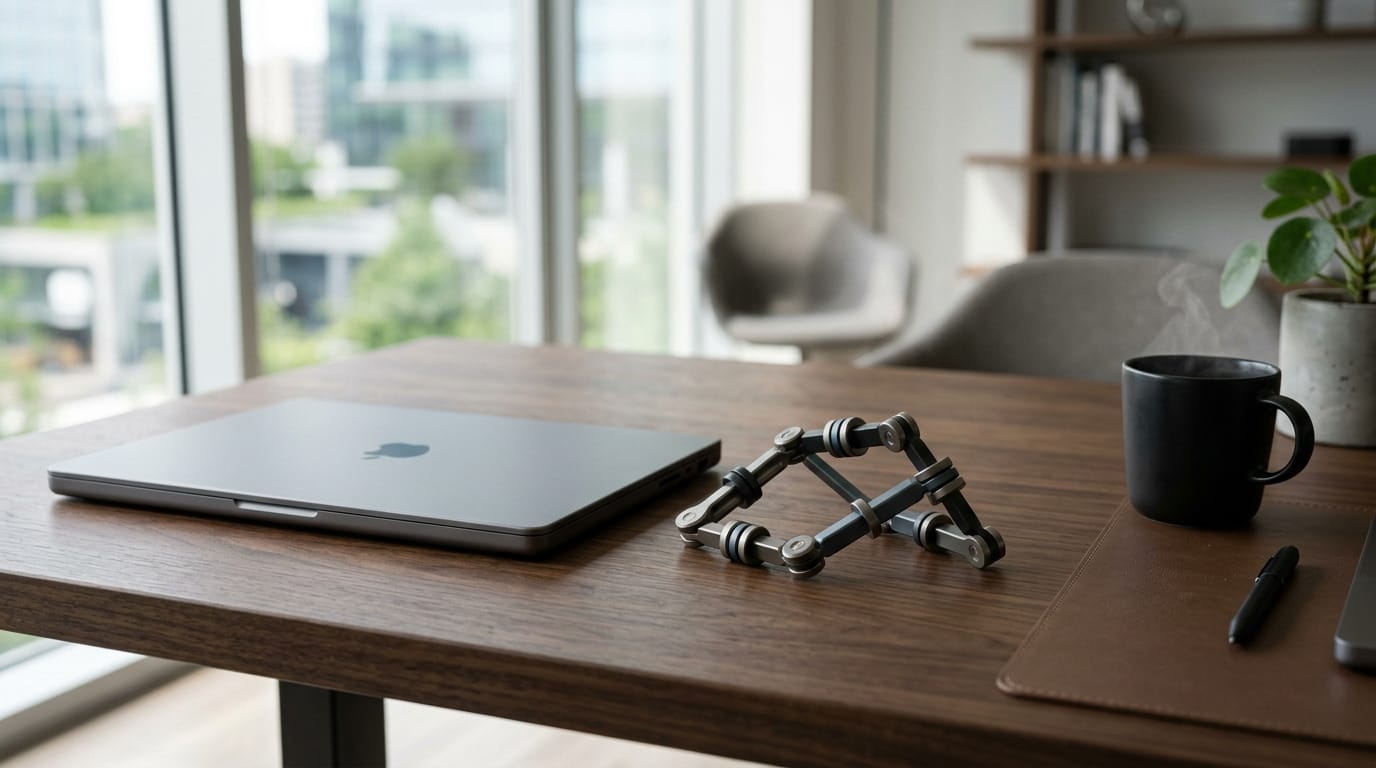
What Makes a Desk Toy ‘Meeting-Safe’?
As the global sensory toys market burgeons toward an estimated USD 2.46 billion valuation in 2026—with projections reaching USD 6.16 billion by 2035—the professional environment is undergoing a paradigm shift. While the late 2010s saw fidget spinners achieve mainstream ubiquity, they simultaneously cultivated a stigma of disruption. Today, the corporate landscape is transitioning toward ‘expertly crafted tools’ that emphasize silent functionality and professional aesthetics. Research indicates that 70 percent of therapists now recommend these accessories for adult concentration, provided the devices meet rigorous noise and design standards.
A critical metric for ‘meeting-safe’ classification is acoustic output. While a standard fidget spinner operates at a discreet 20-25 dB, the more aggressive clicking mechanisms of an infinity cube, which registers between 45-55 dB, are often deemed unsuitable for collaborative settings. By contrast, products like the Stimagz Dubz, which launched in April 2025 featuring modular magnetic pieces and a compact, pocket-friendly design, represent the modern standard for silent, unobtrusive engagement. This shift toward discretion is further supported by the industry’s aesthetic maturation; as noted in Startinal Toys market research, “The trend is towards toys that use sophisticated, muted color palettes (like the popular Morandi colors), natural wood finishes, and minimalist designs.”
This evolution is not merely superficial; it is a strategic integration of wellness into the workplace. With the broader stress toy market projected to reach $7.95 billion by 2030 at a CAGR of 6.1 percent, companies are increasingly incorporating these tools into formal corporate wellness programs. Looking ahead, as the total sensory toy market approaches a potential USD 22.8 billion by 2033, designers are balancing this minimalist aesthetic with innovation; notably, 39 percent of sensory toys launched in 2024 already integrated subtle digital elements such as haptic vibration, ensuring that the next generation of desk tools remains both highly effective and entirely invisible to the casual observer.
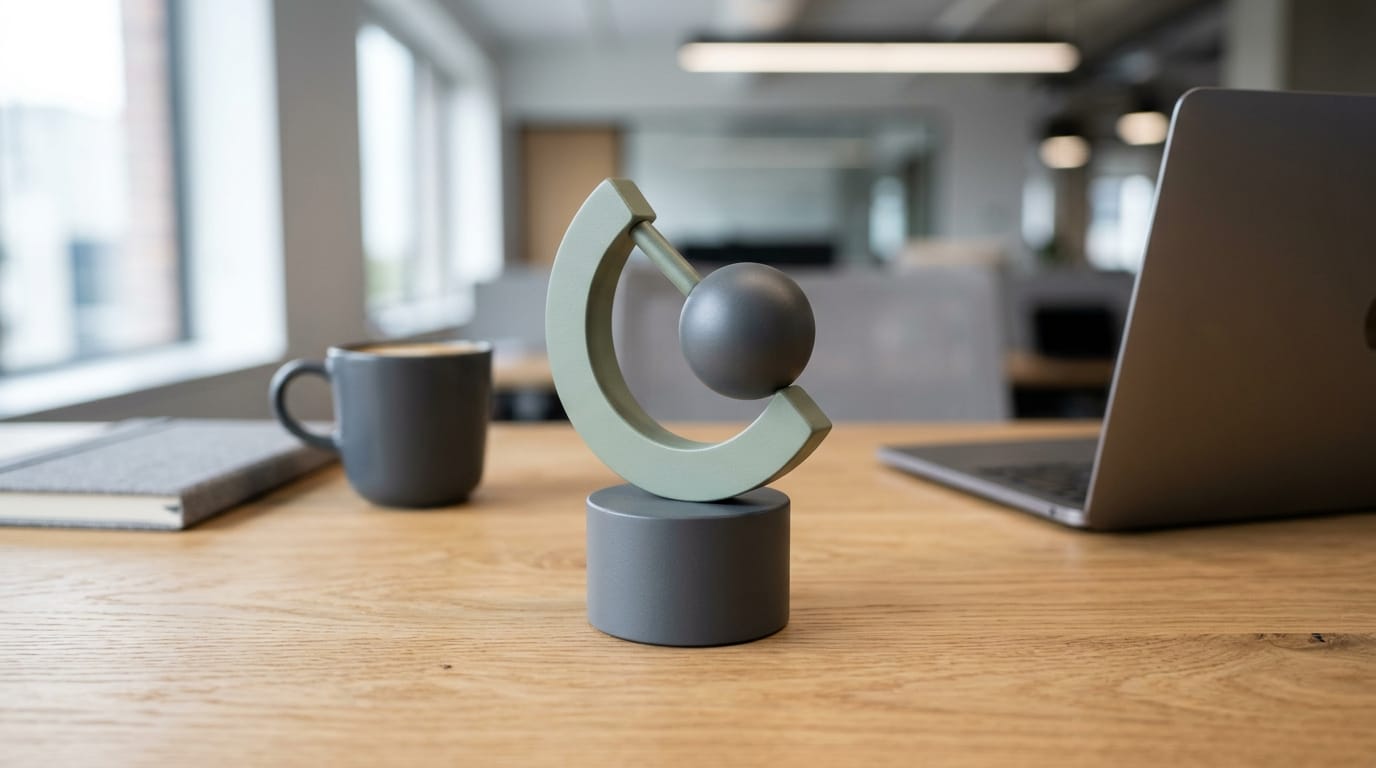
Top Categories of Silent, Discreet Desk Toys
As the global sensory toys market valuation surges toward a projected USD 6.16 billion by 2035, the professional landscape has shifted away from the audible distractions of the late 2010s toward expertly crafted, silent tools. Research indicates that 70 percent of therapists now advocate for these accessories to bolster adult concentration, a transition supported by the market’s shift toward muted aesthetics. When selecting the appropriate instrument for regulation, clinicians categorize these tools based on primary sensory input: magnetic, tactile, and visual.
Magnetic systems have become the gold standard for office environments due to their fluid, low-friction operation. According to The Business Research Company, “Magnetic fidget mechanisms are tactile systems that use interconnected magnets to allow users to manipulate and reconfigure components through repetitive hand movements.” A prime example of this evolution is the Stimagz Dubz, launched in April 2025, which provides a modular, pocket-friendly experience that avoids the 45-55 dB noise profile associated with traditional infinity cubes.
Tactile tools prioritize texture and resistance, often utilizing high-density silicone or weighted metals to provide proprioceptive input without auditory feedback. While 39 percent of 2024’s product launches integrated digital light or vibration elements, traditional tactile tools remain preferred for their simplicity. Meanwhile, visual stim toys—often characterized by flowing kinetic sands or rotating internal components—offer a secondary layer of regulation for those who benefit from passive observation. As the stress toy market tracks toward a USD 7.95 billion valuation by 2030, these categories are increasingly being integrated into formal corporate wellness programs to manage cognitive load effectively.
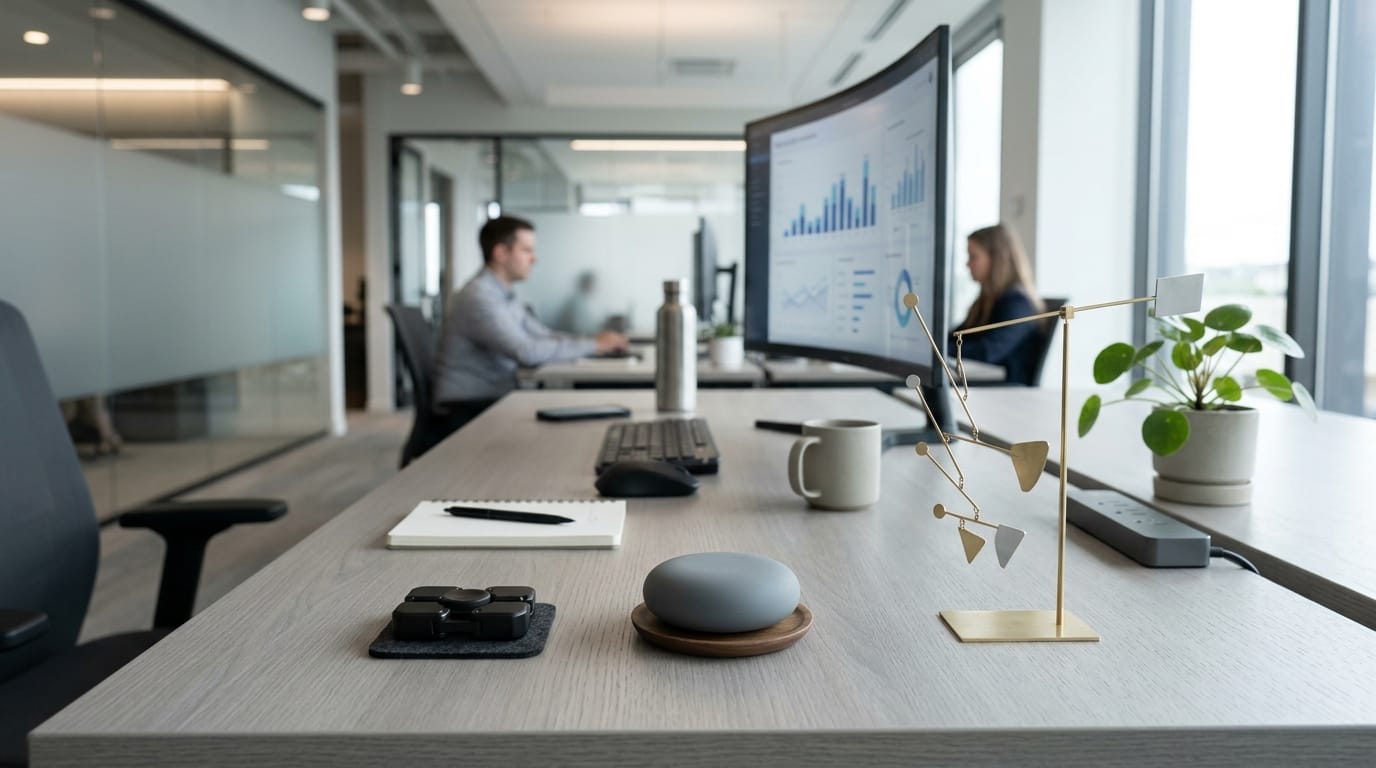
Real-World Examples: Products That Blend In
The sensory toy market, now valued at USD 2.46 billion in 2026, has transitioned from the gaudy, high-decibel playthings of the late 2010s to the sophisticated, ergonomically designed tools favored by modern professionals. While early devices like the infinity cube often generated disruptive noise levels of 45-55 dB—far louder than the 20-25 dB emitted by a standard spinner—the current market focus is on near-silent operation. As noted by The Business Research Company, this shift toward muted aesthetics is crucial for corporate adoption, where 70 percent of therapists now recommend fidget accessories to bolster adult concentration.
A prime example of this evolution is the April 2025 launch of Stimagz Dubz by Stimara, Inc. As reported in industry data, “In April 2025, Stimara, Inc. launched Stimagz Dubz, a magnetic fidget mechanism designed to support stress reduction and mindfulness among adult users.” These modular magnetic pieces emphasize a compact, pocket-friendly design that integrates seamlessly into a boardroom environment. Similar products, such as Speks Crags, further illustrate this trend, moving away from plastic, brightly colored novelties toward tactile, weighted materials that provide sensory regulation without attracting unwanted attention. With the stress toy market projected to reach USD 7.95 billion by 2030, this focus on discreet, professional-grade tools represents a significant maturation of the sector, particularly as 39 percent of new 2024 launches began integrating subtle digital elements like vibration to enhance user focus.
How to Use Them Without Drawing Attention
In the transition from the chaotic, noise-heavy fidget spinners of the late 2010s to the current era of curated sensory regulation, the corporate landscape has demanded a shift toward silence and discretion. While the global sensory toys market has surged to a valuation of USD 2.46 billion in 2026, the modern professional must prioritize acoustic neutrality; for instance, while a standard fidget spinner may register a disruptive 20-25 dB, some mechanical items like an infinity cube can reach up to 55 dB, making them unsuitable for boardroom use. As 70 percent of therapists now advocate for these tools to boost concentration, the emphasis has moved toward devices like the Stimagz Dubz, which utilize a modular magnetic design to allow for low-profile, tactile input during intense focus sessions.
Integrating these tools effectively requires a strategy of concealment and decorum. According to industry experts, “Choose items that are silent, small and unobtrusive such as a stress-ball, putty, a fidget pen, magnetic beads, or a textured ring, and keep them on your desk rather than fidgeting visibly in meetings.” This professional boundary is increasingly vital as the sensory market evolves; even as 39 percent of 2024’s new releases incorporated digital light or vibration elements, these high-tech features can ironically draw unwanted attention in quiet office environments. By favoring passive, muted tools—as opposed to more kinetic, auditory devices—professionals can harness the benefits of regulation without violating the unspoken social contracts of the 2026 workplace.
Addressing Common Objections and Self-Consciousness
Despite the rapid maturation of the market—which saw the global sensory toys sector reach a valuation of USD 2.46 billion in 2026—the stigma surrounding fidget tools persists, largely rooted in the distraction-centric reputation established during the initial 2010s mainstream boom. However, the current corporate landscape is shifting away from the noisy, brightly colored novelties of the past. Modern engineering now prioritizes discretion; for instance, while early fidget spinners registered a disruptive 20-25 dB and clackier infinity cubes reached 45-55 dB, 2026-era tools are designed for acoustic transparency and professional aesthetics.
This evolution toward muted, sophisticated design is best exemplified by products like the Stimagz Dubz, launched in April 2025, which utilize modular magnetic pieces in a compact, pocket-friendly form factor. Acceptance is also being driven by clinical validation. According to industry data, 70 percent of therapists now recommend fidget accessories for adult concentration and anxiety management in professional settings. This clinical endorsement underscores the transition of these devices from ‘distractions’ to essential cognitive regulation tools.
The growth of the sector, with the stress toy market projected to hit USD 7.95 billion by 2030 and overall sensory tool valuations climbing toward USD 22.8 billion by 2033, suggests that corporate wellness programs are increasingly integrating these aids. With 39 percent of 2024’s new sensory releases incorporating subtle digital elements like haptic vibration or light, the future of workspace inclusion is shifting toward high-tech, unobtrusive support systems that allow adults to self-regulate without compromising professional decorum.
Conclusion: Integrating Quiet Tools into Your Workflow
As we navigate the corporate landscape of 2026, the perception of sensory regulation tools has undergone a definitive evolution. Once dismissed as mere classroom distractions during the late 2010s, the market has matured into a USD 2.46 billion industry, projected to scale to USD 6.16 billion by 2035. Today, we prioritize ‘expertly crafted tools’—such as the modular and pocket-friendly Stimagz Dubz—which offer silent mechanisms essential for the modern office. As noted in industry research on current sensory trends, ‘Repetitive, small movements—like clicking, twisting, or spinning—can help regulate the nervous system, reduce anxiety, and improve concentration.’
The efficacy of these instruments is backed by data, with 70 percent of therapists now recommending fidget accessories for professional concentration. Understanding the mechanics is key: while a fidget spinner operates at a subtle 20-25 dB, selecting the right device is crucial to maintaining workplace harmony. With the stress toy market forecast to hit USD 7.95 billion by 2030, these tools are no longer optional novelty items but foundational assets for mental health. To better understand the neurological benefits of these tactile interventions, read our detailed analysis on Why Keeping Your Hands Busy Helps Calm Your Mind. As we look toward a future where the sensory market is projected to reach USD 22.8 billion by 2033, integrating these tools into your daily workflow is an investment in your cognitive resilience.