
Pocket-Sized Calm: Tactile Tools for Stress-Free Commuting
By Kevin Lee | 4/22/2026
Introduction: The Commute as a Peak Stress Moment
For millions of professionals, the daily journey to the office has evolved from a simple transit requirement into a primary source of psychological strain. As of 2025, the average one-way commute in the U.S. has climbed to 27.2 minutes, a duration increasingly correlated with heightened anxiety and diminished cognitive recovery. This phenomenon is supported by recent findings, where a Quebec study confirmed that longer commutes are explicitly linked to mental health stress, noting that, in some cases, taking public transit can exacerbate these negative physiological responses.
While the initial popularity of fidget spinners once cast a trivializing stigma upon sensory regulation, the market has matured significantly. Today, we see a shift toward expertly crafted, therapeutic tools designed for the modern adult. With the global stress toy market projected to reach $7.95 billion by 2030 at a CAGR of 6.1%, manufacturers are pivoting away from novelty toward utility. This is particularly evident in North America, which currently holds a 53% share of the sensory market. Innovative designs now prioritize discretion, such as quiet fidget toys—rated between 0 and 1 on a 10-point noise scale—that are ideal for public transit, as well as the 39% of 2024 sensory toys that integrated sophisticated haptic feedback.
Understanding the neurological basis for these interventions is critical, as Why Keeping Your Hands Busy Helps Calm Your Mind explains, our somatic engagement directly influences our autonomic nervous system’s ability to regulate stress. As we look toward the future of modular, customizable sensory tools, it becomes clear that these devices are no longer mere distractions, but essential instruments for maintaining equilibrium during the most taxing moments of our daily routine.

Why Tactile Tools Work for Travel Anxiety
With the average one-way commute in the U.S. now stretching to 27.2 minutes, psychological distress during travel has reached record highs, necessitating a shift in how we manage transit-induced stress. While the initial wave of fidget spinners once cast a trivializing ‘toy’ stigma over the category, the industry has pivoted toward expertly crafted tools designed for adult wellness. This evolution is reflected in a robust global market projected to hit $7.95 billion by 2030, with North America currently commanding a 53% share of demand.
The efficacy of these devices lies in their physiological impact. As noted in recent industry analysis, ‘Repetitive, small movements—like clicking, twisting, or spinning—can help regulate the nervous system, reduce anxiety, and improve concentration.’ By engaging in these minor motor tasks, users can effectively trigger a parasympathetic response that lowers cortisol levels, helping to anchor the mind against the ambient stressors of a busy commute. Manufacturers are now optimizing these tools for public environments, ensuring they maintain a 0-1 rating on the 10-point noise scale to remain unobtrusive. Furthermore, as 39% of sensory tools launched in 2024 now integrate haptic feedback or vibration, the future of the category lies in modular, highly customized designs that prioritize neurological stabilization over mere distraction.
Key Features of a Perfect Pocket-Sized Calm Tool
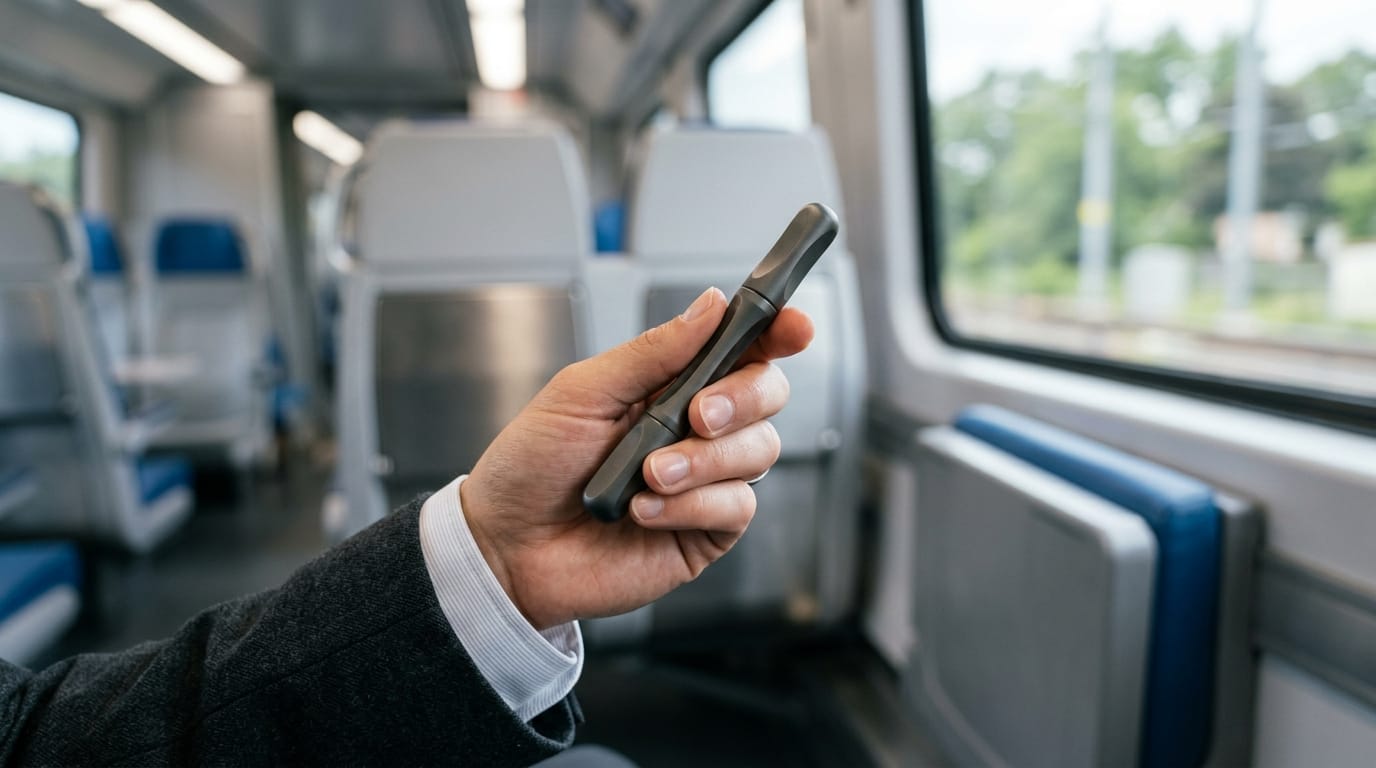
With the average one-way commute in the U.S. now stretching to 27.2 minutes, the psychological impact of transit-related anxiety has reached a critical juncture. As we move away from the juvenile stigma that once defined the era of the fidget spinner, the market is pivoting toward expertly crafted, adult-oriented wellness tools designed for discretion and durability. In an environment where the global stress toy market is projected to reach $7.95 billion by 2030, the modern commuter requires a device that integrates seamlessly into a professional setting without causing public disruption.
For a tool to be considered ‘commute-ready,’ it must prioritize silence. Quiet fidget devices, typically rated 0-1 on a 10-point noise scale, are essential for maintaining decorum in shared public transit spaces. Furthermore, the physical design must avoid ‘messy’ components; as noted by Everyday Health, “It’s messy if dropped (picture all those tiny magnetic pebbles rolling about).” A perfect tool eliminates these risks, focusing instead on structural integrity and the high-end tactile feedback that users demand. While 39% of sensory toys launched in 2024 began incorporating haptic or vibration elements, the preference in North America—which commands a 53% share of the sensory market—is increasingly leaning toward modular, tactile tools that provide grounding without the need for digital dependencies.
Top Tool Types for Different Commute Scenarios
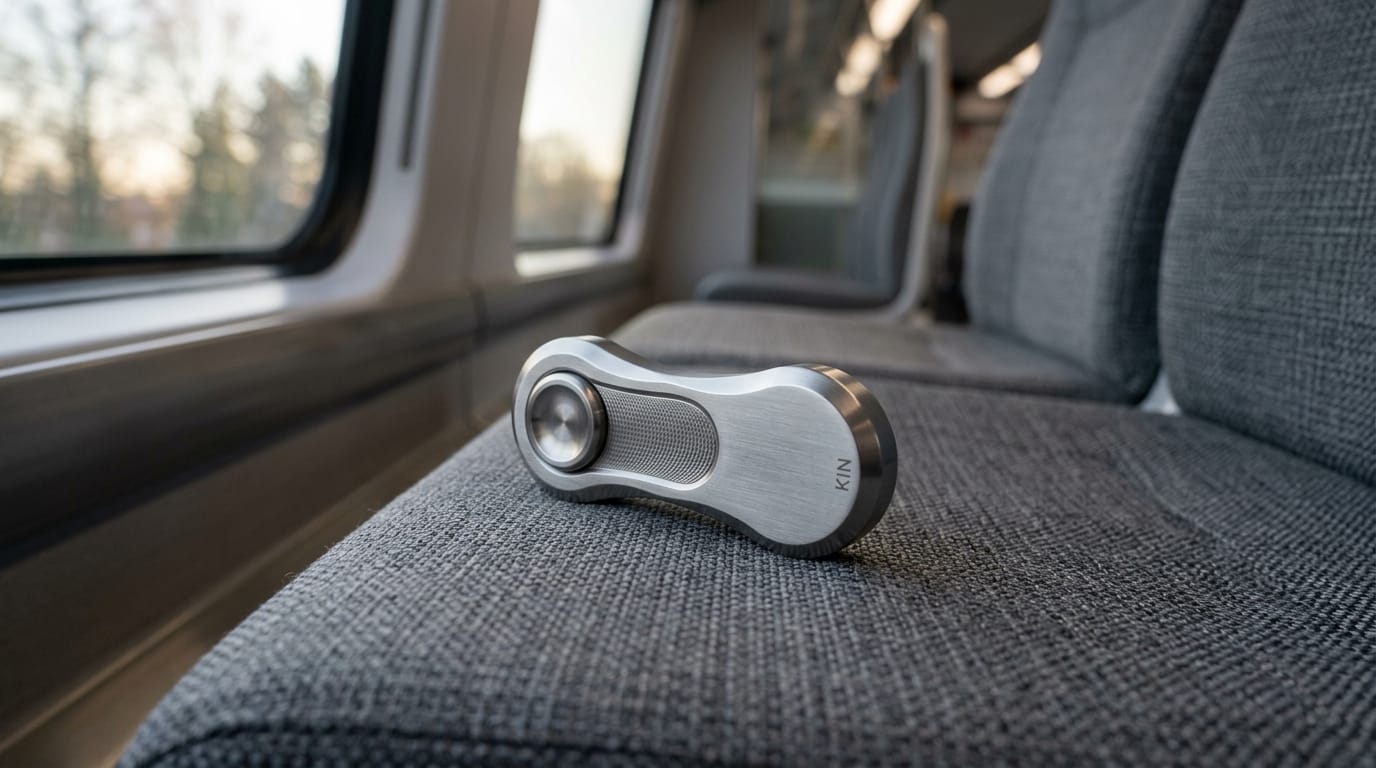
With the average one-way commute in the U.S. now reaching 27.2 minutes, the psychological toll of transit-induced anxiety has become a critical focus for clinical wellness. While the global stress toy market is projected to expand to $7.95 billion by 2030 at a CAGR of 6.1%, as detailed by the Stress Toy Global Market Report, the focus is shifting away from the fleeting trends of early fidget spinners toward sophisticated, adult-oriented sensory regulation tools. For commuters navigating public transit, acoustic discretion is paramount; modern sensory tools are typically rated 0-1 on a 10-point noise scale, ensuring they provide relief without disrupting the surrounding environment.
The current market landscape is characterized by a transition toward expertly crafted, modular designs that offer high-fidelity tactile feedback. For instance, the ONO Roller Jr. provides a weight-based rolling sensation that encourages rhythmic, repetitive motion, ideal for those seeking to ground themselves during high-traffic intervals. Similarly, for commuters prioritizing customization, the Stimagz Dubz offers a versatile alternative. According to the Stress Toy Global Market Report, the Stimagz Dubz “features modular magnetic pieces, customizable interaction patterns, and compact pocket-friendly design,” allowing users to tailor their sensory input to the immediate stress of their commute. As North America commands 53% of the global market share and 39% of new sensory products integrate digital elements like haptic feedback, these tools represent a necessary evolution in professional self-regulation.
How to Integrate a Sensory Tool into Your Travel Routine
As the average one-way commute in the U.S. has climbed to 27.2 minutes, the associated psychological strain has necessitated new approaches to transit wellness. While early sensory trends like fidget spinners were often dismissed as mere novelties, the market is currently undergoing a sophisticated shift. With the global stress toy market projected to reach $7.95 billion by 2030, current innovation is focused on ‘expertly crafted tools’—modular, discreet devices designed to mitigate the anxiety of modern travel. For the daily commuter, the goal is seamless integration.
“Choose a fidget that is small, silent and looks like an everyday object… and keep it in your hand, pocket, or lap so you can manipulate it with subtle finger or thumb movements,” suggests expert guidance on discreet sensory management. By selecting tools rated 0-1 on a 10-point noise scale, travelers can effectively pair tactile engagement with noise-canceling headphones, creating a multi-sensory buffer against transit-induced stress. This approach is particularly relevant as 39% of sensory tools launched in 2024 now integrate digital elements like haptic feedback, further blurring the line between clinical therapeutic aids and wellness gadgets. In North America, which commands a 53% share of this expanding sector, the emphasis remains on high-utility tools that adapt to the user’s environment without drawing undue attention.
Overcoming Self-Consciousness and Social Friction
As we navigate the modern landscape of psychological wellness, the stigma surrounding sensory regulation tools is rapidly dissolving. Historically, the explosive but fleeting popularity of fidget spinners cemented a ‘toy’ label that many professionals found difficult to reconcile with a mature, clinical environment. However, as the average one-way commute in the U.S. has climbed to 27.2 minutes—a duration clinical data now links to heightened baseline anxiety—the demand for discreet, adult-oriented intervention has surged. Understanding Why Keeping Your Hands Busy Helps Calm Your Mind is no longer just a therapeutic concept; it is a necessity for the modern commuter.
The market is evolving to meet this need, with the global stress toy sector projected to reach $7.95 billion by 2030 at a CAGR of 6.1%. North America, currently commanding a 53% share of this market, is witnessing a departure from the garish, plastic aesthetic of the past. Industry experts emphasize this shift, noting, “The trend is towards toys that use sophisticated, muted color palettes (like the popular Morandi colors), natural wood finishes, and minimalist designs” [Startinal Trends Research]. This pivot toward luxury materials and modularity allows individuals to customize their sensory feedback without drawing unwanted attention.
Furthermore, social friction is being mitigated by acoustic engineering. Quiet fidget tools are now typically rated between 0 and 1 on a 10-point noise scale, ensuring they remain unobtrusive during public transit or boardroom meetings. Complementing these physical design improvements, 39% of sensory devices launched in 2024 now integrate subtle digital elements, such as nuanced haptic feedback or vibration. By evolving from ‘toys’ into expertly crafted wellness tools, these devices are finally being integrated into the professional toolkit of the high-functioning, stress-managed individual.