
The Screen-Free Wind Down: Tactile Play for Better Sleep
By Kevin Lee | 4/20/2026
Introduction: The Digital Exhaustion Problem
It is 11:45 PM. You have already checked your emails three times and scrolled through your feed for the fourth, a phenomenon known as ‘revenge bedtime procrastination’—a psychological pushback against a day devoid of personal agency. As our screens become increasingly intertwined with our biological rhythms, the difficulty of disconnecting has reached a public health impasse. Neuroscience research now indicates that a 15-20 minute session of tactile stimulation is the ideal threshold for pre-sleep relaxation, providing a physiological circuit-breaker that the blue light of a smartphone simply cannot offer. As explored in our analysis of Why Keeping Your Hands Busy Helps Calm Your Mind, shifting focus from digital consumption to physical engagement is vital for nervous system regulation.
The market reflects this desperate need for analog intervention. Once restricted to childhood developmental needs or specialized therapeutic settings, sensory tools have undergone a radical maturation. Following the early mainstream introduction of fidget spinners, we are now witnessing a shift toward high-end, aesthetically pleasing tools for adult wellness. This evolution is statistically significant: the Global Sensory Toys Market size is valued at USD 2.46 billion in 2026, expected to reach USD 6.16 billion by 2035, with a CAGR of 11% from 2026 to 2035.
However, the industry faces a paradox. In 2024, 39% of sensory toy launches integrated digital elements, inadvertently continuing the cycle of screen dependence. This has ignited a burgeoning demand for purely screen-free alternatives, such as the modular magnetic fidget tool Stimagz Dubz, which launched in April 2025 to meet the aesthetic and functional needs of professionals. With the broader stress toy market projected to reach 7.95 billion USD by 2030, we are moving toward a future where tactile tools are seamlessly integrated into corporate wellness programs and sleep hygiene routines. As the market transitions toward eco-friendly materials like bioplastics and natural wood, the ‘digital exhaustion’ problem is being met with a sustainable, physical solution.

Why Screen-Free Tactile Play Works for Decompression
While sensory tools were historically reserved for therapeutic settings or childhood development, the market is undergoing a significant maturation. As we move further into 2026, the shift is clear: consumers are increasingly seeking high-end, aesthetically pleasing tools tailored for adult stress management. This evolution is vital, especially as the stress toy market is projected to reach 7.95 billion USD by 2030 at a CAGR of 6.1%. While fidget spinners once introduced the general public to the concept of fidgeting for focus, the current demand is bifurcated. Despite 39% of sensory toys launched in 2024 integrating digital elements, there is a mounting, niche requirement for purely screen-free alternatives that do not tax the visual cortex.
The neurological efficacy of these tools lies in their ability to anchor attention and lower cognitive arousal. As noted by experts, “Repetitive, small movements—like clicking, twisting, or spinning—can help regulate the nervous system, reduce anxiety, and improve concentration” (Made-in-China Insights, 2026). Tools such as the Stimagz Dubz—a modular magnetic fidget device launched in April 2025—exemplify this movement toward tactile regulation. Neuroscience research indicates that a 15-20 minute session of such stimulation is ideal for pre-sleep relaxation, offering a grounding mechanism that digital interfaces fail to provide. Looking ahead, we anticipate the integration of these tools into formal corporate wellness programs and standardized sleep hygiene routines, with a pivot toward sustainable materials like bioplastics and natural wood to satisfy consumer expectations. With the broader sensory toy market expected to hit 6.16 billion USD by 2035, the emphasis remains on the intrinsic human need for tactile, non-digital engagement to achieve systemic calm.
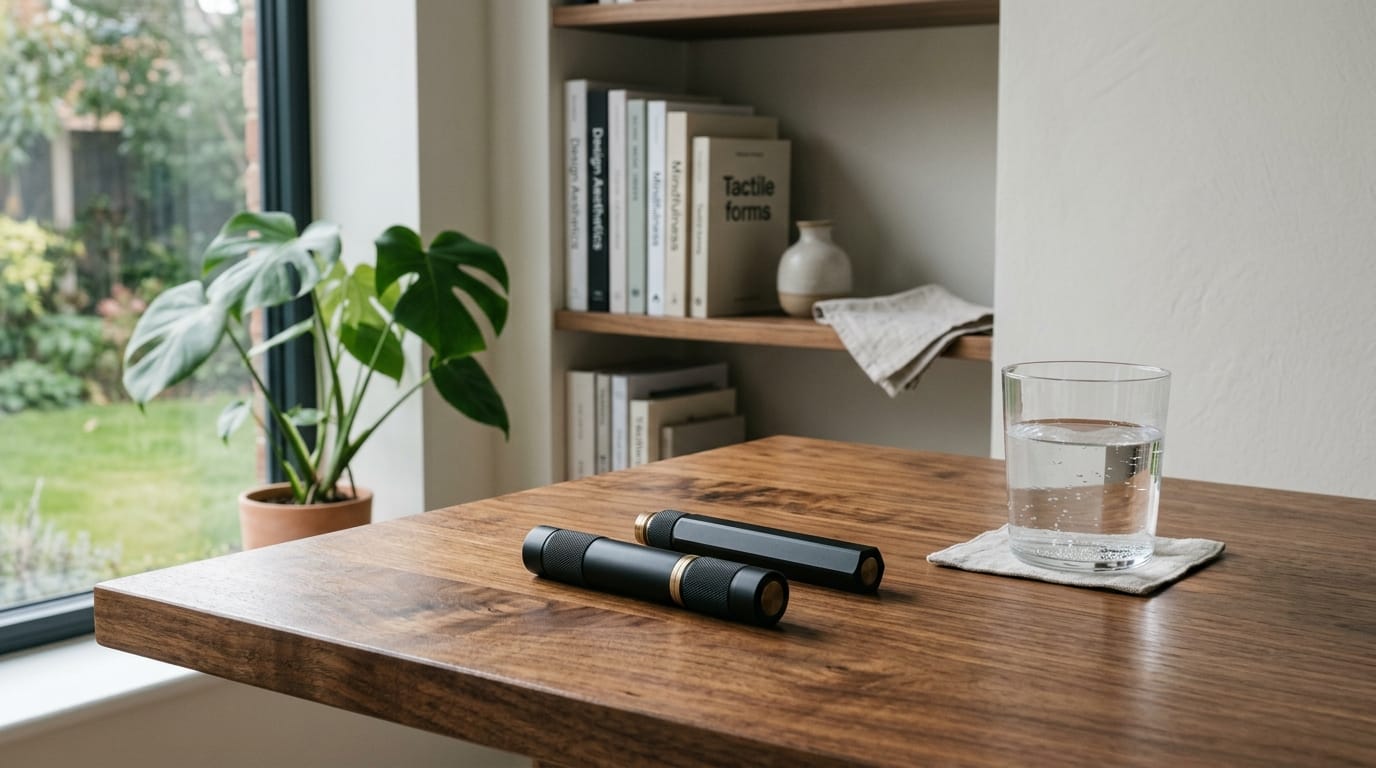
The Ideal Wind-Down Toolkit: Features for Evening Use
The evolution of sensory regulation tools has moved decisively away from the neon, high-decibel plastic toys once relegated to pediatric therapy rooms. As the stress toy market is projected to reach 7.95 billion USD by 2030, a clear shift is occurring: adults are reclaiming tactile stimulation as a legitimate component of nocturnal hygiene. Unlike the ephemeral trend of fidget spinners that introduced the public to the focus-enhancing properties of movement, the current landscape favors discretion and sophistication. Neuroscience research underscores the efficacy of this pivot, indicating that a 15-20 minute session of tactile stimulation is ideal for pre-sleep relaxation. To meet this need, devices like the Stimagz Dubz, launched in April 2025, offer a modular, magnetic tactile experience that integrates seamlessly into a quiet bedroom environment.
This maturation of the market is a direct response to a digital-saturated era. While 39% of sensory toys launched in 2024 integrated digital elements, there is a burgeoning demand for purely screen-free, analog experiences that do not interrupt the brain’s wind-down process. According to Startinal Toys, “The trend is towards toys that use sophisticated, muted color palettes (like the popular Morandi colors), natural wood finishes, and minimalist designs.” This shift toward high-end, aesthetically pleasing tools ensures that these devices function as bedside accents rather than intrusive clutter. With the global sensory toy market projected to reach 6.16 billion USD by 2035, the future of sleep hygiene lies in the intersection of sensory science and interior design, ultimately moving toward the adoption of sustainable materials like bioplastics and natural wood to harmonize with the domestic sphere.
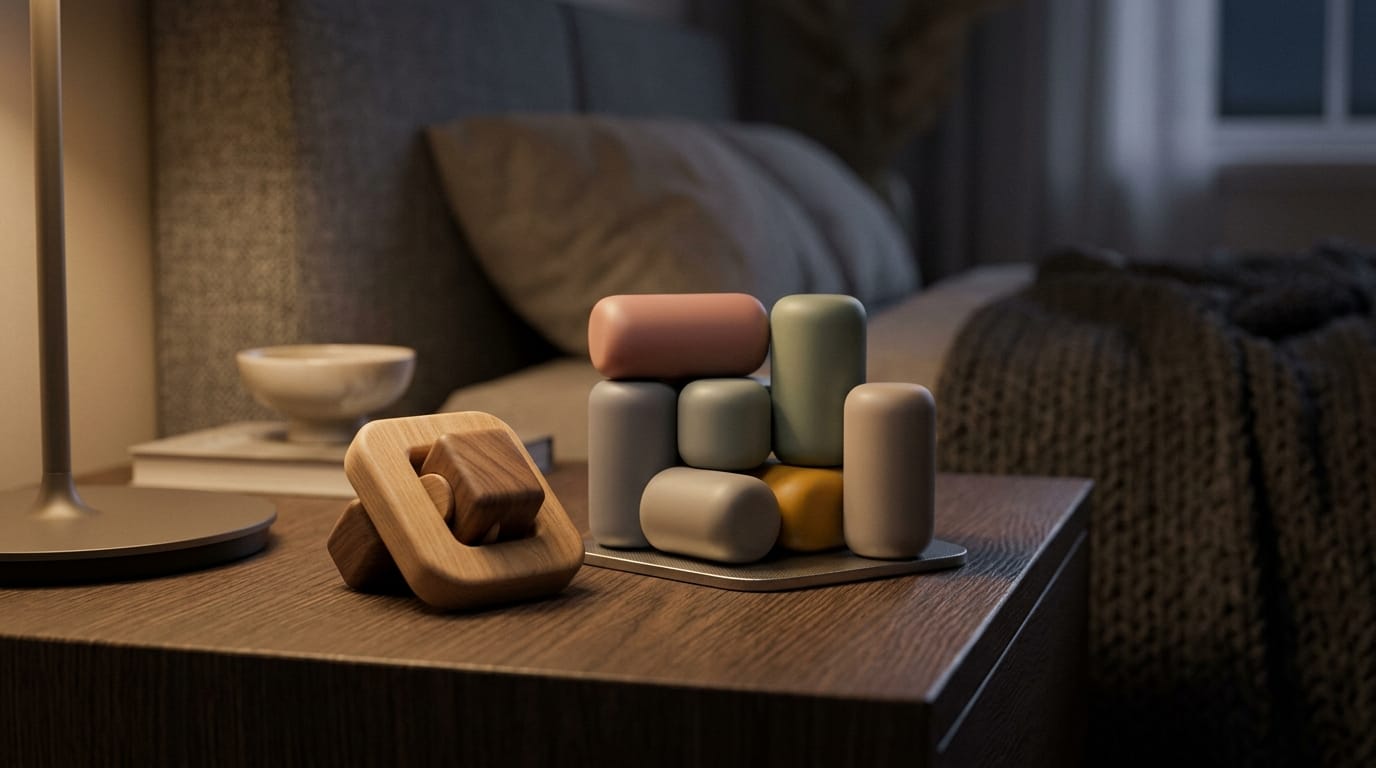
Integrating Tactile Breaks into Your Evening Routine
As we navigate the maturation of the sensory wellness sector—moving far beyond the initial, temporary trend of fidget spinners once confined to developmental settings—the integration of tactile engagement into adult sleep hygiene has become a clinical priority. With the stress toy market projected to reach 7.95 billion USD by 2030 at a CAGR of 6.1%, as noted by The Business Research Company, individuals are increasingly seeking high-end, screen-free grounding anchors to counteract the hyper-stimulation of modern life. Neuroscience indicates that a 15-20 minute session of dedicated tactile stimulation is optimal for down-regulating the nervous system before sleep.
To effectively implement this, follow this ritual: First, disconnect from all digital devices, a necessity given that 39% of 2024 sensory toy launches integrated digital elements, creating a niche demand for purely mechanical alternatives. Second, select a non-digital grounding tool; for instance, in April 2025, Stimara, Inc. launched Stimagz Dubz, a magnetic fidget mechanism designed to support stress reduction and mindfulness among adult users, according to industry data. Third, engage in rhythmic, repetitive manipulation of the device—such as clicking, stacking, or sliding—while focusing on the physical sensation rather than external stressors. By prioritizing these mechanical, often sustainable materials over digitised distractions, users can better facilitate the transition into restorative rest, aligning with the projected growth of the global sensory toy market, which is expected to reach 6.16 billion USD by 2035.
Conclusion: Reclaiming Your Pre-Sleep Time
As we synthesize the trajectory of the sensory toy market—projected to reach 6.16 billion USD by 2035—it is clear that the transition from niche therapeutic equipment to mainstream wellness staples is complete. While we look back at the era of the fidget spinner, which first introduced the public to the utility of tactile focus, the modern landscape is far more sophisticated. With the stress toy market forecast to hit 7.95 billion USD by 2030 at a CAGR of 6.1%, and tools like the April 2025-launched Stimagz Dubz setting new standards for adult-oriented design, we are witnessing a permanent shift in sleep hygiene. This maturation process is underscored by a critical divergence: as 39% of 2024’s sensory toy launches integrated digital elements, a vital niche for purely screen-free alternatives has emerged, offering a necessary digital detox before bed.
Neuroscience research consistently points to a 15-20 minute session of tactile stimulation as the gold standard for pre-sleep relaxation. Integrating these tools into your nightly routine is not merely an indulgence; it is a clinical approach to recalibrating your nervous system. As highlighted in ToyTooth, “Creative mindfulness toys foster emotional wellness through hands-on artistic activities that encourage relaxation and self-expression.” By choosing to engage with these physical objects, you can better understand Why Keeping Your Hands Busy Helps Calm Your Mind. Looking ahead, the integration of eco-friendly materials and their inclusion in corporate wellness programs suggest a future where tactile play is as routine as reading. Reclaiming your pre-sleep time through simple, accessible self-care is a powerful step toward sustained mental clarity. — Kevin Lee.