
Silent Sensory Tools: Fidgeting Without Annoying Coworkers
By Kevin Lee | 5/1/2026
The Stealth Sensory Movement: Why Office Quiet is the New Standard
In the high-pressure landscape of 2026, where 77% of American workers report feeling significant workplace stress, the desk accessory has undergone a clinical evolution. Once dismissed as childhood distractions or niche internet subcultures, sensory tools have graduated into essential professional wellness components. We have moved far beyond the era of the early fidget spinner, which was frequently banned from boardrooms and classrooms for its disruptive decibel levels. Today, the focus has shifted toward what experts describe as the ‘Stealth Sensory’ movement—a design philosophy intended to blend discreet design with multisensory feedback, emphasizing quiet, portable, and aesthetically‑compatible options for the modern executive.
The efficacy of these tools is rooted in neurobiology, specifically the mechanism of bilateral stimulation. Repetitive hand movements, such as frictionless rolling or squeezing, activate both brain hemispheres to effectively interrupt acute anxiety responses. For a deeper look at the physiological mechanisms behind these behaviors, explore Why Your Brain Craves Tactile Satisfaction and Everyday ASMR. Clinical data supports this shift: tactile stress-relief tools are now shown to reduce cortisol levels by 31% while improving sustained focus duration by 28%. These benefits are achieved without compromising the sanctity of the quiet office, where ambient noise typically hovers between 30–35 dB. Modern silent-click cubes and frictionless rollers register at a near-silent 15–25 dB range, while silicone-shelled magnetic components further dampen noise by an additional 15–25 dB. As we look toward the future, where AI-powered occupancy sensors will soon monitor office ‘sensory health’ to calibrate lighting and sound-masking, these tools are rapidly transitioning from personal accessories into standard fixtures within comprehensive HR wellness benefit packages.
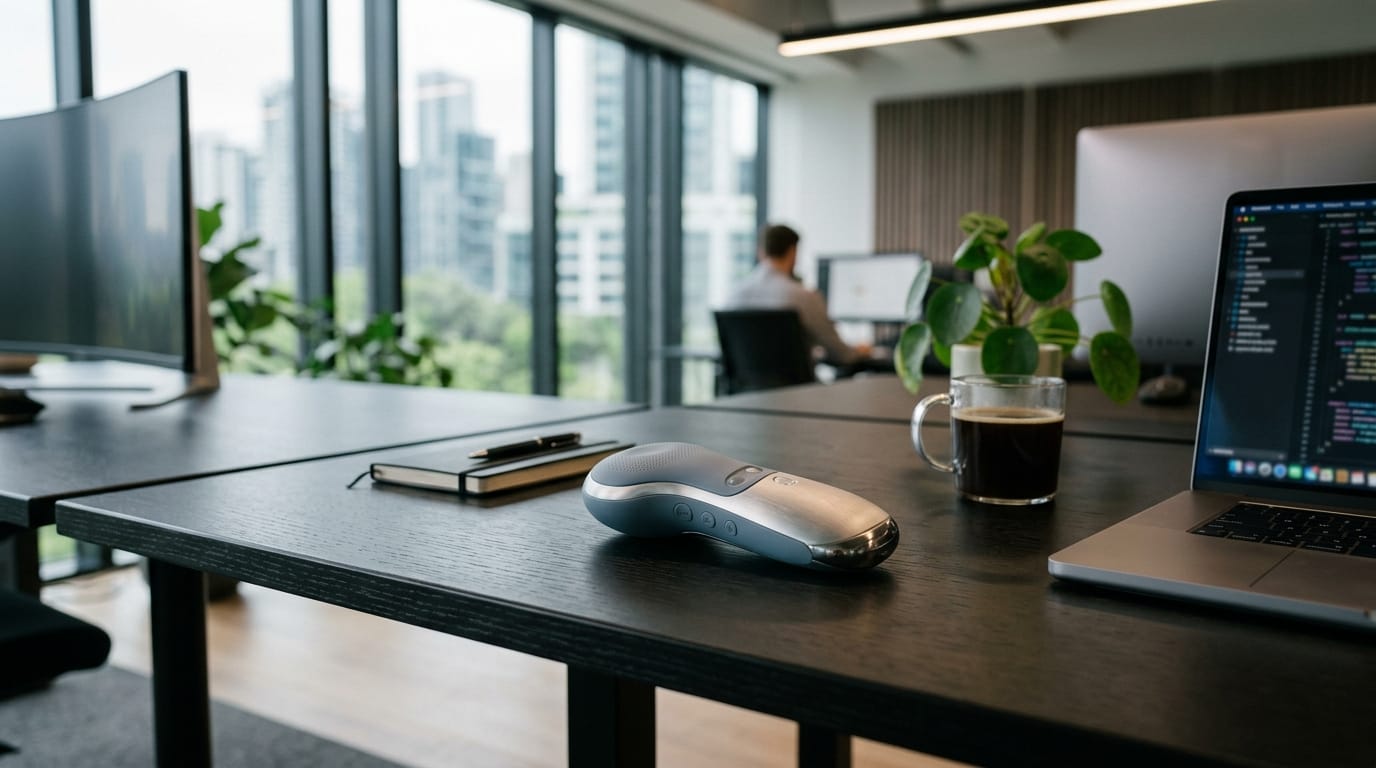
Measuring the ‘Annoyance Factor’: Decibels and Visual Distraction
In the evolving landscape of 2026, the perception of sensory regulation tools has shifted dramatically. Once dismissed as childhood distractions or relegated to niche online subcultures, these devices have transitioned into essential executive desk accessories. This shift is a necessary response to the reality that 77% of American workers now report feeling stressed in the workplace. While early models like the original fidget spinner were frequently banned due to their intrusive auditory profiles, modern engineering has solved the ‘annoyance factor’ by prioritizing near-silent operation.
To put this into clinical perspective, ambient office noise in a quiet professional environment typically hovers between 30 and 35 dB. By comparison, advanced silent-click fidget cubes and frictionless rollers register only within the 15–25 dB range, effectively rendering them inaudible to colleagues. As highlighted in a recent comprehensive guide on office-appropriate sensory tools, the standard for these devices is ‘near-silent operation—no audible sound above ambient office noise (under 30dB).’ Furthermore, the incorporation of silicone shells can reduce the audible sound of magnetic contact by an additional 15–25 dB, ensuring zero visual or auditory distraction.
The clinical benefits of these tools extend beyond mere silence. Bilateral stimulation achieved through repetitive hand movements—such as rolling or squeezing—actively engages both brain hemispheres to interrupt physiological anxiety responses. Data suggests that these tactile stress-relief tools can reduce cortisol levels by 31% and improve individual focus duration by 28%. As we look toward a future where AI-powered occupancy sensors will monitor ‘sensory health’ in real time, these tools are rapidly becoming a standard, non-negotiable component of HR wellness benefit packages.
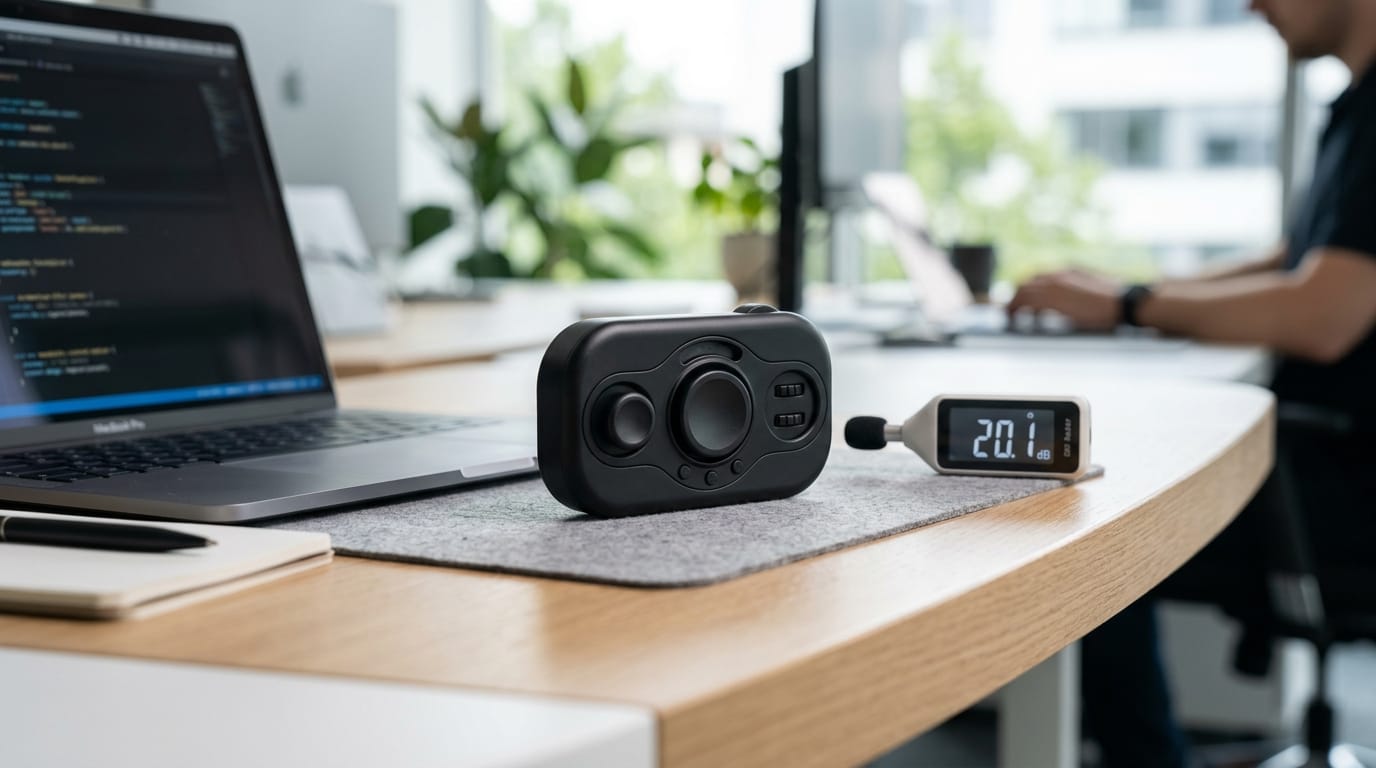
Silent Engineering: How Metal Rollers and Silicone Coatings Work
In an era where 77% of American workers report feeling stressed, the workspace has evolved from a noisy distraction zone to a environment demanding extreme discretion. While early fidget spinners were frequently banned due to the disruptive clatter of their bearings, modern engineering has pivoted toward ‘Stealth Sensory’ tools. These devices now operate in the 15–25 dB range—well below the 30–35 dB threshold of typical ambient office noise—rendering them effectively inaudible to colleagues. This is achieved primarily through the use of frictionless roller systems that eliminate the metallic grinding noise associated with legacy toys, and through the application of high-grade silicone shells. As noted in the technical documentation on magnetic sensory toys, ‘silicone shells dramatically improve the noise-dampening performance of magnetic fidget toys by exploiting the material’s inherent acoustic-absorbing and vibration-attenuating properties.’ By absorbing the impact energy of magnetic contact, these coatings reduce audible sound levels by an additional 15–25 dB. This precision engineering allows for bilateral stimulation, which facilitates the regulation of cortisol levels—reported to drop by 31% with repetitive use—and supports a 28% increase in focus duration without triggering the sensory overload of previous generations.
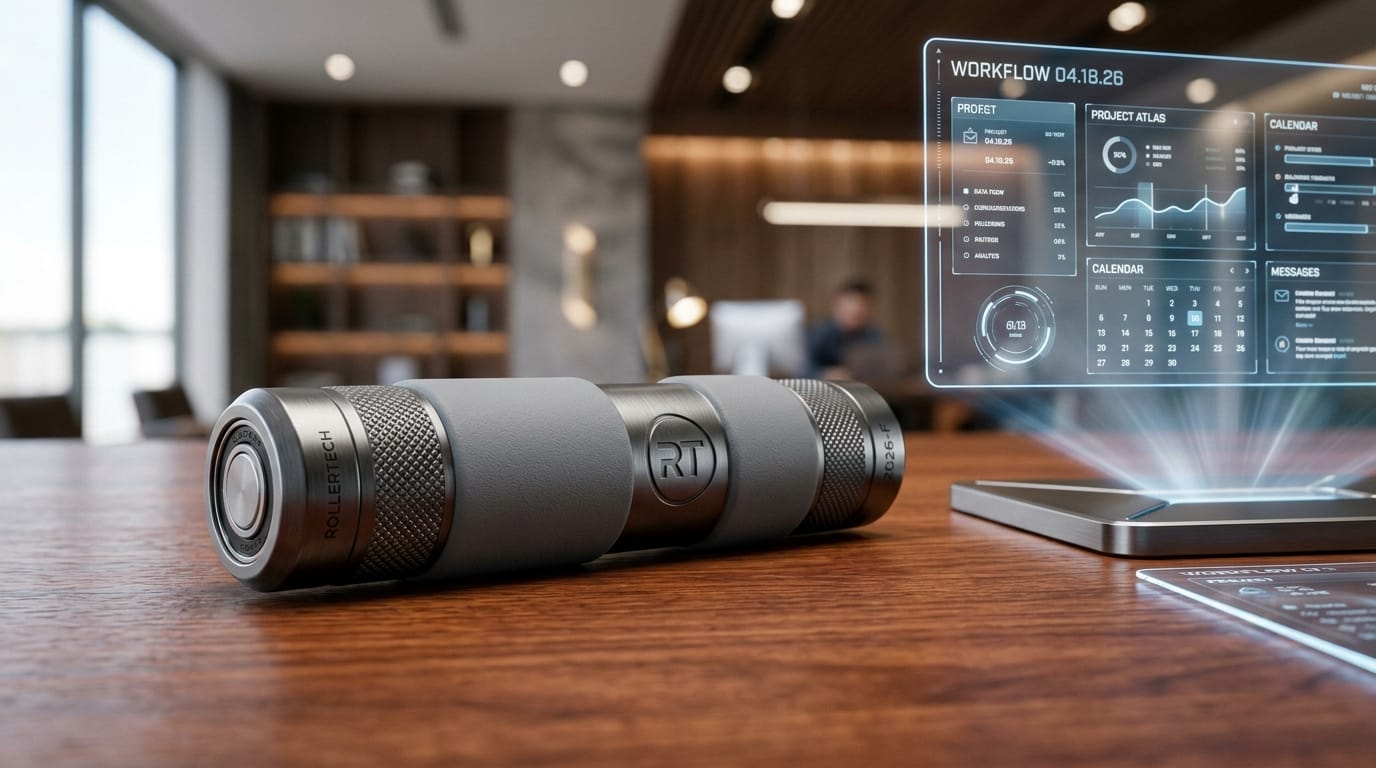
Virtual Meeting Etiquette: Techniques for Off-Camera Sensory Regulation
In the evolving landscape of 2026, where 77% of American workers report feeling stressed, the professional perception of sensory regulation has undergone a radical shift. Once marginalized as childhood distractions or niche subcultures, fidgeting devices have matured into ‘Stealth Sensory’ tools, now standard in executive suites. For professionals managing high-stakes virtual environments, the integration of tactile relief is no longer a disruption but a necessity for neurological calibration. Clinical evidence suggests that bilateral stimulation through repetitive hand movements, such as rolling or squeezing, activates both brain hemispheres to effectively interrupt anxiety responses, with tactile tools proven to reduce cortisol levels by 31% and increase focus duration by 28%.
To maintain decorum while utilizing these tools, audio hygiene is paramount. Given that standard ambient office noise remains at 30–35 dB, modern devices are engineered for near-total discretion. Silent-click fidget cubes and frictionless rollers operate at 15–25 dB—effectively inaudible to sensitive microphones. For those utilizing magnetic tactile tools, the addition of silicone shells provides further acoustic insulation, reducing contact sounds by 15–25 dB. When implementing these strategies, adherence to proper virtual meeting etiquette is critical; as noted by industry standards for meeting conduct, one should “mute when not speaking, keep your camera on for small meetings… don’t multitask.” By positioning tools just below the camera’s frame of view and strictly monitoring microphone sensitivity, professionals can leverage these sensory aids to optimize their cognitive performance without compromising the integrity of the digital workspace.
The Pro-Fidget Protocol: Introducing Tools to Your Coworkers Without the ‘Childish’ Label
In the evolving landscape of 2026, where 77% of American workers report feeling stressed at work, the integration of ‘Stealth Sensory’ tools has transitioned from niche subculture to a necessary executive desk accessory. Once dismissed as childish distractions, these tools are now scientifically validated instruments for cognitive regulation; research indicates that bilateral stimulation through repetitive movements activates both brain hemispheres to effectively interrupt anxiety responses. To understand why your brain craves these inputs, explore our recent feature on Why Your Brain Craves Tactile Satisfaction and Everyday ASMR.
The key to professional adoption is the ‘hidden in plain sight’ strategy. While early fidget spinners were rightfully banned for their noise, modern silent-click cubes and frictionless rollers operate in the 15–25 dB range—far below the 30–35 dB threshold of typical ambient office noise—rendering them effectively inaudible. As noted in the WPsychService guide to adult sensory tools, “The Fidget Pen easily blends into almost any setting, offering a ‘hidden in plain sight’ experience… it acts like Superman in disguise.” By utilizing silicone-shelled devices, which further reduce magnetic contact noise by 15–25 dB, professionals can leverage tools that improve focus duration by 28% and reduce cortisol levels by 31% without disrupting colleagues.
As we look toward a future where AI-powered occupancy sensors will monitor ‘sensory health’ in office environments and sensory tools are integrated into standard HR wellness benefit packages, rebranding these items as sophisticated stress-management gear is essential. By selecting high-quality, muted materials that mimic standard writing or drafting instruments, you align your personal sensory hygiene with modern clinical standards, effectively shedding the juvenile stigma of the past.
Frequently Asked Questions
A silent sensory tool is any device engineered to provide tactile stimulation without emitting audible clicks, rattles, or squeaks. In 2026, these tools prioritize stealth, utilizing materials like high-density silicone or soft-touch polymers. They allow individuals to regulate nervous system arousal while maintaining absolute workspace tranquility for neighboring colleagues.
Yes, many clinicians now advocate for silent fidgeting as a legitimate self-regulation strategy. By providing non-disruptive motor input, these tools can improve focus and reduce restlessness in professional settings. They serve as discreet interventions that support sustained cognitive engagement without drawing unwanted attention or violating established office conduct standards.
Frame the request around productivity and workspace harmony. Explain that silent sensory tools act as ergonomic aids, similar to standing desks or noise-canceling headphones. Emphasize that these discreet devices are designed for complete silence, ensuring your personal focus needs never interfere with the professional expectations or comfort of your immediate teammates.