
Overcoming the ‘Childish’ Stigma of Adult Sensory Tools
By Kevin Lee | 5/1/2026
The Stigma Barrier: Why Adults Hesitate to Fidget
In 2026, the modern professional landscape is defined by a paradox: while workplace anxiety affects 40% of professionals, a pervasive social stigma continues to obstruct the adoption of evidence-based sensory regulation tools. As noted in a report on professional stress management, “workplace anxiety affects 40% of professionals, yet most of us suffer in silence, worried that visible coping mechanisms might undermine our professional image” (Stimm.jewelry). This fear of judgment is not anecdotal; approximately 50% of workers express concern that using focus tools will be perceived as unprofessional or distracting.
Historically, sensory regulation—including ASMR and repetitive fidgeting—was marginalized as either an internet subculture or a necessity strictly for children with developmental needs. Understanding Why Your Brain Craves Tactile Satisfaction and Everyday ASMR reveals that these behaviors are natural physiological responses to stress. Today, the narrative is shifting as sensory tools transition into “executive wellness” accessories. This rebranding, characterized by premium materials and silent, ergonomic operation, has fueled a luxury fidget market currently growing at a 7-8% CAGR. With 72% of therapists now recommending these tools for stress and focus management, the clinical endorsement is clear, particularly regarding weighted tools, which hold ‘Grade A’ clinical backing for their efficacy in reducing anxiety and enhancing sleep quality.
As the global fidget toy market projects to exceed $13 billion by the early 2030s, the workplace is slowly pivoting toward a “neuroinclusive” culture. The goal is to normalize the use of discreet sensory aids as standardized focus tools rather than disruptive behaviors. However, until the cultural perception of professionalism evolves to prioritize cognitive output over rigid physical optics, the stigma barrier remains the final hurdle for the modern workforce.

From ‘Toys’ to ‘Tools’: The Professional Rebranding of Sensory Aids
For years, sensory modulation techniques like fidgeting and auditory stimulation were dismissed as niche internet subcultures or pediatric interventions reserved solely for developmental support. By 2026, however, the professional landscape has undergone a paradigm shift, rebranding these artifacts as essential ‘executive wellness’ accessories. This transition is not merely aesthetic; it is rooted in clinical necessity. With workplace anxiety currently impacting 40% of professionals, the integration of tactile tools is evolving into a standardized form of self-regulation. As noted by One Quiet Mind, 72% of therapists now recommend fidget tools for stress and focus management, underscoring their role as evidence-based clinical interventions. This professional endorsement is fueling a robust market, with the ADHD productivity tools sector projected to climb from $2.4 billion in 2025 to $7.55 billion by 2033.
Despite this therapeutic legitimacy, a significant social barrier remains: approximately 50% of employees still harbor concerns regarding workplace judgment when utilizing these aids. This stigma is being challenged by the rapid growth of the luxury executive fidget market—which is currently expanding at a 7-8% CAGR—focusing on silent operation and premium, unobtrusive materials designed to integrate seamlessly into a corporate environment. Furthermore, weighted sensory tools have garnered ‘Grade A’ clinical backing for their efficacy in reducing systemic anxiety and enhancing sleep quality, solidifying their status as legitimate equipment rather than simple diversions. As we look toward the next decade, with the global fidget toy market expected to exceed $13 billion by the early 2030s, the trajectory is clear: forward-thinking organizations are moving toward ‘neuroinclusive’ cultures where the use of sensory aids is endorsed as a standard productivity strategy rather than viewed as a distraction.

Stealth Sensory Strategies: The Power of Wearables and Functional Stationery
In 2026, the landscape of workplace productivity has undergone a paradigm shift. Once relegated to niche internet subcultures or pediatric developmental interventions, sensory regulation is now an ‘executive wellness’ priority. With workplace anxiety currently impacting 40% of professionals, the stigma that once shadowed fidgeting is rapidly eroding; however, roughly 50% of employees still express concern regarding professional judgment for using focus tools. This hesitation is fueling the rise of ‘stealth’ sensory aids, premium tools designed for silent operation and sophisticated aesthetics.
The luxury executive fidget market is currently growing at a 7-8% CAGR, mirroring the broader global fidget toy market’s trajectory toward a $13 billion valuation by the early 2030s. Today, 72% of therapists explicitly recommend these tools to aid in stress management and cognitive focus. Among the most popular innovations are weighted accessories—which carry ‘Grade A’ clinical backing for their efficacy in reducing anxiety—and functional stationery that masquerades as traditional office equipment. As noted by experts at WPsychService, “The Fidget Pen easily blends into almost any setting, offering a ‘hidden in plain sight’ experience… it acts like Superman in disguise.”
Looking ahead, the shift toward neuroinclusive corporate cultures is likely to normalize the use of tactile feedback loops as standard professional practice. By moving away from disruptive sensory inputs toward discreet wearables and weighted stationery, the modern workforce is successfully bridging the gap between clinical wellness needs and professional expectations.
Material Matters: Choosing Aesthetics That Signal Executive Presence
In the landscape of 2026, the perception of sensory regulation has undergone a profound shift. While fidgeting was once dismissed as a niche internet subculture or a tool reserved solely for children with developmental needs, it is now being rebranded as an ‘executive wellness’ necessity. This evolution is vital, particularly as workplace anxiety now affects 40% of professionals, and 72% of therapists actively recommend sensory tools for stress and focus management. However, a significant barrier remains: roughly 50% of workers report anxiety over being judged for using these tools, fearing they may be perceived as unprofessional. The remedy lies in the material composition of the device itself.
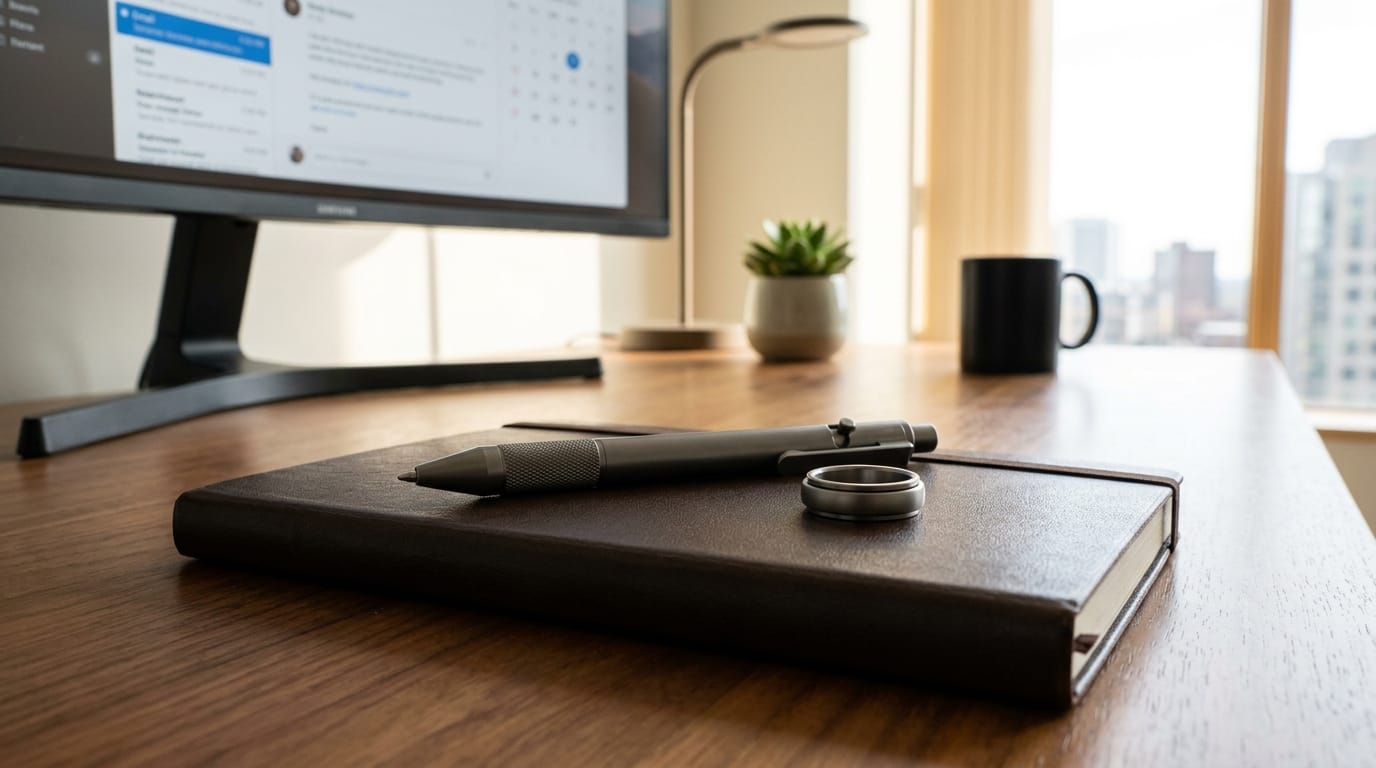
Distinguishing a professional instrument from a juvenile toy requires a commitment to craftsmanship. High-grade materials like aerospace-grade titanium, surgical steel, and rare woods transform a simple distraction into a piece of executive-grade equipment. As noted by MightyEDC, “high-end devices—ranging from weighted spinners and magnetic sliders to ceramic-bearing cubes and sleek metal rings—are marketed toward executives who value silent, tactile feedback, collector-grade aesthetics, and the perception of craftsmanship.” This shift toward luxury materials is not merely stylistic; it is central to the growth of the executive fidget market, which is currently expanding at a 7-8% CAGR.
The move toward these premium aesthetics aligns with the broader transition toward ‘neuroinclusive’ workplaces, where sensory aids are increasingly recognized as evidence-based tools rather than mere distractions. Furthermore, the inclusion of weighted elements provides ‘Grade A’ clinical backing for those seeking to mitigate anxiety. As the global fidget toy market projects to exceed $13 billion by the early 2030s, the choice of material serves as the final arbiter of intent: a plastic toy speaks of fleeting diversion, whereas a weighted, machined-metal tool signals executive presence and intentional self-regulation.
The Social Script: How to Confidently Explain Your Sensory Routine to Colleagues
In the professional landscape of 2026, the perception of sensory management has undergone a radical transformation. Once dismissed as niche internet subcultures or tools exclusively for children, sensory aids are now integral components of ‘executive wellness.’ With workplace anxiety affecting 40% of professionals today, the adoption of these tools is no longer a sign of impairment, but a mark of proactive self-regulation. As the luxury executive fidget market grows at a 7-8% CAGR, premium, silent-operation devices are replacing the plastic toys of the past, signaling a shift toward neuroinclusive cultures where these implements are recognized as evidence-based focus aids.
Despite this progress, roughly 50% of workers still report a fear of judgment, leading to hesitancy in the office. Bridging this social gap requires transparency. As one industry professional notes, “I’ve found that using a noise-cancelling headset and a simple fidget device helps me manage the sensory overload that can come with ADHD and anxiety, allowing me to stay productive and present during meetings.” Framing your routine as a strategic choice—backed by the fact that 72% of therapists now recommend these tools for focus management—shifts the narrative from ‘distraction’ to ‘optimization.’ Furthermore, with the global market projected to exceed $13 billion by the early 2030s and weighted tools receiving ‘Grade A’ clinical backing for anxiety reduction, your use of these implements is firmly supported by the evolving scientific consensus.
Building a High-Performance, Low-Profile Sensory Workspace
In 2026, the transition from viewing ASMR and tactile stimulation as niche, childish subcultures to recognizing them as essential ‘executive wellness’ components is nearly complete. With workplace anxiety currently impacting 40% of professionals, the integration of neuroinclusive workspace design is no longer a luxury, but a clinical necessity. Despite this shift, internal data reveals that roughly 50% of workers still harbor concerns regarding the professional perception of focus tools. To bridge this gap, modern workspace architecture prioritizes high-performance, silent, and aesthetically refined sensory aids—a market segment currently experiencing a 7-8% CAGR.
As we move toward a future where neuroinclusive environments are the standard, the goal is to curate a space that supports cognitive load without visual clutter. For those interested in the biological mechanics behind this, our previous analysis, Why Your Brain Craves Tactile Satisfaction and Everyday ASMR, provides deep insight into the sensory regulation loop. Incorporating tools such as weighted accessories—which now hold ‘Grade A’ clinical backing for anxiety reduction—can be done discreetly. As noted in the Zenify 2026 Desk Guide, “A visible zen garden, strategically placed breathing card, or palm-smooth worry stone transforms your desk from stress-accumulation station to recovery-friendly environment.”
By selecting premium, minimalist materials that harmonize with professional decor, you can leverage the global fidget toy market—projected to exceed $13 billion by the early 2030s—to optimize your own productivity. Ultimately, arranging a desk that favors silent, tactile recovery is a proactive step toward mental sustainability. When 72% of therapists now actively recommend these tools, the evidence is clear: the most professional workspace is one that facilitates, rather than suppresses, the brain’s need for regulation. – Kevin Lee
Frequently Asked Questions
Sensory tools are increasingly recognized by clinicians as evidence-based interventions for neurodivergent adults. By modulating sensory input, these devices help regulate the nervous system, reduce anxiety, and improve focus. Far from being recreational, they are vital clinical aids that support functional independence and emotional stability in complex daily environments.
Modern sensory tools are designed for discretion and aesthetic integration. Opt for ergonomic, neutral-toned items like hidden fidget rings, textured discreet adhesives, or noise-canceling earbuds. By selecting tools that mimic professional accessories, you can manage sensory overload effectively while maintaining a polished appearance that aligns with your workplace expectations and professional identity.
Feeling embarrassed is common due to outdated societal stigmas, but your sensory needs are entirely valid. Recognizing that your brain requires specific input to function optimally is a sign of self-awareness. Choosing to use these tools is a proactive, mature health decision that prioritizes your long-term well-being and cognitive performance.
Expert Resources