
The Power of Multi-Sensory Triggers
By Kevin Lee | 5/1/2026
The Sensory Saturation Threshold: When One Sense Isn’t Enough
In the high-pressure environment of 2026, where 77% of American workers report feeling stressed and 57% grapple with the debilitating effects of burnout, the brain’s traditional coping mechanisms are reaching their limit. We have moved far beyond the initial, niche fascination with ASMR and fidget devices, which once carried the stigma of being exclusively for children. Today, the professional landscape demands more sophisticated, aesthetically integrated solutions. As explored in Why Your Brain Craves Tactile Satisfaction and Everyday ASMR, our neural architecture is primed for sensory grounding, yet simple, singular inputs often fail to pierce the veil of modern cognitive overload.
Clinical data suggests that the anxiety loop is increasingly resistant to unimodal interventions. Instead, a multimodal approach—pairing tactile engagement with deliberate visual stimuli—has emerged as a superior strategy for regulation. Research highlights that a 5-minute viewing of falling-sand art correlates with increased high-frequency heart-rate variability and a 15% reduction in salivary cortisol, proving that aesthetic, quiet tools are essential for the modern office. According to One Quiet Mind’s 2026 sensory report, “This dual input works particularly well during high-stress moments when one sensory channel isn’t enough to interrupt the anxiety response.” This is further evidenced by findings that multi-sensory tool users report a 70% increase in engagement and score 15% higher on cognitive assessments. By utilizing tools like the 1.4 kg (3 lb) grounding weight—which has been shown to reduce cortisol by 31% and boost focus by 28%—professionals are beginning to integrate sensory regulation into their standard daily protocols, setting the stage for a future defined by sophisticated, tech-synced haptic mindfulness.
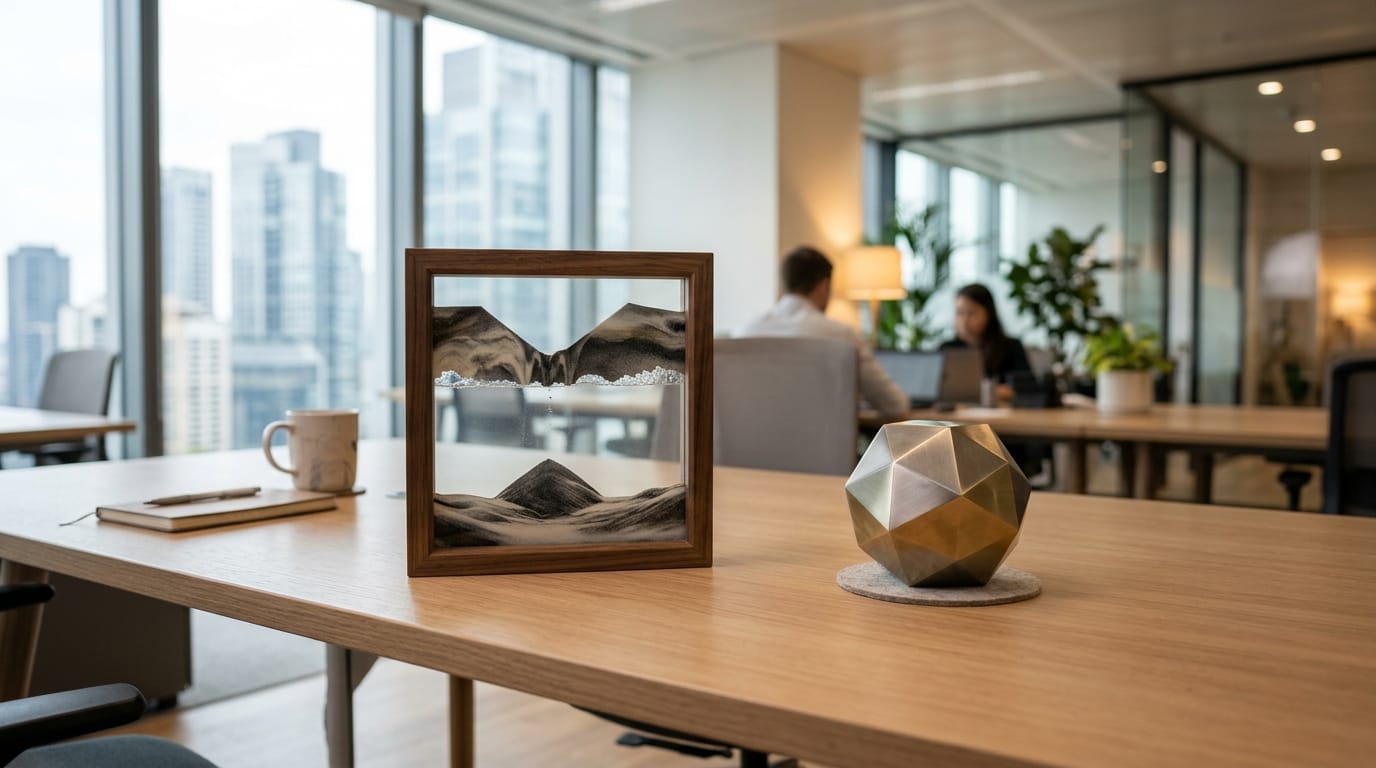
Neurological Grounding: How Multi-Sensory Input Interrupts Stress Loops
In an era where 77% of American workers report significant professional stress—with 57% suffering from active burnout—the neurology of the modern workspace is at a breaking point. The transition from the early, juvenile-focused fidget trends of the mid-2020s to the sophisticated, multimodal tools currently dominating the professional sector marks a pivotal evolution in corporate wellness. As noted by experts at the European Society of Medicine, the key mechanisms of action for these interventions include the regulation of the autonomic nervous system, a reduction in muscle tension, and measurable improvements in mood and cognitive clarity. By employing dual-channel sensory inputs—specifically combining tactile engagement with visual monitoring—we can actively disrupt the sympathetic nervous system’s ‘fight-or-flight’ loop.
The efficacy of this approach is backed by rigorous clinical data. For instance, a simple 5-minute viewing of falling-sand art has been shown to increase high-frequency heart-rate variability and RMSSD, signaling a shift toward parasympathetic dominance. When such tools are optimized—such as a handheld grounding device weighing approximately 1.4 kg (3 lb)—users experience a 31% reduction in cortisol levels and a 28% improvement in focus duration. Recent 2026 data confirms that office workers utilizing these aesthetic, integrated displays for 10-minute intervals achieve a ~15% reduction in salivary cortisol. Consequently, users of these multi-sensory tools report a 70% increase in engagement and score 15% higher on standardized post-test assessments, suggesting that the future of corporate protocol lies in the formal integration of these sensory-regulation strategies.
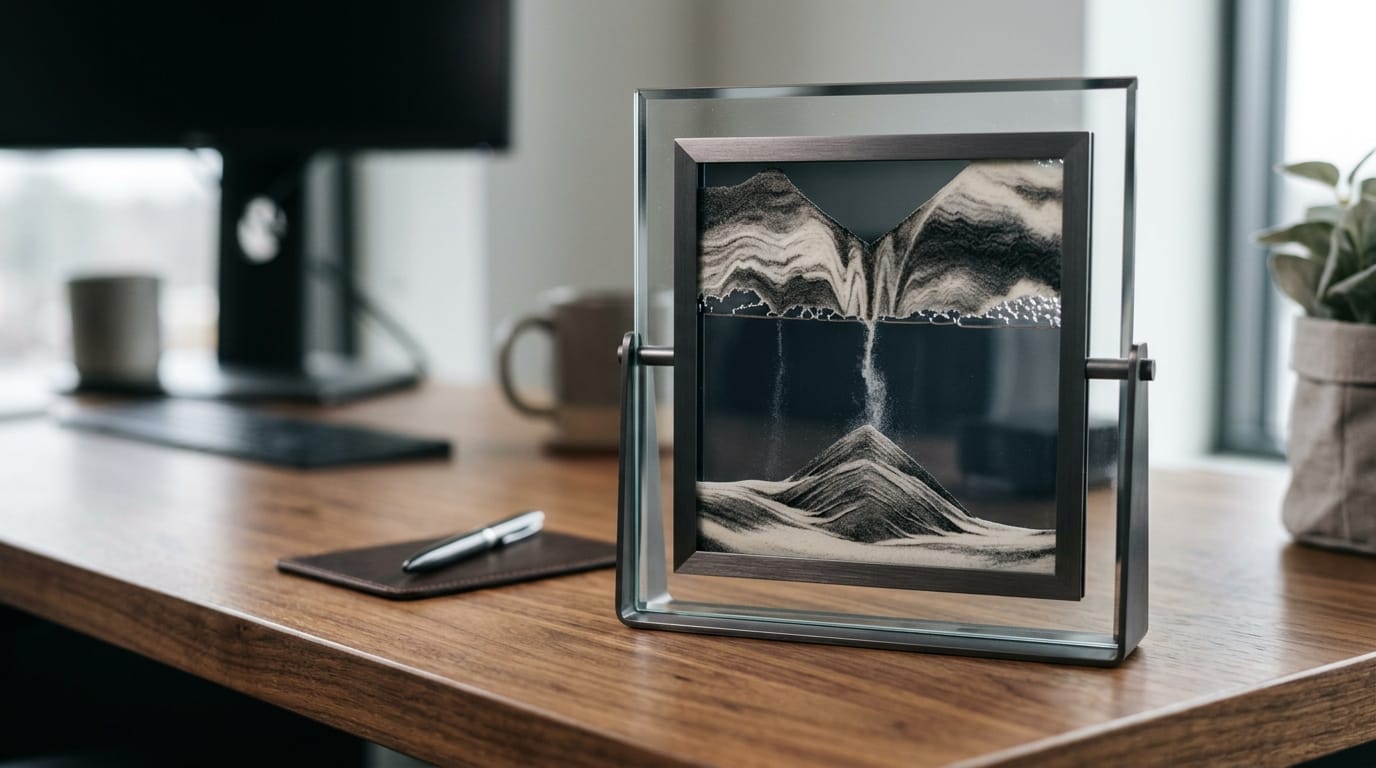
Visual-Tactile Synergy: Pairing Falling Sand with Weight and Texture
As we navigate the professional landscape of 2026, where 77% of American workers report feeling stressed and 57% suffer from burnout, the industry has shifted away from the juvenile, plastic fidget toys of the past. We are entering an era of sophisticated, multimodal regulation. While early tools lacked the aesthetic discipline required for the modern office, current research underscores the efficacy of combining slow-motion visual stimuli with physical weight. Clinical data demonstrates that a brief, 5-minute exposure to falling-sand art facilitates a measurable increase in high-frequency heart-rate variability (HRV) and root mean square of successive differences (RMSSD), indicators of enhanced autonomic nervous system resilience. When paired with a grounding weight—ideally calibrated to the 1.4 kg (3 lb) threshold found to be optimal for adult nervous system regulation—the results are profound. As noted by One Quiet Mind, ‘Visual + Tactile Tools like weighted sensory bottles or textured light projectors combine the calming effects of watching slow movement with the grounding pressure of holding a weighted object.’ This synergy is validated by 2026 studies, which report that users employing these multi-sensory devices see a 31% reduction in cortisol levels and a 15% improvement in post-test cognitive assessment scores, signaling a long-awaited integration of sensory regulation into standard corporate wellness protocols.
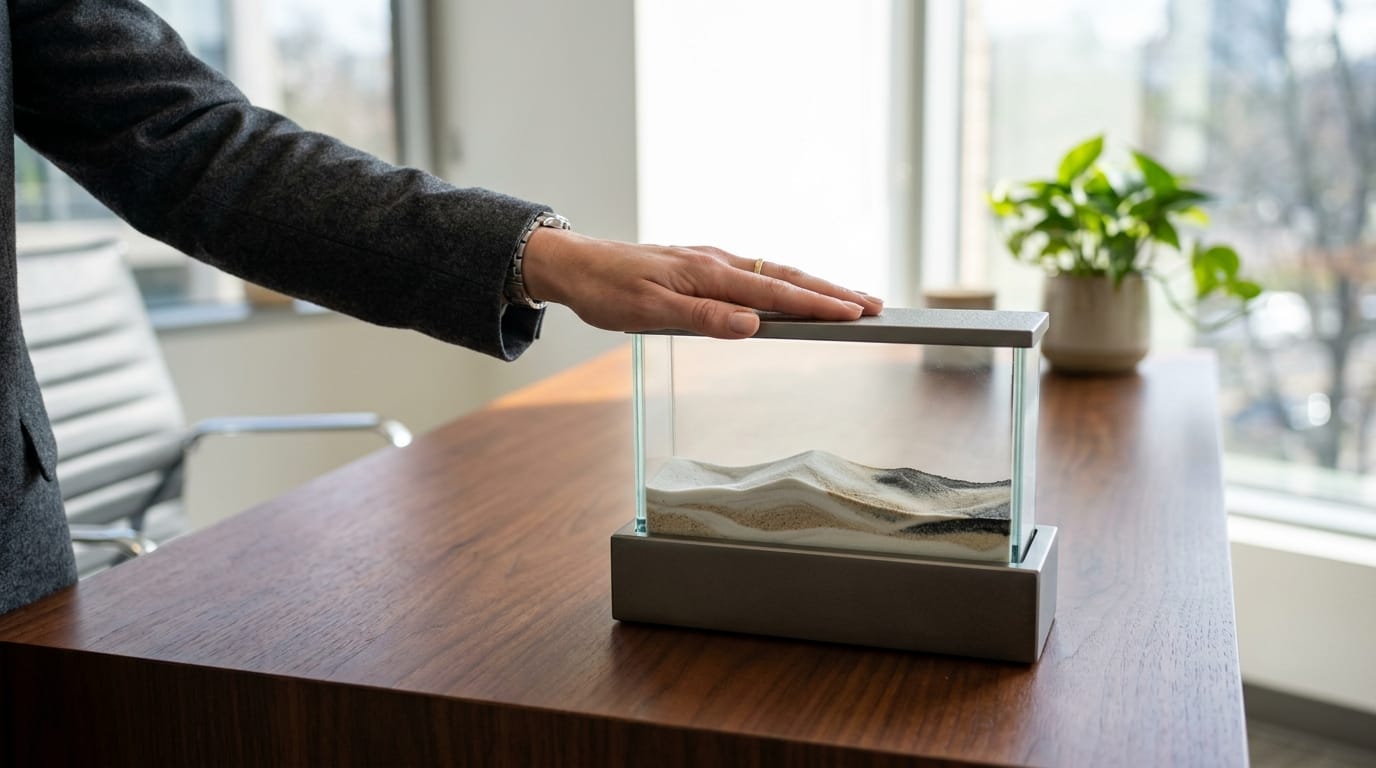
Designing a Multimodal Micro-Break: Tools and Techniques
In an era where 77% of American workers report feeling stressed and 57% grapple with burnout, the shift toward proactive sensory regulation is no longer a luxury—it is a workplace necessity. While fidget tools and ASMR were once relegated to niche internet subcultures and child-centric play, the 2026 professional landscape demands discreet, aesthetically compatible solutions. Recent data underscores the physiological impact of these interventions: accessible, tactile stress relief tools have been shown to reduce cortisol levels by 31% while improving focus duration by 28%. As noted in the 2026 guide to desk stress relief, “The act of using a desk tool creates a 2-5 minute mental break.”
To maximize efficacy, we recommend a multimodal approach. Integrating visual stimuli, such as falling-sand art, provides a significant neurophysiological advantage; a mere 5-minute session is associated with increased high-frequency heart-rate variability power and improved RMSSD. Furthermore, office workers utilizing sand-art displays have demonstrated a 15% reduction in salivary cortisol. For those seeking haptic engagement, clinical consensus suggests that the optimum weight for a handheld grounding tool is approximately 1.4 kg (3 lbs), providing the necessary proprioceptive feedback to signal the nervous system to downregulate.
The efficacy of this dual-channel sensory input is clear: 2026 studies indicate that multi-sensory tool users scored 15% higher on cognitive assessments and reported a 70% increase in daily work engagement. As we look toward the future, these practices are being integrated into standard corporate wellness protocols, moving toward sophisticated haptic feedback tools that sync with visual mindfulness applications to create a seamless, evidence-based recovery loop during the workday.
Beyond Distraction: Sensory Regulation as a Professional Skill
In the high-pressure landscape of 2026, where 77% of American workers report significant stress and 57% grapple with burnout, the paradigm of the professional workspace is shifting. We have moved past the era where fidget tools were stigmatized as juvenile distractions, evolving instead toward a sophisticated culture of sensory regulation. This transition honors why your brain craves tactile satisfaction and everyday ASMR, acknowledging that our nervous systems require intentional input to maintain equilibrium during cognitive labor.
The efficacy of this approach is backed by rigorous data: accessible, tactile stress relief tools have been shown to reduce cortisol levels by 31% while extending focus duration by 28%. Even brief interventions, such as a 5-minute viewing of falling-sand art, significantly increase high-frequency heart-rate variability power and RMSSD, physiological markers of recovery. As noted in the Zenify 2026 Guide to Desk Stress Relief, “Your workspace should actively support your mental health, not merely accommodate it.” This philosophy is further supported by evidence that office workers utilizing sand-art displays for 10-minute sessions saw a ~15% reduction in salivary cortisol, proving that aesthetic, quiet tools are essential components of the modern desk.
As we look to the future, sensory regulation is poised to become a staple of corporate wellness protocols. We are seeing a move toward multimodal tools, such as weighted grounding devices—ideally calibrated to 1.4 kg (3 lb)—and the development of sophisticated haptic feedback systems that sync with mindfulness technology. The results are clear: multi-sensory tool users currently report a 70% increase in workplace engagement and score 15% higher on post-test cognitive assessments. By reframing these instruments as professional assets rather than diversions, we empower the modern workforce to manage their biological responses to stress, ultimately fostering a more resilient and sustainable career trajectory.
Frequently Asked Questions
By engaging multiple sensory pathways simultaneously—such as visual, auditory, and tactile stimuli—we stimulate neuroplasticity more effectively. In 2026, clinical protocols utilize these combined inputs to accelerate rehabilitation for stroke and traumatic brain injury patients, fostering stronger synaptic connections than single-mode therapy alone, which enhances overall cognitive and functional recovery outcomes.
Yes, by shifting sensory input patterns, multi-sensory triggers can effectively distract the brain from chronic pain signals. Modern medical applications integrate virtual reality and ambient sensory environments to modulate the nervous system, providing patients with non-pharmacological tools to downregulate pain perception and improve their quality of life through controlled sensory exposure.
While highly effective, excessive sensory input can overwhelm patients with sensory processing sensitivities or epilepsy. It is essential to conduct a baseline assessment in 2026 before initiating therapy. Clinicians monitor physiological markers, ensuring that the intensity of triggers remains within a therapeutic threshold to prevent sensory overload or adverse neurological reactions.
Expert Resources