
Overcoming the ‘Childish’ Toy Stigma
By Kevin Lee | 4/21/2026
Introduction: The Adult Craving for Sophisticated Sensory Relief
In the modern corporate landscape, the physiological toll of professional pressure has become an unavoidable reality. According to the Anxiety and Depression Association of America (ADAA), workplace anxiety affects 40% of professionals, yet most of us suffer in silence, worried that visible coping mechanisms might undermine our professional image. This tension between the need for regulation and the fear of social stigma has long defined the sensory tool landscape. While the 2017 fidget spinner craze introduced the masses to tactile regulation, it also unfortunately relegated these tools to the category of cheap, plastic trinkets primarily associated with pediatric therapeutic settings for ADHD and autism. To understand why this shift is occurring, read our analysis on Why Keeping Your Hands Busy Helps Calm Your Mind.
We are now observing a pivotal evolution. The embarrassment once felt by adults using fidget tools is steadily waning, with reports of social discomfort dropping from 28% in 2025 to 24% in 2026. This cultural pivot is mirrored by a market shift toward premium materials, such as anodized aluminum featuring a hard oxide layer of 60-70 RC for enhanced wear resistance, replacing the disposable aesthetic of the past. As we move toward a projected $22.8 billion global market by 2033, the focus has shifted toward muted, sophisticated designs that satisfy an adult ‘wellness’ demographic. The stress toy market alone is tracking toward a $7.95 billion valuation by 2030, supported by a 6.1% CAGR. Furthermore, innovation is no longer purely mechanical; 39% of sensory toys launched in 2024 have integrated digital elements like light or haptic feedback. Looking ahead, we anticipate a future where AI-driven, personalized sensory experiences become standard components of corporate wellness, effectively normalizing the use of discreet, high-end tactile instruments as essential gear for the modern professional.
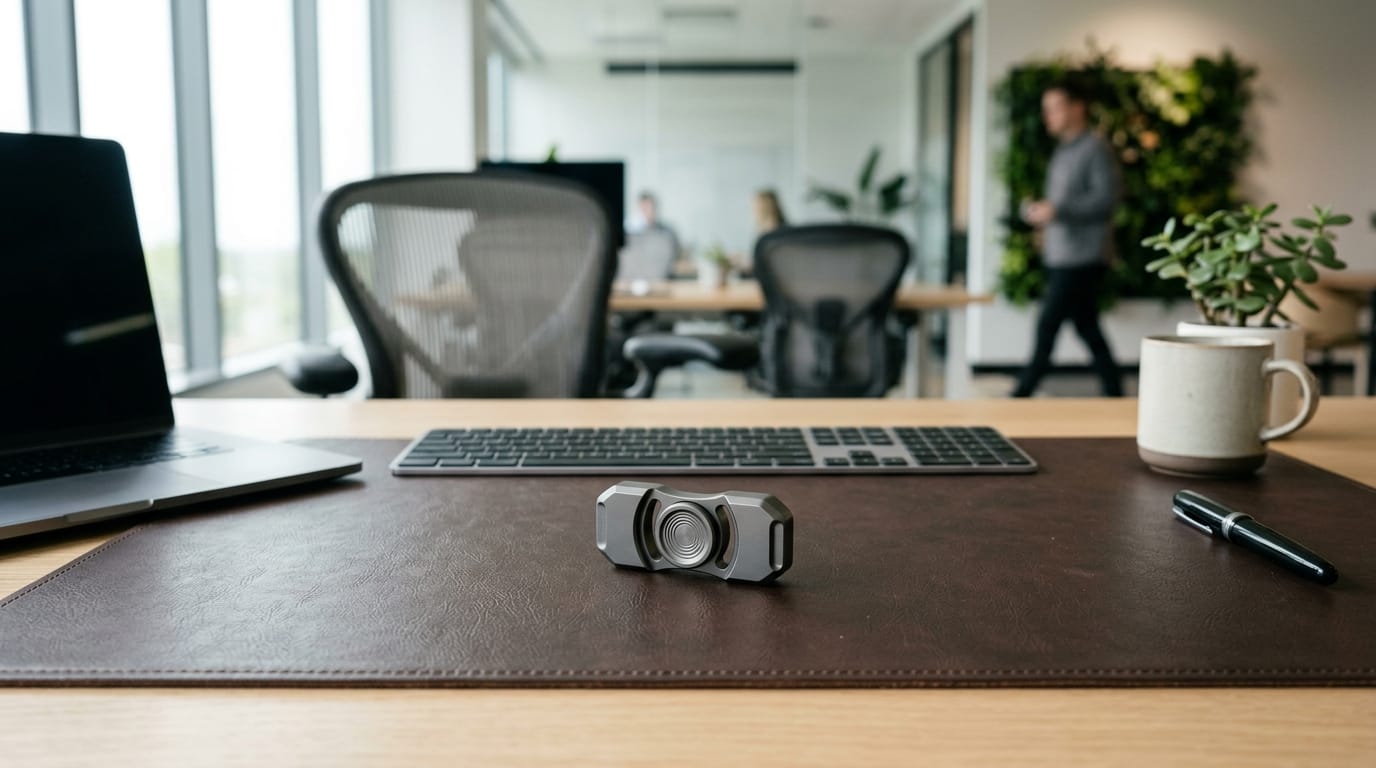
The Stigma Problem: Why ‘Toy’ Aesthetics Feel Unprofessional
For many, the necessity of tactile regulation in high-pressure environments remains at odds with the lingering image of sensory tools as mere trinkets. The 2017 fidget spinner craze, while bringing tactile tools into the mainstream, paradoxically cemented their reputation as disposable, plastic novelties designed for children. This legacy persists, contributing to a professional environment where 40% of employees suffer from workplace anxiety, according to the ADAA, yet many hesitate to utilize regulatory tools for fear of appearing infantile. As noted in a 2026 industry analysis, 28% of adult workers reported feeling embarrassed using fidget toys in a professional setting in 2025; however, this figure subsided to 24% in 2026 as more discreet, high-fidelity designs emerged.
This transition toward maturity is evident in the shift away from neon plastics toward premium, industrial-grade materials. Modern devices now feature anodized aluminum surfaces with a hard oxide layer of approximately 60-70 RC for wear resistance, replacing the auditory distraction of rattling plastic with the subtle, tactile feedback of precision engineering. Despite the market’s evolution, the industry faces a design dilemma: while 39% of sensory toys launched in 2024 integrated digital elements like light or haptic feedback, these features often mimic the disruptive aesthetic of consumer gaming hardware, further complicating their acceptance in corporate boardrooms.
The economic stakes are significant. With the global sensory toy market projected to reach $22.8 billion by 2033, and the dedicated stress toy market expected to hit $7.95 billion by 2030 at a 6.1% CAGR, manufacturers are pivoting toward the ‘wellness’ demographic. By prioritizing muted palettes and tactile sophistication, the industry is gradually stripping away the ‘toy’ stigma. As these tools move from their historical origins in therapeutic settings for ADHD and autism into the standard toolkit of corporate wellness programs, they are shedding their chaotic past in favor of a sleek, professional future defined by discreet haptics and AI-driven personalization.
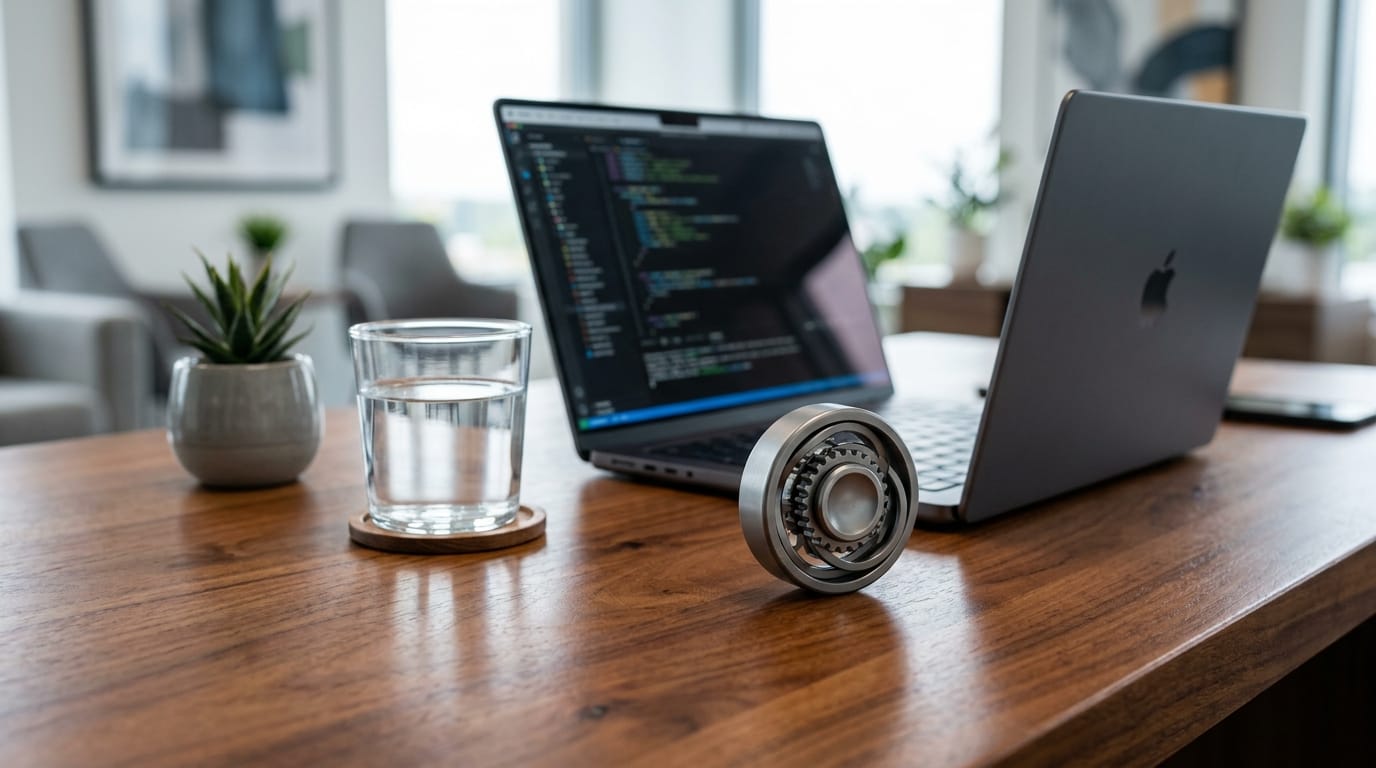
The Rise of the ‘Desk Tool’ Aesthetic: Materials and Design
The trajectory of sensory-based self-regulation tools has undergone a significant metamorphosis since the 2017 fidget spinner craze, which initially pigeonholed these devices as transient, plastic playthings. As workplace anxiety increasingly impacts 40% of professionals according to ADAA data, the design language of these tools has pivoted from juvenile kitsch to sophisticated, professional instrumentation. This shift is critical, as historical stigma previously relegated such aids to clinical settings for ADHD and autism management, or prompted embarrassment in 28% of adult users—a figure that has begun to decline as these devices are rebranded as ‘desk tools.’
Contemporary design now mirrors the broader corporate wellness aesthetic. According to industry trend analysis, “The trend is towards toys that use sophisticated, muted color palettes (like the popular Morandi colors), natural wood finishes, and minimalist designs.” This evolution is more than superficial; it represents a commitment to durability and professional integration. For instance, the transition to high-grade anodized aluminum provides a surface with a hard oxide layer of approximately 60-70 RC, offering the necessary wear resistance for daily office use.
As the stress toy market targets a $7.95 billion valuation by 2030, manufacturers are moving beyond tactile-only experiences. With 39% of sensory toys launched in 2024 incorporating digital elements such as haptic feedback, these objects are becoming integrated, ‘smart’ peripherals. As this market segment is projected to reach $22.8 billion by 2033, these premium desk tools are no longer perceived as mere toys, but as essential, discreet components of a modern, stress-mitigated workspace.

Market Validation: Consumer Demand for Mature-Looking Products
The perception of sensory regulation tools has undergone a definitive evolution. While the 2017 fidget spinner craze introduced tactile stimulation to the masses, it tethered these instruments to a juvenile, plastic-centric aesthetic. Historically relegated to specialized therapeutic settings for ADHD and autism, these tools are now central to the burgeoning corporate wellness industry. This transition is necessitated by urgent data: according to the ADAA, workplace anxiety now affects 40% of professionals. As businesses prioritize mental resilience, the stigma surrounding these aids is fading, with public embarrassment regarding fidget tool usage dropping from 28% in 2025 to 24% in 2026.
Economic indicators confirm this shift toward professional-grade solutions. The global Sensory Toy Market, valued at USD 10.5 billion in 2025, is projected to expand at a CAGR of 9.7%, reaching USD 22.8 billion by 2033. Simultaneously, the specific stress-toy segment is expected to hit $7.95 billion by 2030, bolstered by a 6.1% CAGR. This growth is driven by a demand for durability and sophistication; consumers are increasingly gravitating toward premium materials like wood and anodized aluminum—the latter prized for its hard oxide layer of approximately 60-70 RC, which ensures long-term wear resistance in demanding office environments.
As we look toward the future, these tools are becoming indistinguishable from high-end office accessories. In 2024, 39% of new sensory products integrated advanced digital elements such as haptic feedback or smart-light arrays. As these devices evolve to include AI-driven, personalized sensory experiences, they are poised to become standard fixtures in corporate wellness suites, effectively doubling the market scale by 2033.
How to Choose: Key Features for a Discreet, Adult-Friendly Tool
As workplace anxiety continues to affect 40% of professionals according to the ADAA, the demand for professional-grade sensory regulation tools has reached a critical inflection point. While the 2017 fidget spinner craze initially anchored these tools as low-cost plastic novelty items, the market has undergone a significant maturation. By 2026, the stigma surrounding these devices is receding, with the percentage of adults reporting embarrassment over their use dropping to 24%, down from 28% in 2025. When selecting a tool for a corporate environment, users should prioritize three specific criteria: acoustic discretion, material longevity, and portability.
First, evaluate the device’s acoustic profile. As noted by Stimm Jewelry, “Traditional fidget spinners or stress balls can appear juvenile and may distract colleagues with noise or movement. However, sensory jewelry like fidget rings… demonstrates self-awareness and proactive stress management.” Opting for silent, kinesthetic mechanisms is essential for maintaining professional decorum.
Second, consider the material science. With the sensory toy market projected to reach $22.8 billion by 2033, manufacturers are shifting toward premium aesthetics. For maximum durability, look for anodized aluminum, which features a hard oxide layer of approximately 60-70 RC for superior wear resistance. This aligns with the broader move toward adult-centric ‘wellness’ goods, contrasting with the 39% of sensory toys from 2024 that relied on digital, light-based, or haptic feedback elements, which may prove too flashy for formal settings. Whether investing in the $7.95 billion stress toy sector or future-facing AI-integrated tools, the goal is to bridge the gap between therapeutic necessity and modern workplace etiquette.
Conclusion: Redefining Sensory Tools as Lifestyle Accessories
As we navigate a professional landscape where workplace anxiety affects 40% of professionals according to the ADAA, the paradigm of sensory regulation is undergoing a fundamental transformation. The 2017 fidget spinner craze initially relegated tactile tools to the realm of ephemeral, plastic children’s novelties; however, we are witnessing a decisive pivot. By 2026, the stigma of using these devices has declined, with embarrassment rates falling from 28% in 2025 to 24% today. This shift is driven by a move toward premium, durable materials, such as anodized aluminum surfaces boasting a hard oxide layer of 60-70 RC for wear resistance, which align with the sophisticated aesthetic of the modern wellness demographic.
The market trajectory confirms this evolution. With the stress toy sector projected to reach $7.95 billion by 2030 and the broader sensory market climbing toward $22.8 billion by 2033, these items are transitioning from niche therapeutic aids to essential lifestyle accessories. Much of this growth is fueled by innovation, as 39% of 2024 product launches integrated sophisticated digital elements like haptic feedback. As noted in industry trend analysis, “A beautifully designed toy is more likely to be left out in the living room, leading to more play.” This sentiment underpins the future of the category: normalizing the integration of Why Keeping Your Hands Busy Helps Calm Your Mind into our daily workflows.
As we look toward an era defined by AI-driven, personalized sensory experiences and corporate-sponsored wellness initiatives, the sensory tool is finally finding its place on the executive desk and the living room coffee table alike. By replacing cheap plastics with tactile, muted elegance, we are not just managing anxiety—we are elevating the human experience through intentional, stigma-free design. Author: Kevin Lee.